What Are Quartz Vanity Tops With Sink?
Quartz vanity tops with sink combine an engineered stone countertop with a built-in or separately installed sink to create a practical bathroom surface. They offer a consistent appearance, a nonporous surface, and a range of colors that work with different vanity cabinets and bathroom styles.
These countertops are made from ground quartz minerals mixed with resins and pigments. Unlike natural stone slabs, engineered quartz is manufactured to provide a more uniform pattern and color. The sink may be molded into the countertop or fitted as an undermount or drop-in basin, depending on the design.
For example, a 36-inch quartz vanity top with an integrated sink can suit a small guest bathroom, while a 60-inch double-sink option may work better in a shared primary bathroom.
When choosing a top, check the cabinet dimensions, sink placement, faucet-hole configuration, and countertop overhang before purchasing. Quartz is also different from granite in its composition and care requirements, so comparing both materials can help you make a practical choice.
Table of Contents
What Sink Styles Work Best With Quartz Vanity Tops?
Undermount, integrated, drop-in, and vessel sinks can all work with quartz bathroom countertops. The best choice depends on your cleaning preferences, available counter space, cabinet size, and the look you want for your bathroom.
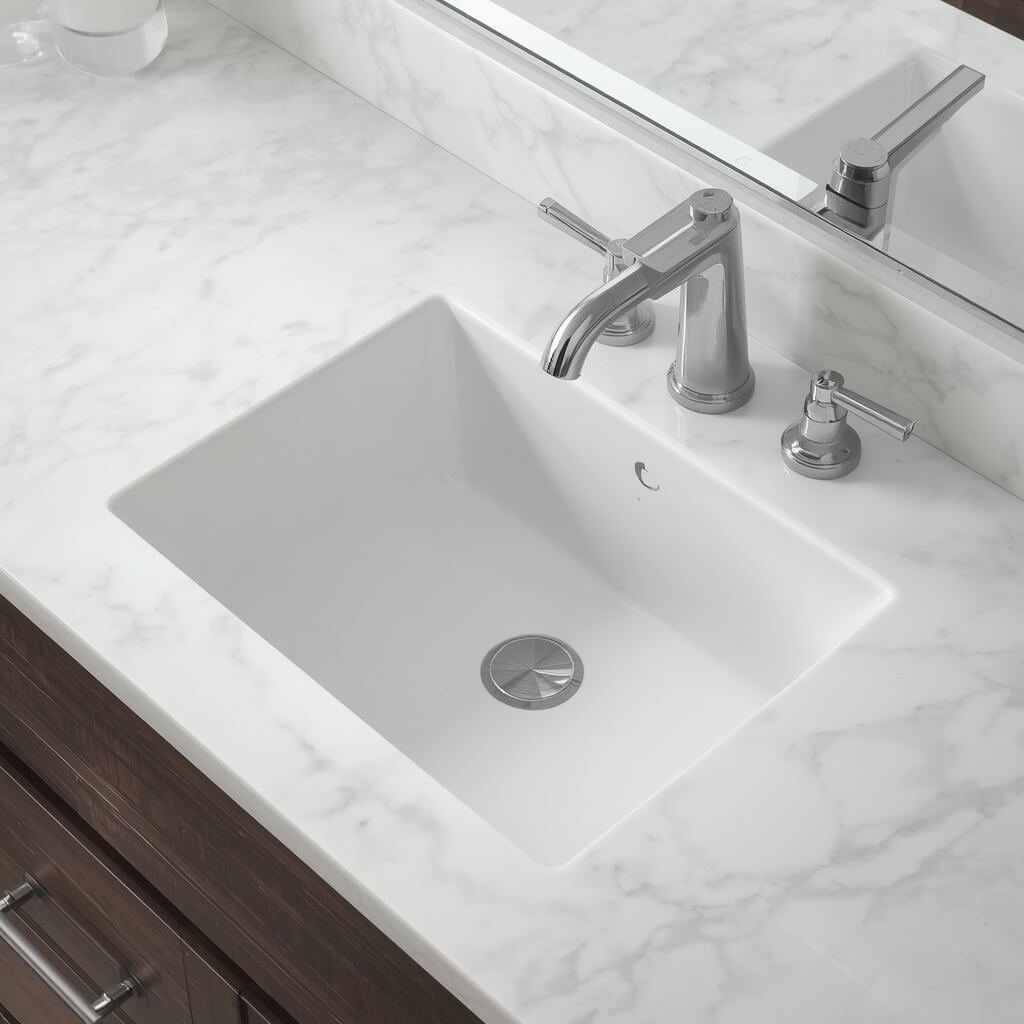
- Undermount sink: Installed beneath the countertop, this style creates a smooth edge and makes it easy to wipe water and toothpaste into the basin. It works well in family bathrooms that need regular cleaning.
- Integrated sink: The basin and countertop form one continuous unit. This design has fewer exposed joints around the sink, although the available shapes and sizes depend on the manufacturer.
- Drop-in sink: The basin sits inside a cutout, with its rim resting on the countertop. It can be a practical option when replacing an older sink, provided the opening and faucet arrangement are compatible.
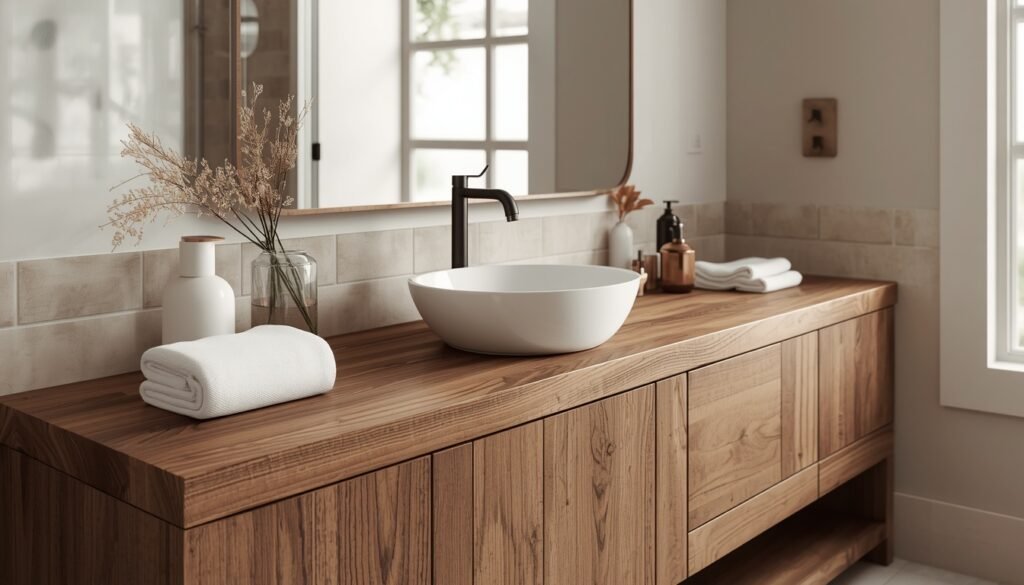
- Vessel sink: This basin sits above the countertop, creating a decorative focal point. It can suit modern bathrooms, but the added height may require a lower vanity cabinet or a carefully positioned faucet.
For example, a 36-inch vanity in a guest bathroom may work well with a single undermount basin because it leaves useful space for soap and everyday toiletries. A vessel sink may look attractive in the same space, but it can reduce the available counter area.
Before choosing a sink, confirm that the quartz slab is suitable for the required cutout and mounting method. Also, check the faucet reach, drain position, and cabinet clearance to avoid installation problems.
If you are comparing basin designs, explore different bathroom vanity with bowl sink options to find a style that suits your available space, countertop, and daily routine.
3. What Are the Benefits and Drawbacks of Quartz Vanity Tops With Sink?
Quartz countertops offer a consistent appearance, a nonporous surface, and straightforward daily cleaning, but they can be costly and may suffer damage from excessive heat. Weighing these advantages against the limitations helps you decide whether this material suits your bathroom and budget.
Benefits of Quartz Countertops
Engineered quartz is made from quartz minerals, resins, and pigments. This combination creates a hard surface with a more consistent pattern than many natural stone slabs.
- Low water absorption: Quartz resists everyday moisture better than porous stone, although standing water around seams and fittings should still be wiped away.
- Easy daily cleaning: Mild soap, water, and a soft cloth are usually enough to remove toothpaste, soap residue, and routine bathroom mess.
- Consistent colors: Manufactured patterns make it easier to match the countertop with bathroom cabinets, floor tiles, and wall finishes.
- Several design options: Homeowners can choose from marble-look patterns, solid colors, and different edge profiles.
- No routine sealing: Most engineered quartz surfaces do not require the periodic sealing associated with some natural stones.
Drawbacks to Consider
Quartz is durable, but it is not indestructible. Its resin content can make it vulnerable to high temperatures and certain harsh chemicals.
- Higher upfront cost: Custom cuts, sink openings, edge finishing, and professional installation can increase the total price.
- Heat sensitivity: Hot styling tools placed directly on the surface may cause damage or discoloration. Use a heat-resistant mat.
- Possible staining or discoloration: Some products can react to strong chemicals, prolonged exposure to certain substances, or unsuitable cleaners.
- Visible seams: Larger countertops may require joints that remain noticeable, depending on the pattern and installation.
- Limited repair options: Chips and cracks may need professional repair, and the results can vary by color and damage.
For example, if you regularly use a curling iron beside the bathroom sink, leave enough room for a heat-resistant mat rather than placing the tool directly on the counter.
Best fit: Quartz is worth considering if you want a coordinated bathroom design and easy everyday maintenance. If your main priority is the lowest initial cost, compare it with other countertop materials before making a decision.
4. Which Quartz Colors and Edge Styles Suit Different Bathrooms?
The right quartz color and countertop edge should complement your vanity cabinet, bathroom lighting, and overall design. Light colors can make a compact bathroom feel brighter, while darker surfaces create contrast and can give a larger room a more defined look.
White and Light Gray Quartz
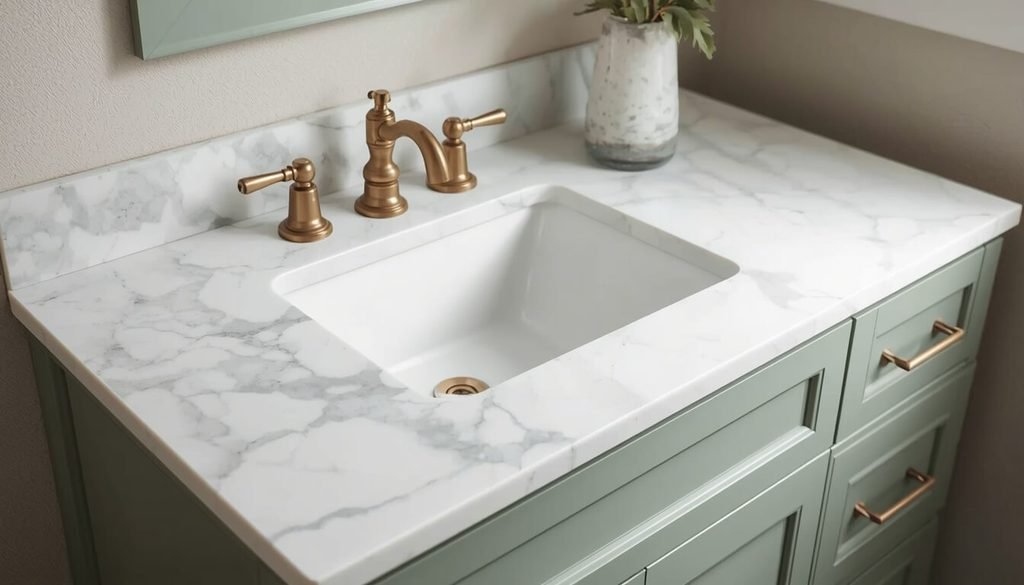
White quartz with subtle gray veining works well with white, navy, sage green, and natural wood cabinets. It can also complement bathrooms with limited natural light.
A marble-look finish provides visual detail without requiring the same care as some natural marble surfaces. However, the exact stain resistance depends on the quartz product and its finish. If you are coordinating countertop colors with green cabinetry, explore these sage green bathroom vanity ideas for complementary design inspiration.
Beige and Warm Neutral Quartz
Cream, beige, and warm gray shades suit oak cabinets, brushed brass faucets, and earthy tile colors. These tones are useful when you want a softer appearance instead of a sharp contrast between the countertop and cabinet.
Dark Gray and Black Quartz
Charcoal and black quartz pair well with white cabinets, light wall tiles, and contemporary fixtures. They can create a strong visual contrast, although water spots, dust, and dried residue may be noticeable on some dark finishes.
Popular Countertop Edge Profiles
The edge profile affects the countertop’s appearance and can influence how well it fits the style of your vanity.
- Eased edge: A slightly softened square edge that suits modern and traditional bathrooms.
- Bullnose edge: A rounded profile that gives the countertop a softer outline.
- Beveled edge: An angled detail that adds definition without looking overly decorative.
- Ogee edge: A more detailed, curved profile that works well with traditional cabinetry.
For a small bathroom with a sage green vanity, a white quartz surface and a simple eased edge can keep the design balanced without adding too many competing details.
Before ordering, view a sample under your bathroom’s actual lighting. Countertop samples may look different under warm vanity bulbs than they do in a showroom.
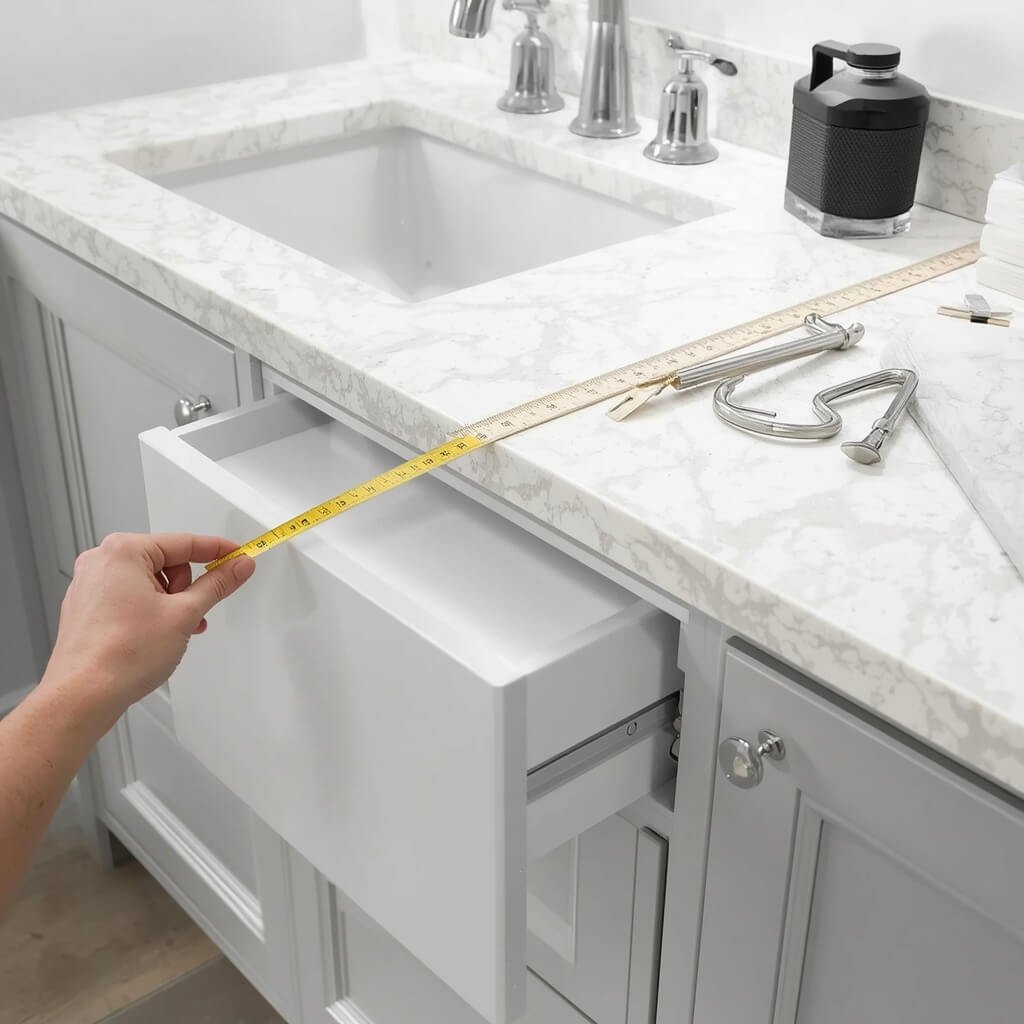
5. What Sizes and Thicknesses Should You Choose for a Quartz Vanity Top?
Choose a countertop size that matches your vanity cabinet, sink dimensions, and available bathroom clearance. The correct thickness depends on the manufacturer’s specifications, the sink installation method, and the support required for the finished slab.
Common Bathroom Vanity Top Sizes
Bathroom vanity widths vary, but several sizes are widely used in U.S. homes.
| Vanity width | Common application |
| 24 inches | Small bathrooms and powder rooms |
| 30–36 inches | Guest bathrooms and compact full bathrooms |
| 48 inches | Medium-sized bathrooms |
| 60 inches | Larger bathrooms or double-sink layouts |
| 72 inches | Spacious primary bathrooms |
These are common cabinet widths, not guaranteed countertop dimensions. The finished top may extend beyond the cabinet, so confirm the measurements before ordering.
Depth also matters. Many bathroom vanities use a countertop depth of around 21–22 inches, but compact models can be shallower. Measure from the wall to the cabinet’s front edge and account for any intended overhang. For more guidance, read this guide to standard bathroom vanity depth, sizes, and clearances before selecting your countertop..
Common Quartz Countertop Thicknesses
Engineered quartz countertops are commonly available in thicknesses such as 2 cm (about ¾ inch) and 3 cm (about 1¼ inches). Some vanity products use thinner slabs or built-up edges to create a thicker appearance.
- 2 cm quartz: A thinner option that may require suitable support or a fabricated edge, depending on the installation.
- 3 cm quartz: A thicker slab that often provides a substantial appearance and may simplify some countertop designs.
- Built-up edge: A fabrication method that creates the look of a thicker countertop without using a solid slab of that full visible thickness.
How to Measure Before Buying
Measure the cabinet width and depth, then confirm the sink cutout, faucet holes, backsplash requirements, and wall alignment. If the walls are uneven, a professional measurement can help prevent gaps or fitting problems.
For example, a 36-inch vanity may need a top with a slightly wider finished dimension, depending on the cabinet design. Do not order based on the cabinet label alone.
Also, check the countertop manufacturer’s installation instructions before choosing a sink. An undermount basin requires a properly finished cutout and compatible mounting support, while an integrated sink must be supplied in a size that fits the cabinet and plumbing layout.
| Vanity Width | Best For | Common Quartz Thickness |
| 24 inches | Powder rooms | 2 cm or 3 cm |
| 30–36 inches | Small bathrooms | 2 cm or 3 cm |
| 48 inches | Medium bathrooms | 2 cm or 3 cm |
| 60 inches | Double-sink layouts | 2 cm or 3 cm |
| 72 inches | Large primary bathrooms | 2 cm or 3 cm |
Note: Actual countertop dimensions and thickness options vary by manufacturer and cabinet design.
6. How Much Do Quartz Vanity Tops With Sink Cost in the USA?
Quartz bathroom vanity tops with a sink can cost a few hundred dollars for basic prefabricated options or well over $1,000 for larger, custom-made designs. The final price depends on countertop size, quartz quality, sink type, edge finishing, and installation labor.
What Affects the Total Cost?
Several factors determine how much you will pay for a new quartz countertop.
- Countertop size: A 24-inch vanity top generally costs less than a 60-inch double-sink countertop because it requires less material.
- Quartz quality: Premium patterns, special finishes, and certain slab designs can increase the price.
- Sink style: An integrated basin, undermount sink, and vessel sink have different product and installation costs.
- Custom fabrication: Sink cutouts, faucet holes, backsplash pieces, and decorative edges can add to the total.
- Installation labor: Removing an old countertop, adjusting the cabinet, and connecting plumbing may increase the project cost.
Example Budget for a Bathroom Project
Use the following figures as rough planning estimates rather than fixed market prices. Actual quotes vary by region, supplier, and product specifications.
| Expense | Estimated Cost |
| Prefabricated quartz vanity top | 200–600 |
| Custom quartz countertop | 400–1,200+ |
| Sink, if sold separately | 50–300+ |
| Professional installation | 200–600+ |
These amounts are illustrative and may overlap depending on what the supplier includes. A prefabricated top may already include a sink, while a custom quote may cover fabrication but exclude plumbing.
For example, when replacing a 36-inch vanity top, ask whether the quote includes the basin, faucet holes, backsplash, delivery, and installation. Comparing complete quotes is more useful than choosing the lowest countertop price alone. For a clearer picture of additional expenses, read our guide to bathroom vanity installation costs before finalizing your budget.
7. How Do You Choose the Right Quartz Vanity Top for Your Bathroom?
Choose a quartz countertop by matching its dimensions, sink design, color, and maintenance needs to your bathroom and budget. A suitable option should fit the existing or planned vanity without creating problems with plumbing, storage, or daily use.
Check Your Vanity Measurements
Measure the cabinet width and depth, and check whether the walls are square. Confirm the required countertop overhang, backsplash height, sink opening, and faucet placement before placing an order.
If you are replacing an existing top, do not assume that a new one will fit simply because both products are listed as 36 inches wide. Finished dimensions and cutout locations can differ.
Match the Sink to Your Daily Routine
Think about who uses the bathroom and how much counter space is available.
- Choose an undermount sink for a clean countertop edge and easier wipe-downs.
- Consider an integrated basin if you prefer a continuous surface around the sink.
- Select a vessel sink if appearance is a priority and the countertop and faucet heights work together.
- Consider a double-sink design for a shared bathroom, provided the vanity is wide enough for comfortable use.
Compare Color, Finish, and Cabinet Style
Look at quartz samples beside your cabinet finish, wall tiles, flooring, and faucet. White and light gray surfaces can brighten a compact room, while darker colors create contrast with pale cabinetry.
Also, check the manufacturer’s care instructions. Most engineered quartz does not need routine sealing, but cleaning products and heat resistance can vary by product.
Review the Complete Purchase
Before buying, confirm these details:
- Exact countertop width and depth
- Sink type and included accessories
- Faucet-hole configuration
- Edge profile and backsplash options
- Delivery, installation, and warranty terms
A little planning can prevent costly changes later. If your bathroom has an unusual layout or an older cabinet, ask the supplier or installer to verify the measurements before fabrication begins.
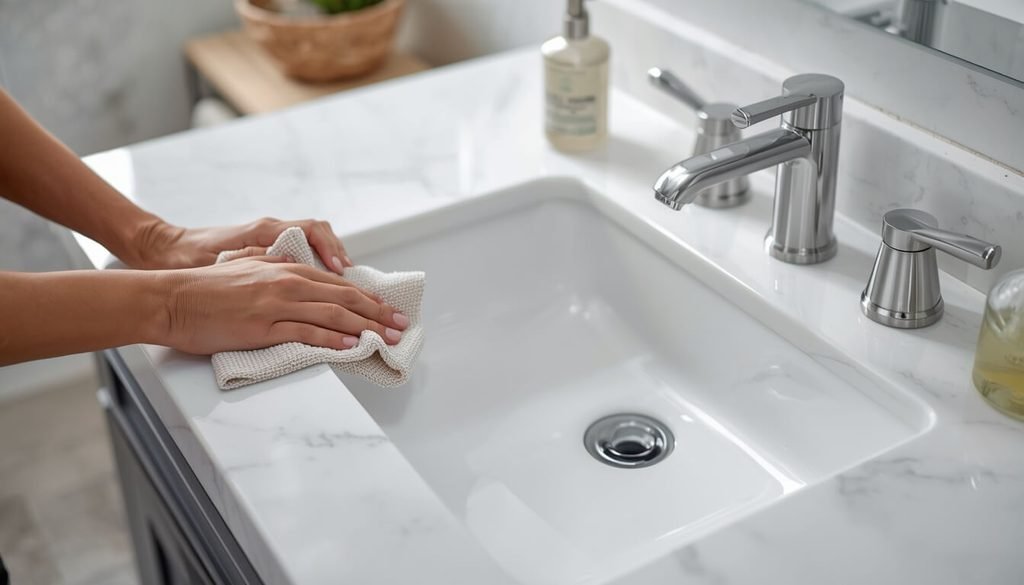
8. How Do You Clean and Maintain a Quartz Vanity Top With Sink?
Clean a quartz vanity countertop with a soft cloth, warm water, and mild dish soap for routine care. Wipe up toothpaste, cosmetics, and standing water promptly, and avoid harsh cleaners that could damage the surface or affect its finish.
Follow a Simple Daily Cleaning Routine
Regular cleaning helps prevent soap residue and grime from building up around the sink and faucet.
- Remove toiletries and loose debris from the countertop.
- Wipe the surface with a soft cloth and mild soapy water.
- Clean around the faucet base, sink rim, and backsplash where residue collects.
- Rinse away soap residue with a clean, damp cloth.
- Dry the surface with a microfiber cloth to reduce water spots.
Pay extra attention to seams and areas around the sink where water can collect. Although quartz is nonporous, nearby sealants, joints, and cabinetry still need proper care.
Remove Common Bathroom Stains Carefully
Different marks may need different cleaning methods. Start with mild soap and water before trying anything stronger.
- Toothpaste residue: Wipe with a damp cloth and mild soap.
- Makeup marks: Clean promptly with a soft cloth and a product approved by the manufacturer.
- Dried soap: Let a damp cloth soften the residue before wiping it away.
- Water spots: Dry the surface after cleaning to limit mineral deposits.
Avoid abrasive scouring pads, strong acids, and unapproved chemical cleaners. Products containing bleach or solvents may not be suitable for every quartz surface, so check the manufacturer’s care guide first. For additional guidance on countertop care, consult the Natural Stone Institute’s stone care resources.
Protect the Surface From Heat and Scratches
Quartz can handle normal bathroom use, but its resin content makes it sensitive to excessive heat. Keep curling irons, hair straighteners, and other hot tools on a heat-resistant mat rather than placing them directly on the countertop.
Do not use the surface as a cutting or scraping area, and avoid dragging heavy objects across it. If a chip or crack develops, contact a countertop professional before attempting a repair.
Maintenance tip: A few minutes of regular cleaning can help keep the countertop looking good without specialized products or complicated routines. Follow the care instructions supplied with your specific quartz product for the safest results.
9. What Installation Issues Should Homeowners Consider Before Buying?
Before buying a quartz countertop, check the cabinet’s strength, sink cutout, plumbing connections, and wall measurements. Planning these details in advance helps prevent fitting problems, unexpected labor costs, and damage during installation.
Check Cabinet Support and Measurements
Quartz is heavy, so the vanity cabinet must provide suitable support for the countertop. Inspect the cabinet for loose joints, water damage, uneven surfaces, or sagging before ordering a replacement top.
Measure the cabinet width and depth carefully. Also, account for the backsplash, countertop overhang, and clearance around nearby walls or fixtures.
For example, a 48-inch vanity with a damaged cabinet base may need repairs before a new countertop can be installed safely. Fitting a new slab without addressing the damage can lead to poor support.
Confirm Sink Cutouts and Plumbing Access
The sink opening must match the selected basin and countertop design. An undermount sink needs a properly finished cutout and compatible mounting hardware, while an integrated sink must fit the cabinet and drain layout.
Check these details before purchasing:
- Faucet holes: Confirm their number and position match your faucet.
- Drain alignment: Make sure the sink drain lines up with the existing plumbing or allow for adjustments.
- Backsplash clearance: Check that the countertop and backsplash fit against the wall.
- Cabinet space: Ensure the basin does not interfere with drawers, storage, or plumbing connections.
Plan for Delivery and Installation
Large quartz slabs can be difficult to move through narrow hallways, staircases, and bathroom doorways. Measure the access route before scheduling delivery, especially if the countertop is large or has an attached sink.
Professional installation is worth considering for custom-cut slabs, heavy countertops, and undermount basins. A qualified installer can check the cabinet support, position the top correctly, secure the sink as required, and finish the joints.
Understand Seams, Joints, and Warranty Terms
Some countertop layouts require seams, particularly on larger surfaces or around complex cuts. Ask the fabricator where seams will be placed and how visible they may be with your chosen quartz pattern.
Also, review the product warranty and installation requirements. Improper support, unsuitable cleaning products, or installation that does not follow the manufacturer’s instructions may affect warranty coverage.
Practical tip: Before approving the final order, get written confirmation of the countertop dimensions, sink style, included accessories, installation charges, and any additional cabinet or plumbing work. This makes it easier to compare quotes and avoid unexpected expenses.
Conclusion: Is a Quartz Vanity Top With Sink Right for Your Bathroom?
Quartz vanity tops with sink are a practical choice if you want a durable countertop, easy daily cleaning, and a consistent design. They suit many bathroom styles, from compact guest bathrooms to spacious primary bathrooms.
Before buying, check the vanity measurements, sink style, installation costs, and care requirements. For help choosing the right dimensions, explore our guide to common bathroom vanity sizes. For example, a 36-inch vanity with a white quartz top can work well in a small bathroom when the sink leaves enough room for everyday essentials. Choose a design that fits your space, budget, and routine.
1. Is quartz good for a bathroom vanity top?
Yes, quartz is a good choice because it resists moisture, needs no routine sealing, and is easy to clean with mild soap and water.
2. What is the downside to a quartz countertop?
Quartz can be expensive, may discolor from excessive heat, and can chip or crack if struck hard. Repairs may also be difficult to match.
3. What are the trendiest quartz countertop colors for 2026?
Warm white, soft beige, greige, and marble-look quartz with subtle veining are popular choices for bathrooms with modern or natural finishes.
4. What type of sink goes best with quartz countertops?
An undermount sink is a popular option because it creates a clean edge and makes wiping water and debris off the countertop easier.
5. What should you avoid with quartz countertops?
Avoid placing hot styling tools directly on quartz, using abrasive scrubbers, or applying harsh cleaners without checking the manufacturer’s care instructions.
6. What is the new trend for kitchen sinks?
Workstation sinks with built-in ledges for cutting boards and drying racks are popular because they combine food preparation and cleanup in one space.