
Introduction
Choosing a bathroom vanity with bowl sink can feel simple until you compare different shapes, sizes, and materials. The right design should look good while leaving enough room for comfortable handwashing and everyday essentials. In this guide, you’ll learn about bowl sink styles, countertop materials, suitable heights, faucet options, cleaning needs, and the pros and cons to consider before choosing a vanity for your bathroom.
Table of Contents
What Is a Bathroom Vanity With a Bowl Sink?
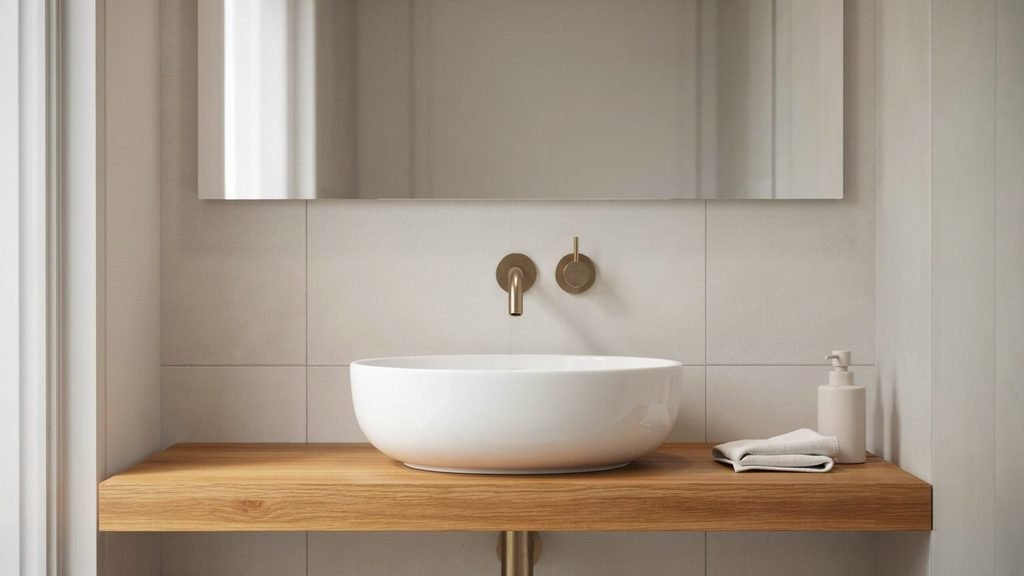
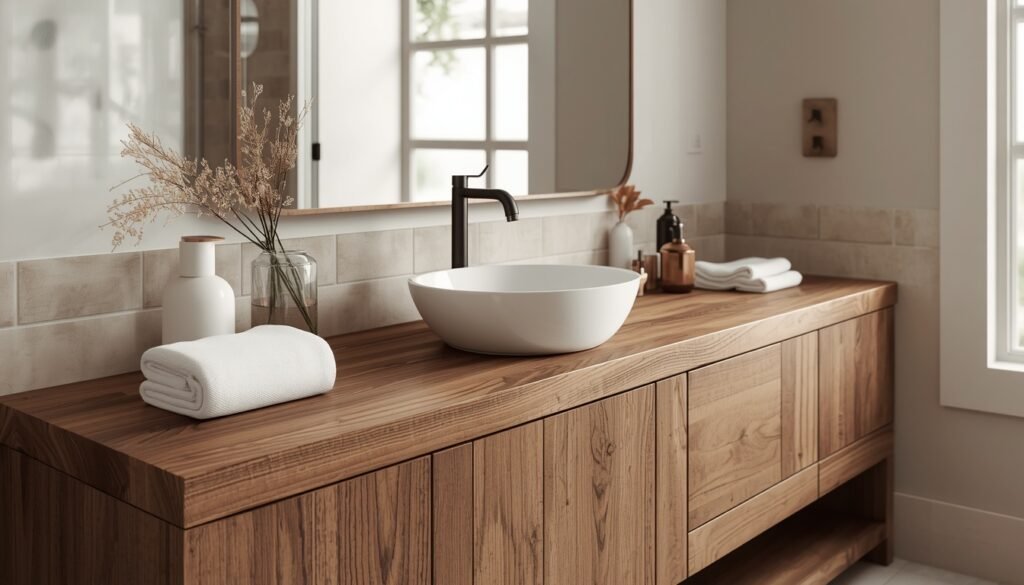
A bathroom vanity with a bowl sink combines a storage cabinet with a basin that rests above the countertop. Often known as a vessel sink, this style stands out because the bowl remains visible instead of sitting inside the counter. The cabinet below can provide useful storage for everyday bathroom items, such as towels, toiletries, and cleaning products.
Unlike drop-in and undermount sinks, a vessel sink sits on top of the vanity surface, making its shape and material a noticeable part of the bathroom design. These sinks are available in options such as ceramic, porcelain, glass, and natural stone. You can also choose from round, oval, square, or rectangular bowls to suit your available space and preferred decor.
For example, a homeowner remodeling a small guest bathroom might choose a 24-inch vanity with a compact vessel sink to create a clean, modern appearance without taking up too much floor space. However, the bowl’s height matters. Since the basin sits above the counter, the combined height of the vanity and sink should feel comfortable for everyday handwashing.
The faucet also needs careful planning. A vessel sink may require a tall faucet mounted on the countertop or a wall-mounted faucet positioned to direct water into the bowl without excessive splashing. The faucet’s reach, water flow, and bowl depth all affect how well the setup works.
A bathroom vanity with a bowl sink can suit modern, traditional, rustic, and minimalist bathrooms. The best choice depends on the available counter space, storage needs, plumbing layout, and how frequently the bathroom is used.
If you are comparing different vanity dimensions before choosing a design, see our guide to standard bathroom vanity depth. It can help you assess the available space before selecting a countertop and bowl combination.
What Are the Different Types of Bowl Sink Vanities?
Bathroom vanity designs with bowl sinks come in several styles, including vessel sink vanities, floating vanities, freestanding cabinets, and single- or double-bowl setups. The right option depends on your bathroom size, storage needs, countertop space, and preferred look.
1. Vessel Sink Vanity
A vessel sink vanity uses a basin that rests directly on the countertop rather than being fitted inside it. This arrangement makes the sink a noticeable design feature and gives homeowners plenty of options to match their bathroom decor. Depending on the look you prefer, you can choose a basin made from materials such as fired ceramic, porcelain, decorative glass, or natural stone.
- Ideal for: Contemporary bathrooms, guest washrooms, and spaces where the vanity serves as a decorative focal point.
- Main benefit: Offers a wide range of bowl shapes, colors, and materials.
- What to consider: The bowl adds height, so check the combined countertop and sink height before buying.
For example, a 32-inch vanity with a vessel bowl may feel too tall for some users once the basin is installed. Always check the total finished height rather than the cabinet height alone.
2. Freestanding Bowl Sink Vanity
A freestanding vanity rests on the floor and usually includes cabinet doors, drawers, or open shelves. It is a practical choice for homeowners who want a bowl sink without giving up everyday bathroom storage.
- Best for: Family bathrooms and bathrooms that need extra storage.
- Main benefit: Keeps toiletries, towels, and cleaning supplies within easy reach.
- What to consider: Leave enough room for cabinet doors and drawers to open comfortably.
Wood-look finishes, painted cabinets, and stone countertops can all work well with this style.
3. Floating Bowl Sink Vanity
A wall-mounted vanity keeps the cabinet above the floor, creating a clear space beneath it. When combined with a raised bowl sink, this setup gives the bathroom a clean, modern look without making the room feel visually heavy. It can be especially useful in smaller bathrooms where an open floor area helps the space feel more spacious.
- Ideal for: Compact bathrooms, sleek contemporary spaces, and interiors with a clean, uncluttered look.
- Main advantage: The open area beneath the vanity allows easier access for sweeping and mopping the bathroom floor.
- What to consider: The wall must support the vanity’s weight, including the countertop, sink, and items stored inside.
Proper wall support and secure installation are important, particularly when the vanity has a heavy stone countertop.
4. Single Bowl Sink Vanity
A single bowl sink vanity has one basin and usually provides more usable countertop space than a comparable double-sink design. It is often a sensible choice for powder rooms, guest bathrooms, and bathrooms used by one or two people.
A 30- to 36-inch vanity can be a useful starting point, depending on the bowl size and the space available for faucets and toiletries. Actual fit depends on the vanity’s dimensions and layout.
5. Double Bowl Sink Vanity
A double bowl vanity includes two basins, allowing two people to use the bathroom at the same time. It can be useful in shared bathrooms, especially during busy mornings.
Before choosing this design, check that the countertop has enough room for both bowls and their faucets. You should also account for the plumbing connections, cabinet space, and clearance around the vanity.
Which Bowl Sink Vanity Style Should You Choose?
Use these practical guidelines to narrow down your options:
- For a small bathroom: Consider a compact single-bowl or floating vanity.
- For extra storage: Choose a freestanding vanity with drawers or cabinet doors.
- For a modern look: A vessel bowl on a floating vanity can work well.
- For a shared bathroom: Consider a double-bowl setup if the room has sufficient space.
- For easy daily use: Compare the total sink height, bowl depth, faucet reach, and available countertop space.
The best bathroom vanity with bowl sink is one that balances appearance with comfortable use. Before settling on a design, measure the available area and consider how much storage and counter space your household actually needs.
If you are comparing different vanity dimensions before choosing a bowl sink, read our guide to common vanity sizes. It explains how to choose a suitable vanity width and height based on your bathroom layout and available space.
Which Countertop Materials Work Best With a Bowl Sink?
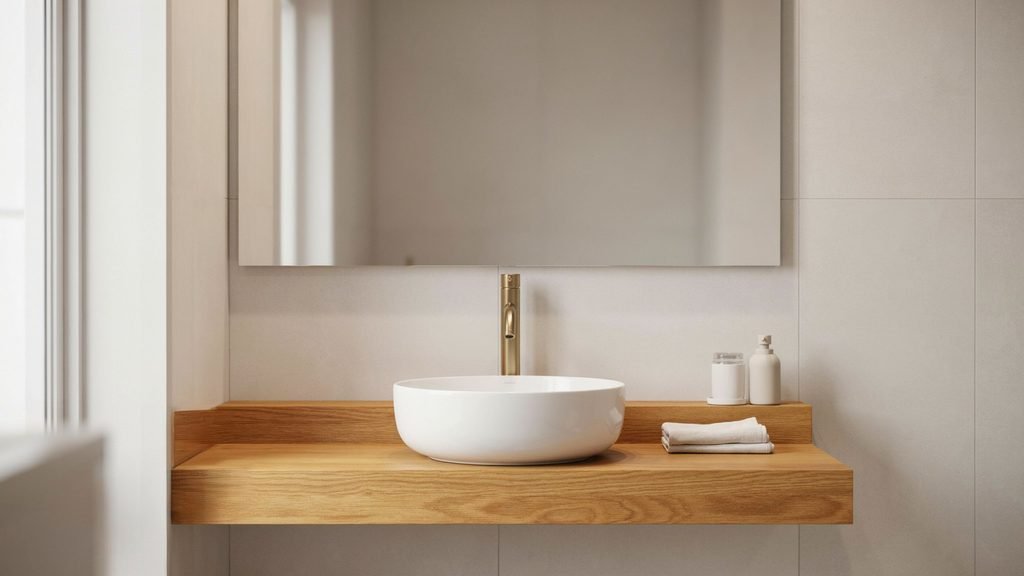
Quartz, granite, solid surface, and sealed natural stone are popular countertop choices for a bowl sink because they provide a stable surface and can handle normal bathroom use when properly installed and maintained. The best material depends on your budget, moisture exposure, cleaning routine, and the weight of the sink.
A countertop for a vessel basin needs more than an attractive finish. It must support the bowl securely, accommodate the faucet and drain, and resist water around the sink’s base. When choosing materials for a bathroom vanity with bowl sink, consider both appearance and everyday maintenance.
1. Quartz Countertops
Quartz is an engineered surface made from mineral particles and binding resins. It is available in many colors and patterns, including designs that resemble marble.
Why it works well:
- Its nonporous surface resists many common stains.
- It is easy to clean with a soft cloth and a mild cleaner.
- Its consistent patterns suit modern and traditional bathroom designs.
Quartz is a practical choice for a busy family bathroom where toothpaste, soap, and cosmetics may collect around the bowl. However, it is not completely heat-proof, and standing water should still be wiped away. Follow the manufacturer’s care instructions.
2. Granite Countertops
Granite countertops bring a natural character to the bathroom, with each slab featuring its own blend of colors, grains, and markings. Their sturdy construction makes them a practical option for supporting a vessel basin while adding an individual touch to the vanity area.
What to know before choosing granite:
- Some granite varieties need periodic sealing.
- Water spots and soap residue can show on darker or polished finishes.
- The cabinet must support the combined weight of the stone countertop and sink.
For example, if you choose a thick granite top with a heavy stone bowl, confirm the vanity’s weight capacity before installation. The sink, faucet, countertop, and supporting cabinet all need to work together safely.
3. Marble Countertops
Marble has natural veining that gives a bathroom a classic, upscale appearance. It pairs well with ceramic, porcelain, glass, and stone bowls, but it requires more care than many engineered surfaces.
Marble is vulnerable to etching from acidic products and can stain if spills are left unattended. Makeup, hair products, and certain bathroom cleaners may damage the finish.
Choose marble if you value its natural appearance and are comfortable following a regular care routine. Use products approved for marble and wipe up spills promptly.
4. Solid Surface Countertops
Solid surface countertops are manufactured from blended materials that create a smooth, often seamless-looking finish. They come in different colors and may be easier to repair than some natural stone surfaces, depending on the product and type of damage.
They can work well with a simple vessel bowl because the surface keeps attention on the sink itself. Minor scratches may be repairable on some products, but the manufacturer’s instructions should guide cleaning and repairs.
5. Laminate Countertops
Laminate is often a budget-friendly choice for bathroom renovations. It comes in a wide range of patterns, including finishes that imitate wood or stone.
However, the edges and cutouts need careful protection from moisture. Water that enters damaged seams can cause the substrate to swell, so the sink base and faucet openings must be sealed according to the installation instructions.
Laminate may suit a guest bathroom or a low-cost renovation, provided the bowl is properly supported and water is not allowed to collect around the mounting area.
How Do You Choose the Right Countertop Material?
Before making a final decision, compare these practical factors:
- Moisture resistance: Choose a surface that suits your bathroom’s daily water exposure.
- Sink weight: Check the countertop and cabinet’s load capacity, especially for stone bowls.
- Maintenance: Decide whether you prefer a low-maintenance engineered surface or are willing to seal and care for natural stone.
- Faucet placement: Make sure the countertop has enough room for the faucet, drain, and comfortable handwashing.
- Budget: Include fabrication, cutouts, installation, and any required sealing in your total cost.
A bathroom vanity with bowl sink should have a countertop that supports the basin securely and leaves enough room for practical use. The right material will depend on the sink design as much as the bathroom’s overall style.
If you are considering a natural wood surface, our guide to butcher block bathroom vanities explains the moisture protection and upkeep that wood surfaces require.
How Do You Choose the Right Vanity Height and Bowl Size?
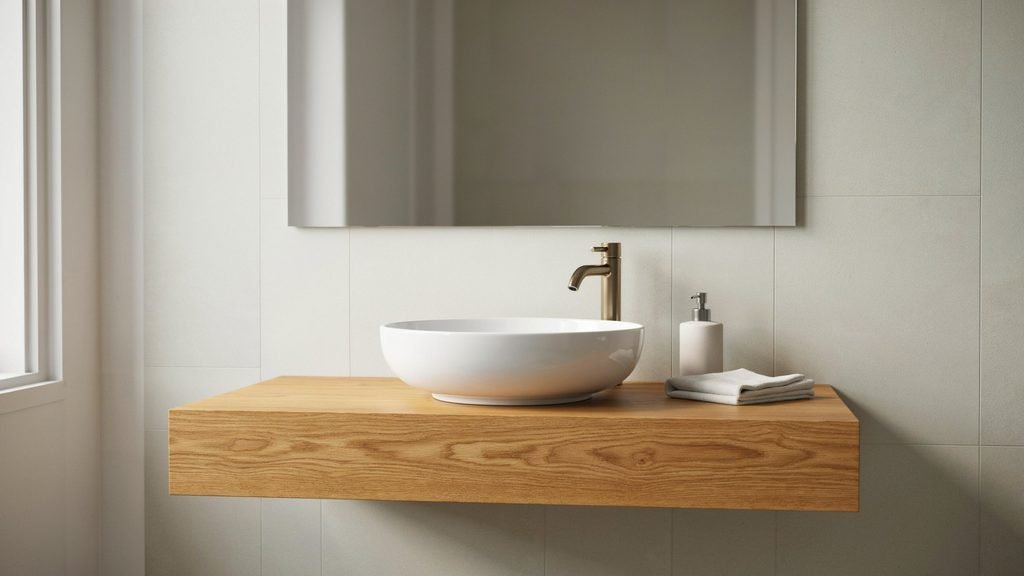
Choose a vanity height and bowl size that allow comfortable handwashing while leaving enough countertop space for daily essentials. For a vessel sink, measure the combined height of the cabinet, countertop, and bowl before buying.
Key Measurements to Check
- Vanity height: Standard bathroom vanities are often around 30–36 inches tall. A vessel bowl adds extra height, so check the finished measurement.
- Bowl diameter: A bowl around 14–18 inches wide may suit many bathrooms, but the right size depends on the countertop and sink shape.
- Bowl depth: Choose a basin deep enough for handwashing without excessive splashing.
- Countertop space: Leave room for soap, toiletries, and the faucet.
- Faucet reach: Make sure the water stream falls comfortably inside the bowl.
- Bathroom clearance: Check door swings, drawer access, and walking space before installation.
Match the Size to Your Bathroom
- Small powder room: A compact bowl and narrow vanity can save space.
- Family bathroom: A wider countertop offers more room for daily use.
- Tall vessel bowl: Consider a shorter cabinet to keep the overall sink height comfortable.
For example, a 32-inch cabinet with a 5-inch-tall bowl creates a finished height of about 37 inches before accounting for the countertop. This may feel high for some users, so test the measurements against your needs.
Before choosing a bathroom vanity with bowl sink, compare the full dimensions rather than relying on the cabinet size alone. For additional planning, see our guide to common vanity sizes to help assess the available width and height.
What Plumbing and Faucet Setup Does a Bowl Sink Need?
A vessel basin needs a compatible drain assembly, properly connected water supply lines, and a faucet that fits the bowl’s height and shape. Correct measurements help prevent leaks, poor water flow, and splashing onto the countertop.
1. Choose the Right Faucet
- Tall vessel faucet: Provides clearance above a raised basin.
- Wall-mounted faucet: Saves counter space but requires suitable in-wall plumbing.
- Deck-mounted faucet: Fits on the countertop when enough space is available.
Check the spout reach and water flow to ensure water lands near the center of the bowl.
2. Check the Drain Assembly
- Match the drain fitting to the basin’s drain opening.
- Choose a compatible pop-up or grid drain.
- Check whether the sink has an overflow hole before buying the drain.
- Use suitable seals to prevent water from leaking around the drain.
3. Confirm the Plumbing Connections
- Check hot and cold water supply lines.
- Make sure the drain aligns with the P-trap.
- Leave enough cabinet space for pipes and fittings.
- Test all connections for leaks after installation.
4. Measure Before Installation
For example, a vessel bowl that rises 5 inches above the countertop may require a taller faucet than a recessed basin. Measure the bowl height, faucet reach, and clearance before purchasing the fixtures.
If the installation requires moving water lines or changing drain positions, a licensed plumber can help ensure the work meets local plumbing codes.

How Much Counter Space Do You Need Around a Bowl Sink?
A bowl sink needs enough countertop space for the faucet, soap dispenser, and everyday toiletries without making the basin difficult to use. The right amount depends on the sink’s diameter, vanity width, and faucet placement.
Key Measurements to Consider
- Side space: Leave practical room beside the bowl for soap and small bathroom essentials.
- Front clearance: Keep enough space in front of the basin for comfortable handwashing.
- Faucet placement: Make sure the spout reaches over the bowl without hitting its rim.
- Back clearance: Allow room for the faucet, backsplash, and cleaning.
- Bowl diameter: A 16-inch bowl on a 30-inch countertop leaves about 14 inches of total width outside the bowl, before accounting for its exact position and faucet.
Choose a Practical Layout
For a small guest bathroom, a compact round vessel sink may leave more usable counter space than a wide rectangular bowl. Avoid placing the basin too close to the edge, where splashes can reach the floor or water can run onto the cabinet.
Before choosing a countertop, measure the sink, faucet, and available vanity width together. A well-planned layout makes daily use easier and leaves enough room to clean around the basin.
What Are the Pros and Cons of a Bathroom Vanity With a Bowl Sink?
A bowl sink vanity offers a range of design choices, but it also has a few practical drawbacks. Consider the benefits and limitations before choosing one for your bathroom.
Pros of a Bowl Sink Vanity
- Distinctive appearance: A raised vessel basin adds visual interest and works well with modern, rustic, and traditional decor.
- Variety of designs: Choose from round, oval, square, and rectangular bowls made from ceramic, porcelain, glass, or stone.
- Flexible countertop choices: Pair the basin with quartz, granite, or other suitable countertop materials.
- Easy style updates: Some vessel bowls can be replaced without replacing the entire countertop, depending on the mounting and plumbing.
- Suitable for guest bathrooms: A carefully sized bowl can create an attractive focal point in a powder room.
Cons of a Bowl Sink Vanity
- Extra height: A 32-inch vanity with a 5-inch bowl may place the sink surface around 37 inches high, excluding countertop thickness.
- More cleaning: Water and soap residue can collect around the bowl’s base, requiring regular wiping.
- Faucet compatibility: The faucet must have enough height and reach to direct water into the basin properly.
- Splashing concerns: A shallow bowl or poorly positioned faucet can send water onto the countertop.
- Possible installation costs: New drain fittings, faucet changes, or plumbing adjustments can increase the total cost.
Final verdict: A bowl sink can give your bathroom a more individual look, but it may require more attention during daily cleaning. Before choosing one for a busy family bathroom, consider how high the basin will sit, how deep it is, and whether the faucet provides enough reach for comfortable use.
How Do You Keep a Bowl Sink Vanity Clean and Practical?
Keeping a bathroom vanity with bowl sink clean requires regular wiping, gentle cleaning products, and proper care around the basin’s base. Daily attention helps prevent water spots, soap buildup, and moisture damage to the countertop.
Clean the bowl with a soft cloth and a cleaner suitable for its material. Ceramic and porcelain sinks are generally easy to maintain, while glass bowls may show water spots and fingerprints more clearly. Natural stone basins need products made for stone to avoid damaging the finish.
Pay attention to the area where the vessel sink meets the countertop. Water can collect around this joint after handwashing, leaving soap residue or creating moisture problems if it stays wet. Wipe the area dry and check the seal periodically for signs of wear. The EPA’s guide to mold, moisture, and your home also explains why controlling moisture and addressing leaks promptly are important for maintaining a healthy indoor environment.
The countertop also needs proper care. Use a cleaner recommended for quartz, granite, marble, or laminate, as each surface has different maintenance needs. Avoid harsh chemicals and abrasive scrubbers unless the manufacturer confirms they are safe for that material.
For everyday use, keep hand soap and toothbrushes in a small tray rather than spreading them around the bowl. Check the faucet connections and drain occasionally for leaks. Even a small drip can damage cabinet finishes over time, especially if water collects inside a vanity cabinet.
With simple cleaning habits and suitable products, a bowl sink can remain attractive and practical for years. Choose the right care routine for the sink and countertop materials rather than using the same cleaner on every surface.
Is a Bathroom Vanity With a Bowl Sink Right for Your Bathroom?
A bathroom vanity with a bowl sink is a good choice if you want a distinctive design, flexible bowl styles, and a countertop that complements your bathroom decor. However, it may not suit every space, especially if you prefer low-maintenance fixtures or have limited countertop room.
A vessel basin can work well in a guest bathroom or modern master bath. For example, a 30-inch vanity may fit a compact room, but the bowl’s diameter, faucet reach, and total sink height must leave enough room for comfortable handwashing.
Before buying, consider your storage needs, plumbing layout, countertop material, and cleaning routine. If the bathroom is used by children or several family members, check that the raised bowl is comfortable for everyone.
Final tip: Measure your available space and compare the basin’s height and depth before choosing a design. The right combination should look good while remaining practical for everyday use.
Conclusion
The right bowl sink can enhance your bathroom’s appearance while making daily washing and grooming more convenient. Before making a decision, consider comfort, cleaning, materials, and available space rather than appearance alone. The right design should suit your routine and make the room more practical. Choose a vanity that not only looks good but also works well for your home.
FAQs
Are bowl sinks still in style?
Yes, bowl sinks remain popular in modern and contemporary bathrooms. Ceramic, stone, and glass vessel sinks add a decorative touch when paired with a suitable vanity and faucet.
What is the current trend for bathroom vanities?
Floating vanities, natural wood finishes, warm neutral colors, simple cabinet fronts, and quartz countertops are popular choices. Homeowners also value practical storage and easy-to-clean designs.
What are the drawbacks of a floating vanity?
A wall-mounted vanity needs secure installation to support its weight and daily use. Depending on its design, it may provide less cabinet space than a floor-standing unit. Installation can also become more expensive if the wall needs extra support or the existing plumbing must be adjusted.
Where is the best place to buy bathroom vanities?
Home improvement stores, bathroom showrooms, and reputable online retailers are good options. Compare dimensions, materials, warranties, delivery costs, and return policies before purchasing.
Who has better bathroom vanities, Lowe’s or Home Depot?
Both offer a range of bathroom vanities at different price points. The better choice depends on the specific model, construction quality, available sizes, warranty, and customer reviews.
Which company makes the best bathroom vanities?
There is no single best manufacturer for everyone. Compare brands based on cabinet materials, drawer construction, countertop quality, warranty coverage, and your budget before deciding.
About the Author: Bilal Khan
Bilal Khan is a content writer interested in home improvement, bathroom design, and interior decor. He researches practical home-related topics and writes easy-to-understand guides to help readers explore different options for their living spaces. His focus is on clear information, useful tips, and everyday solutions for the home.
Pingback: Quartz Vanity Tops With Sink: Complete Buying Guide