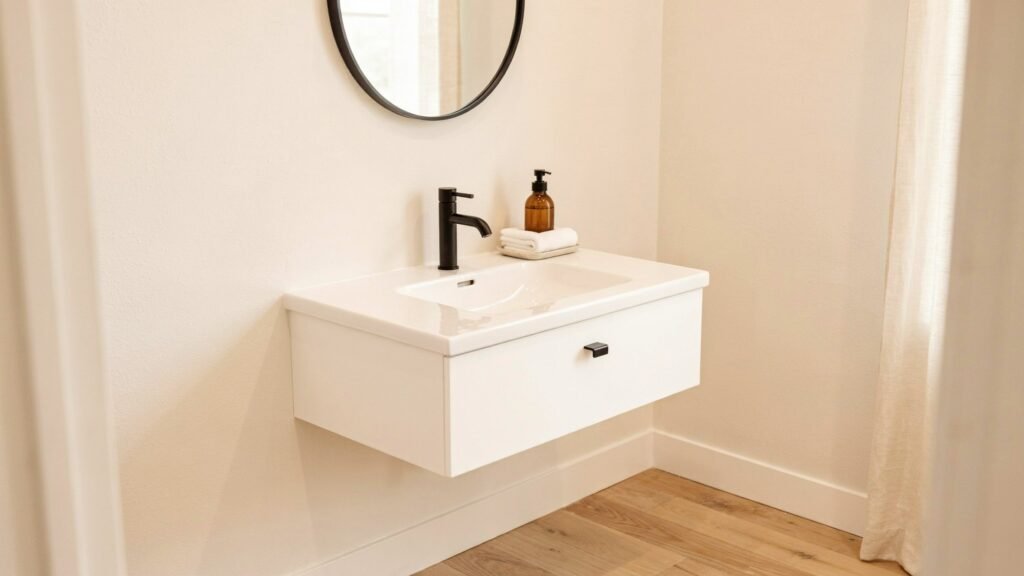

The cost to install bathroom vanity in a U.S. home depends on the vanity’s size, materials, labor requirements, and whether existing plumbing can stay in place. A simple replacement usually costs less than installing a custom vanity that requires new water lines, drain relocation, or wall repairs.
For a realistic budget, homeowners should separate the price of the vanity from installation labor and additional expenses. This guide explains average bathroom vanity installation cost, labor charges, removal fees, plumbing work, and practical ways to manage the project without sacrificing quality.
Table of Contents
How Much Does It Cost to Install a Bathroom Vanity?
Bathroom vanity installation costs around $400 to $2,200 for many projects, with an average near $1,500 when the vanity unit is included, according to Angi’s 2026 bathroom vanity installation cost guide. Simpler projects may cost less, while custom installations with significant plumbing or finish work can reach $4,000 or more.
Your final bathroom vanity installation prices depend on what the contractor includes in the estimate. A quote for labor alone is not directly comparable to a complete project price that includes a cabinet, countertop, sink, and faucet.
| Project type | General budgeting range |
| Basic replacement using an existing layout | 300–800 |
| Prefabricated vanity with installation | 400–2,200 |
| Custom vanity project | 1,000–4,000+ |
| Labor for a straightforward installation | 200–500 |
| More complex installation labor | 500–1,000+ |
These are planning ranges, not guaranteed prices or fixed national rates. Actual costs vary by location, product selection, and job complexity. Ask whether the estimate includes the vanity, sink, faucet, removal, plumbing, and disposal before comparing offers.
What Is Included in Bathroom Vanity Installation Costs?
A standard installation may include assembling the cabinet, positioning and leveling it, securing it to the wall, fitting the countertop, and connecting the sink and faucet. However, the exact scope depends on the vanity you purchase and the agreement with your installer.
The cost of labor and materials may cover several items:
- Vanity cabinet: A prefabricated unit generally costs less than custom cabinetry.
- Countertop: Laminate, cultured marble, quartz, and natural stone have different material and installation costs.
- Sink and faucet: Some vanities include a sink and countertop, while others require separate purchases.
- Installation hardware: Fasteners, brackets, sealants, and small plumbing components may be needed.
- Plumbing connections: Existing water supply lines and drain connections may need new fittings or replacement parts.
- Finishing work: Caulking, backsplash installation, trim, and minor wall repairs can add to the bill.
Before hiring anyone, ask for an itemized quote showing which materials are included and which are billed separately.
Your countertop choice can make a noticeable difference in the total. Explore these quartz vanity countertop options to understand how countertop material and appearance can influence your project budget.
How Much Does Bathroom Vanity Installation Labor Cost?
The bathroom vanity labor cost typically ranges from $200 to $500 for a straightforward installation of a prefabricated unit. More complex projects may cost $500 to $1,000 or more in labor, especially when custom fitting, heavy countertops, or additional plumbing work is required. Your final bathroom vanity installation cost will depend on the project’s complexity and local contractor rates.
What Factors Affect Vanity Installation Labor Costs?
Several factors influence professional vanity installation cost, including the size of the cabinet, the condition of the existing bathroom, and the amount of work involved.
- Cabinet size and weight: Large or double-sink vanities may require additional time and help to position safely.
- Installation complexity: Custom cabinets and unusual dimensions can increase labor requirements.
- Plumbing adjustments: Moving drainpipes or water supply lines can add to the total expense.
- Local labor rates: Contractor charges vary by location and experience across the United States.
- Old vanity removal: Removing the existing cabinet and arranging disposal may increase the overall labor bill.
What Does Bathroom Vanity Installation Labor Include?
A standard installation may involve several tasks beyond placing the cabinet in position. Confirm which services are covered by your contractor’s estimate.
- Unpacking and assembling the vanity cabinet.
- Positioning the unit and checking that it sits level.
- Fastening the cabinet securely to suitable wall framing.
- Installing the countertop and sink.
- Connecting the faucet, water supply lines, and drain assembly.
- Sealing appropriate joints and checking connections for leaks.
A carpenter or experienced vanity installer may handle cabinet mounting and countertop placement. A qualified plumber is generally appropriate when the job involves modifying water supply lines, drainage, or other plumbing components.
Do Labor Estimates Include Plumbing and Removal Costs?
Not always. Some contractors quote only for cabinet installation, while others include sink fitting, plumbing connections, and removal of the old vanity. This difference can affect the bathroom vanity replacement cost and make two estimates difficult to compare.
Before hiring a professional, ask for an itemized quote that separates installation labor, plumbing charges, materials, and old vanity disposal. This helps you understand the actual cost of labor and materials and reduces the risk of unexpected bathroom renovation expenses.
How Much Does Bathroom Vanity Installation Cost by Size?

The size of the vanity affects material expenses, installation time, and the number of plumbing connections. Larger units may also require additional support and more careful handling during installation.
The following ranges are broad planning estimates for prefabricated vanities with countertops. They are not labor-only prices.
| Vanity size and configuration | Approximate unit cost |
| 24–30-inch single vanity | 100–500 |
| 36–48-inch single vanity | 400–900 |
| 48–60-inch single vanity | 500–1,800 |
| 48–60-inch double vanity | 550–2,200 |
| Large or custom vanity | 1,000–3,000+ |
Installation labor and extra work may increase these amounts. Custom cabinetry, premium countertops, and complicated plumbing can push a project above the ranges shown.
A single sink vanity installation cost is often lower because it generally requires fewer fixtures and less countertop space. A double sink vanity installation cost can be higher because it may need two faucets, two drain connections, a wider cabinet, and a larger countertop.
Before buying a unit, measure the available wall space, cabinet depth, and clearance around doors and other fixtures. This common vanity sizes guide can help you check dimensions before requesting installation estimates.
How Does Vanity Type Affect Installation Costs?
The type of vanity you choose affects both the purchase price and the work needed to install it. A standard freestanding cabinet is often simpler to fit than a floating or custom-built design.
Freestanding vanities: These rest on the floor and are often easier to install when the new unit fits the existing space and plumbing arrangement.
Wall-mounted or floating vanities: These require suitable wall support and secure mounting. Depending on the wall construction and plumbing layout, installation may need additional preparation.
Custom vanities: These are made to suit a specific space or design. Custom dimensions, countertop fabrication, and fitting work can increase the project total.
Double vanities: These provide two sink positions but usually need a wider cabinet and more fixtures. Costs depend on whether the existing plumbing supports both sinks.
Unfinished vanities: These may cost less upfront, but staining, painting, sealing, or other finishing work adds time and expense. Read this guide to choosing and finishing an unfinished bathroom vanity before deciding whether it suits your budget.
For the most predictable installation, choose a vanity that fits your room and existing connections without requiring major layout changes.
How Much Does It Cost to Replace an Existing Bathroom Vanity?
The bathroom vanity replacement cost depends on whether the old cabinet can be removed without damaging surrounding finishes and whether the new unit fits the existing space.
For a straightforward replacement, homeowners may budget around 300–800 for a basic installation when the vanity is already purchased and the plumbing remains in place. A complete project that includes a new cabinet, countertop, sink, faucet, labor, and finishing work can cost considerably more.
The cost to replace bathroom vanity may include these tasks:
- Disconnecting the water supply and drain.
- Removing the existing countertop and cabinet.
- Transporting and disposing of the old unit.
- Repairing damaged drywall, tile, or flooring.
- Installing and securing the replacement vanity.
- Reconnecting fixtures and testing for leaks.
The bathroom vanity removal cost alone may range from roughly $115 to $500, depending on the weight of the old unit, access, and disposal requirements. Heavy stone countertops and built-in cabinetry may require more work.
Before replacement, compare the old and new vanity measurements. A different width or depth can expose unfinished flooring or wall areas, creating extra repair costs. Also confirm that the new cabinet provides enough space for existing pipes.
What Additional Costs Can Affect Vanity Installation?
Additional expenses can raise the total even when the cabinet installation itself seems straightforward. Include a contingency in your budget for issues discovered after the old vanity is removed.
Common extra costs include:
- Old vanity disposal: Removal and hauling fees may be separate from installation labor.
- Countertop and sink: These may not be included with the cabinet.
- Faucet and hardware: New fixtures, drain assemblies, and supply lines can add to material costs.
- Backsplash: Installing or replacing a backsplash adds material and labor expenses.
- Wall and floor repairs: Water damage, uneven surfaces, or exposed flooring may need attention.
- Electrical work: Lighted mirrors, outlets, or other electrical changes require appropriate professional work.
- Permits and Building Code Compliance: Depending on the installation work, local regulations may require permits or specific plumbing and building standards to be followed.
Bathroom vanity plumbing cost can also rise if old valves, drains, or supply lines need replacement. A project that appears to involve only a cabinet may reveal damaged pipes or moisture problems after removal.
If you plan to add wall protection behind the sink, review these bathroom vanity backsplash ideas before choosing a material. Planning the backsplash alongside the countertop can help avoid mismatched finishes and unplanned installation work.
How Do Plumbing Changes Affect Bathroom Vanity Installation Costs?
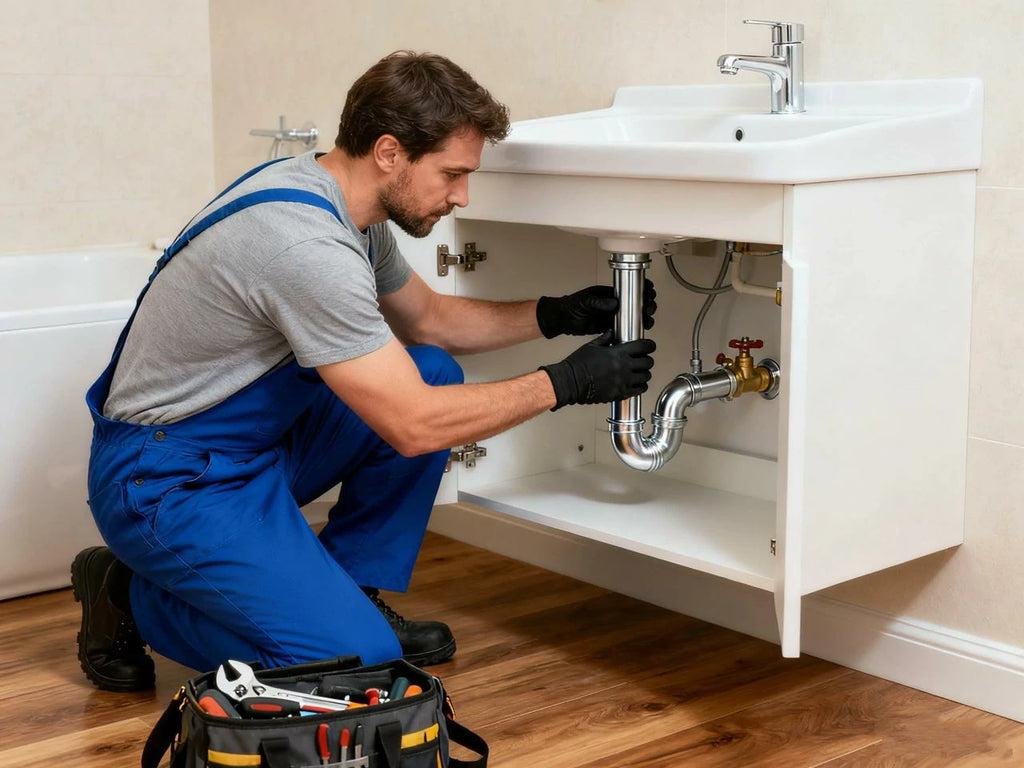
Plumbing changes can increase the cost of installing a bathroom vanity, especially when the new cabinet does not align with the existing drain and water supply connections. Keeping the sink in its current position is generally more affordable than relocating pipes or modifying the plumbing layout.
What Plumbing Work May Be Needed During Vanity Installation?
Depending on the condition of your existing plumbing and the design of the new vanity, a plumber may need to perform several tasks:
- Connect the sink drain and water supply lines.
- Replace worn shutoff valves or damaged supply hoses.
- Adjust the drain trap to fit the new sink configuration.
- Relocate water lines or drainage pipes to match the new layout.
- Test the connections for leaks and confirm proper drainage.
How Much Does Plumbing Work Add to the Installation Cost?
Plumber charges for vanity installation vary according to local labor rates, the time required, and the complexity of the work. Connecting a sink to existing plumbing is usually simpler than moving pipes inside a wall or changing the drain location.
Relocating plumbing can add several hundred dollars or more to the project, depending on the required modifications. Wall repairs and replacement materials may increase the total further.
Before budgeting for new plumbing, check whether the replacement vanity fits the existing connections. Choosing a compatible cabinet can help control your bathroom vanity plumbing cost and reduce unnecessary work.
When Should You Hire a Professional Plumber?
A qualified plumber can help when drainpipes need relocation, water lines require modification, or existing connections show signs of damage. Where required, use a licensed professional and follow applicable local plumbing codes.
Ask for a separate plumbing estimate that identifies labor, materials, and any necessary repairs. This makes it easier to distinguish plumbing expenses from cabinet installation costs.
How Can Vanity Design Help Reduce Plumbing Costs?
Choosing a vanity that works with your existing bathroom layout can help limit additional plumbing expenses. Before purchasing a cabinet, compare its dimensions and sink position with your current connections.
For more guidance on choosing a suitable cabinet, read our guide to common bathroom vanity sizes. Selecting an appropriate size can help you plan the available space and determine whether plumbing adjustments may be needed.
Is DIY Bathroom Vanity Installation Cheaper Than Hiring a Professional?
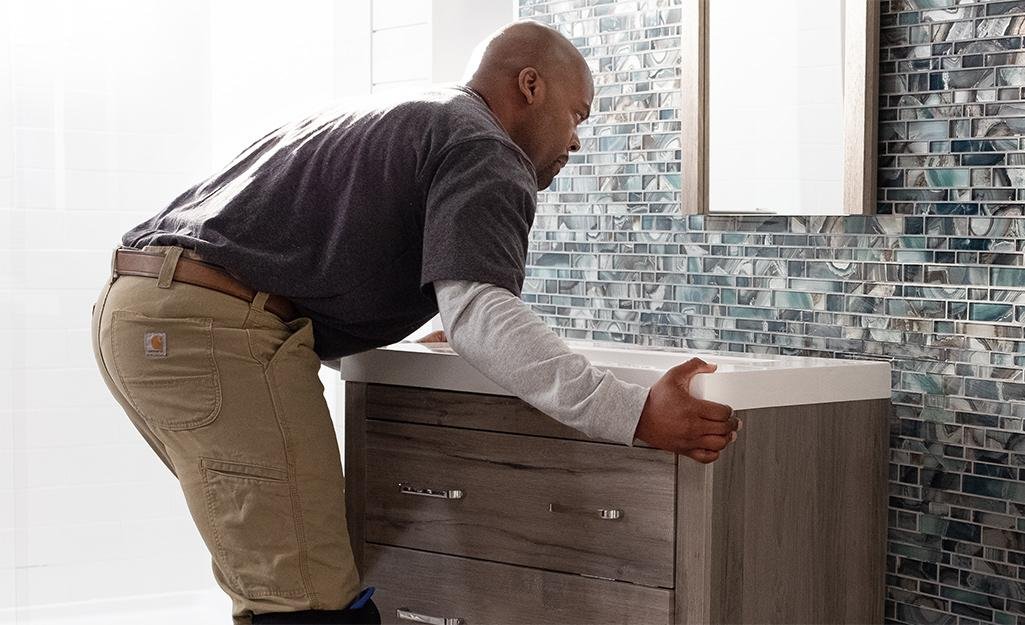
DIY versus professional installation comes down to your skills, the complexity of the job, and the risk of mistakes. Installing a small prefabricated vanity can be manageable for an experienced homeowner when the existing plumbing and layout remain unchanged.
DIY work may reduce labor expenses, but you still need to pay for the cabinet, hardware, fixtures, and any tools or supplies you do not already own.
DIY may be reasonable when:
- The vanity is small and relatively lightweight.
- The existing plumbing connections align with the new unit.
- You can position the cabinet evenly and fasten it firmly in place to ensure stability.
- You understand the manufacturer’s installation instructions.
Professional installation is preferable when:
- The vanity is heavy, wall-mounted, or custom-built.
- Plumbing lines need modification.
- The wall or floor has water damage.
- The project requires electrical adjustments or precise installation of a custom countertop.
Incorrect connections can cause leaks and hidden water damage, while poor mounting can make a cabinet unstable. A professional may also provide insurance coverage or a workmanship warranty, depending on the contractor’s terms.
If you choose DIY installation, turn off the water before disconnecting fixtures and follow safe installation procedures. Leave complex plumbing and electrical tasks to qualified professionals.
How Can You Estimate and Reduce Bathroom Vanity Installation Costs?
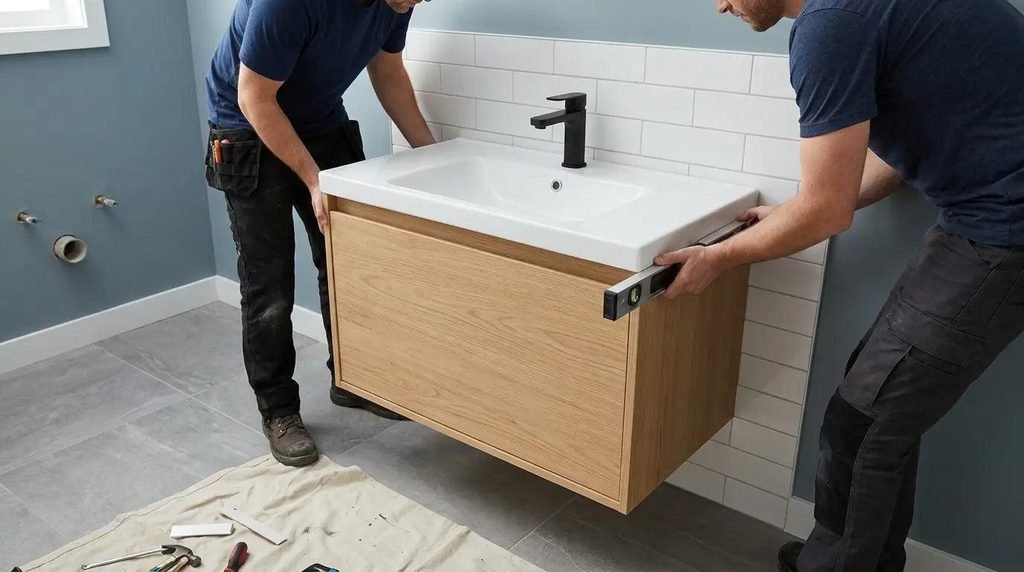
A reliable vanity installation estimate starts with accurate measurements and a clear list of everything you want included. Comparing contractor estimates and labor rates is easier when each professional prices the same scope of work.
Use these steps to plan your budget:
- Measure the space. Record the available width, depth, height, and location of plumbing connections.
- Choose the vanity type. Compare prefabricated, custom, freestanding, and wall-mounted options.
- List the required materials. Include the cabinet, countertop, sink, faucet, drain assembly, and hardware.
- Request itemized estimates. Ask contractors to separate labor, materials, removal, plumbing, and disposal.
- Check local pricing. Local labor rates in the United States vary with location, demand, and contractor experience.
- Allow for unexpected expenses. Keep a contingency for repairs or changes discovered during removal.
You can reduce expenses by choosing a vanity that matches your existing plumbing, selecting a standard size, and avoiding unnecessary layout changes. Prefabricated cabinets and countertops may also cost less than custom options.
Compare quotes carefully rather than automatically choosing the lowest price. Confirm the installation timeline, warranty, insurance, and who is responsible for plumbing connections and old-unit disposal.
The most economical option is not always the cheapest cabinet. A properly sized vanity with compatible plumbing and durable materials can help limit future repairs and make the project easier to complete within budget.
Final Thoughts
The cost to install bathroom vanity depends on the cabinet, materials, labor, and any additional plumbing or repair work. A basic replacement can be relatively affordable when the existing layout works, while custom designs and plumbing changes can raise the total substantially.
Before committing, measure your space, compare itemized estimates, and confirm exactly what each quote includes. Choosing a vanity that complements your bathroom design and available space can help you avoid unnecessary adjustments. Careful planning makes it easier to select a practical vanity that meets your needs and stays within a realistic budget.
FAQs
1. How much does it cost to remove and install a bathroom vanity?
Removing and installing a bathroom vanity typically costs 400–2,200, including the vanity and labor. Removing the old unit alone may cost 115–500.
2. How much does Home Depot charge to install a bathroom vanity?
Home Depot does not publish one fixed national installation price. The cost depends on the vanity, labor, and plumbing requirements, so you’ll need a quote.
3. How much does Lowe’s charge to install a bathroom vanity?
Lowe’s installation costs vary by location, vanity type, and project complexity. Contact Lowe’s for a quote based on your bathroom and installation needs.
4. How much do plumbers charge to install a bathroom sink?
A plumber may charge around 125–450 for a typical sink-related job. The final cost depends on local labor rates and whether plumbing changes are needed.
5. What is the average labor cost to install a vanity and sink?
Labor for a straightforward vanity and sink installation may cost 200–500. Custom installations or complicated plumbing work can cost considerably more.
6. How much does it cost to install a bathroom sink and vanity?
Installing a bathroom sink and vanity can cost approximately 400–2,200, including the vanity and labor. Premium materials, plumbing changes, and old-unit removal can increase the total.
7. Do I need a plumber to install a bathroom vanity?
Not always. A handyman or vanity installer may handle a straightforward replacement if the existing plumbing fits. Hire a qualified plumber for relocated drains, new water lines, plumbing repairs, or work requiring a licensed professional.
About the Author
Bilal Khan — Home Decor Content Writer
Bilal Khan writes informative, reader-focused content about bathroom vanities, home decor, and interior design. He aims to make home improvement topics easier to understand by presenting practical guidance, clear explanations, and useful planning considerations for homeowners.