
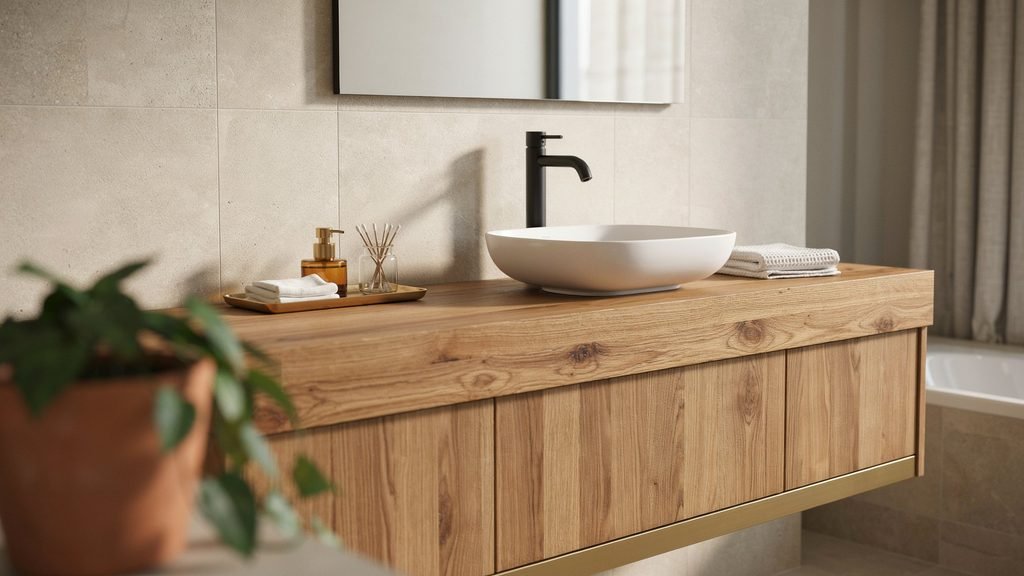
A butcher block bathroom vanity adds natural wood grain, warmth, and character to a bathroom while creating a distinctive alternative to traditional stone countertops. It can complement modern, farmhouse, rustic, and minimalist interiors, but wood needs proper protection against water and humidity. Before choosing this style, consider the countertop material, sink design, protective finish, and maintenance requirements. This guide explains how to select, install, and care for a butcher block vanity so it fits your bathroom’s design and everyday needs.
Table of Contents
1. What Is a Butcher Block Bathroom Vanity?
A butcher block bathroom vanity uses a countertop made from solid wood strips or blocks joined together to create a thick, durable-looking surface around a bathroom sink. The countertop typically rests on a vanity cabinet or supporting frame and may be paired with drawers, open shelves, or enclosed storage.
Although butcher block is commonly associated with kitchen countertops, it can also be used in bathrooms when the wood and finish are suitable for the environment. Its visible grain creates a natural appearance that differs from the uniform patterns of many manufactured surfaces.
Common design features include:
- Wood strip construction: Individual pieces of wood are joined to form a countertop.
- Visible natural grain: Different grain patterns and shades give the surface its character.
- Multiple finish options: Clear coatings, stains, and suitable wood finishes can change its appearance.
- Flexible vanity styles: The countertop can work with traditional cabinets, floating vanities, or open shelving.
- Custom sizing: Wood tops can sometimes be cut to fit a particular vanity layout, provided the manufacturer allows it and the cut edges are properly finished.
A butcher block top is not automatically waterproof. Its performance around a bathroom sink depends heavily on the wood construction, finish, installation details, and how consistently standing water is removed.
2. Why Choose a Butcher Block Vanity for Your Bathroom?
A butcher block vanity offers a natural look and design flexibility that can make a bathroom feel more inviting. It is particularly appealing to homeowners who want wood textures instead of an entirely stone, tile, or synthetic interior.
Adds Warmth and Natural Texture
Wood introduces visual warmth into bathrooms that might otherwise feel cold or overly uniform. Its grain and color variations can soften the appearance of white tile, porcelain sinks, and smooth countertops.
For example, a light oak vanity top can complement cream walls and brushed brass fixtures, while a walnut surface creates a richer contrast with white cabinetry. The best combination depends on the bathroom’s lighting, flooring, and existing finishes.
Works With Different Interior Styles
A wood countertop can suit several bathroom design approaches without requiring an elaborate renovation.
- Modern bathrooms: Pair a clean-edged wood top with simple hardware and a frameless mirror.
- Farmhouse bathrooms: Combine natural wood with white cabinets, classic fixtures, and understated decorative details.
- Rustic interiors: Choose a pronounced grain pattern and coordinate it with stone-inspired tiles.
- Minimalist spaces: Use a simple countertop with uncluttered surfaces and neutral colors.
If you prefer a softer color palette, explore these sage green bathroom vanity ideas for inspiration on combining natural finishes with muted cabinet colors.
Can Be Customized
Depending on the product and construction, a butcher block countertop may be cut, sanded, stained, or refinished to achieve a particular look. This flexibility can help when coordinating a vanity with existing bathroom furniture.
However, not every countertop is suitable for every modification. Follow the manufacturer’s cutting and finishing instructions, particularly when making openings for sinks and faucets.
Can Be Renewed in Some Cases
Certain solid wood countertops can be sanded and refinished when their surfaces develop minor scratches or wear. Whether this is possible depends on the thickness of the wood, the construction, and the existing finish.
If the sealant is badly worn or the wood has deteriorated, routine cleaning may not be enough to restore the surface. Extensive moisture damage, unstable joints, or noticeable changes in the wood’s shape may require expert repairs or a full replacement.

3. What Are the Best Wood Types for a Butcher Block Bathroom Vanity?
The best wood depends on the appearance you want, the construction quality, and how much moisture the countertop will encounter. No wood species should be treated as completely waterproof simply because it is naturally dense or durable.
Maple
Maple typically has a light color and relatively subtle grain, making it suitable for clean, understated bathroom designs. Its appearance works well with white cabinets, gray tile, and neutral accessories.
Maple still requires a finish appropriate for bathroom use. Pay close attention to the sink opening, faucet holes, and exposed edges because these areas can allow water to reach the wood.
Oak
Oak offers a recognizable grain pattern that can add texture to modern or traditional interiors. Light oak works with Scandinavian-inspired spaces, while darker finishes can complement more traditional cabinetry.
Choose a suitable protective coating and keep the surface clean and dry. The final result depends on the specific oak species, construction, and finishing method.
Walnut
Walnut is known for its rich brown tones and distinctive grain. It can create contrast against a white sink or pale countertop accessories without relying on bold colors.
Because walnut often has a deeper natural color, it may be a good choice for a bathroom where the vanity is intended to become a visual focal point. Proper sealing and routine care remain essential.
Acacia
Acacia can display varied grain patterns and warm shades, ranging from golden brown to deeper tones. It can suit rustic, contemporary, and natural-inspired bathrooms.
Its moisture performance depends on the specific wood, construction, and protective finish. Do not rely on the species alone to protect the countertop from repeated splashes.
When comparing wood options, examine the quality of the joined strips, surface finish, thickness, and manufacturer’s care recommendations rather than choosing by color alone.
4. How to Protect a Butcher Block Bathroom Countertop From Water
Protecting the wood from moisture is essential when installing a wooden countertop near a bathroom sink. Without a suitable protective finish, water may seep into the wood and its edges, leading to stains, swelling, peeling sealant, or deterioration where individual wood pieces are joined together.
Seal Every Exposed Surface
The protective finish should cover more than the visible top. Depending on the product and finishing system, the underside, side edges, sink cutout, faucet openings, and other exposed areas may also need protection.
Follow the countertop manufacturer’s instructions for the selected finish. A coating intended for a dry furniture surface may not be appropriate for a bathroom countertop that receives frequent splashes.
Protect Areas Around the Sink
Water often gathers around the edges of the sink and where the faucet meets the countertop. If these areas are not fitted and sealed properly, moisture can seep beneath the surface and gradually harm the wood.
Choose sealants that are suitable for the countertop and sink materials, and seal around the sink or backsplash wherever needed. Always follow the manufacturers’ installation and sealing guidelines to help prevent water from getting into the wood.
Remove Standing Water Promptly
Even a well-finished countertop benefits from basic care. Wipe up water around the faucet, soap dispenser, and sink rim instead of leaving puddles to evaporate naturally.
Also avoid leaving wet washcloths or damp containers on the wood for long periods. These habits help reduce prolonged moisture exposure.
Maintain Bathroom Ventilation
Bathroom humidity can affect wood even when the countertop is not directly splashed. Use an appropriate exhaust fan during showers and follow its recommended operating guidance to help manage moisture.
The National Kitchen & Bath Association’s guide to choosing a bathroom vanity top discusses wood’s vulnerability to water and the importance of protecting areas around plumbing fixtures.

5. Which Sink Style Is Suitable for a Butcher Block Bathroom Vanity?
The right sink should complement the look of a butcher block bathroom vanity while making everyday use and moisture control manageable. Before choosing a basin, consider the countertop cutout, installation requirements, available workspace, and how easily you can protect the wood from water.
Vessel Sink
A vessel sink rests above the countertop, making the natural wood grain a visible part of the overall design. Its raised profile can give the bathroom a modern, decorative look without concealing much of the countertop.
Depending on the basin design, this style may require only a small opening for the drain. However, water can collect around the bottom of the sink, so the contact area needs appropriate sealing. Check the basin’s height and faucet reach together to ensure comfortable use and reduce unnecessary splashing.
Drop-In Sink
A drop-in sink sits inside a prepared countertop opening, with its rim resting on the surrounding surface. It can be a practical option for a wooden vanity because the rim covers the edge of the cutout when installed correctly.
The joint around the sink still needs careful attention. If water passes through an unsealed gap, it may reach the exposed wood and cause damage over time. Use a sealing product approved for the materials and follow the sink manufacturer’s fitting instructions.
Undermount Sink
An undermount sink is secured beneath the countertop, leaving the top surface free of a raised rim. This creates a streamlined appearance and makes it easier to wipe countertop debris directly into the basin.
With a butcher block countertop, however, the exposed wooden edge around the sink opening requires thorough protection. The basin also needs suitable structural support, compatible mounting hardware, and a sealing method designed for the installation. Inspect the finish around this area regularly for signs of wear or moisture penetration.
How to Choose the Right Sink
Your preferred style should match your bathroom layout, maintenance routine, and countertop construction. A vessel sink emphasizes the wood’s appearance, while a drop-in sink offers a traditional fit. An undermount design provides a smooth countertop transition but requires particular care around the exposed cutout.
Before purchasing a basin, compare its dimensions with the available countertop space and check the manufacturer’s installation requirements. You can also review our guide to standard bathroom vanity depth to understand how countertop depth affects sink placement and usable space.
6. Butcher Block Bathroom Vanity Design Ideas
The right combination of wood, cabinetry, lighting, and fixtures can help a butcher block vanity fit naturally into your bathroom.
Natural Wood With a White Countertop Basin
A warm wood surface paired with a white vessel sink creates a simple contrast between natural grain and smooth porcelain. Keep the surrounding finishes neutral to let the materials stand out.
A round mirror and understated metal faucet can complete the look without making the vanity feel crowded.
Floating Butcher Block Vanity
A floating vanity uses wall-mounted support instead of a traditional floor-standing cabinet. A wood countertop can make this design feel warmer while the open floor area keeps the bathroom visually light.
Before installation, confirm that the wall structure and mounting hardware can safely carry the countertop, sink, cabinet components, and normal use. The wood top must also be suitable for the intended installation.
Butcher Block With Open Shelving
Combining a wood countertop with open shelves creates a coordinated look and provides accessible storage for towels and bathroom essentials.
Choose shelf materials that complement the countertop without requiring every surface to have the same finish. For example, a walnut top can work with a dark metal frame and neatly arranged neutral towels.
Dark Wood With Light Cabinets
A darker butcher block surface can add contrast to white or cream cabinetry. This arrangement works particularly well when the bathroom already includes light wall tiles or a pale floor.
Repeat one or two colors in the mirror frame, faucet, or accessories to create a coordinated appearance.
Compact Vanity for a Small Bathroom
A smaller butcher block countertop can add natural texture without overwhelming a powder room or compact bathroom. Keep decorative items limited and leave enough room around the sink for everyday use.
Before choosing a top, compare the available wall space and finished countertop dimensions. This guide to common bathroom vanity sizes can help you evaluate widths and overall proportions.
7. How to Choose the Right Vanity Size
The right countertop dimensions depend on the room layout, sink size, storage requirements, and available clearance. A butcher block top should fit the vanity base correctly while leaving enough space for comfortable use.
Measure the Width
Measure the available wall space and account for nearby doors, toilets, showers, and other fixtures. The countertop should not interfere with normal movement or access to adjacent features.
If you are replacing an existing vanity, measure the current unit and confirm whether the new design will use the same footprint.
Check the Depth
Countertop depth determines how far the vanity extends into the room. A deeper top may provide more usable surface area, while a shallower one can help preserve walking space.
Remember to include the sink and any overhanging countertop edges in your measurements. Review this guide to standard bathroom vanity depth for additional planning considerations.
Plan for the Sink and Faucet
The sink opening must fit the selected basin, while faucet holes need to match the fixture’s specifications. Check the position of existing water supply lines and the drain before cutting or ordering a custom countertop.
Do not cut a wood top until you have confirmed the sink dimensions and installation template.
Confirm Support and Plumbing Clearance
Butcher block can be substantial in thickness and weight. Make sure the vanity base or wall-mounted support is suitable for the finished assembly.
Allow enough room beneath the countertop for the drain trap, supply lines, and any drawers or shelves. If the plumbing needs to move, get an estimate from a qualified professional before starting the project.

8. How to Install a Butcher Block Bathroom Vanity
Installation requires careful measurement, stable support, accurate cutting, and suitable moisture protection. The exact process depends on whether you are replacing an existing countertop or building a new vanity.
- Measure and inspect the base. Confirm the cabinet dimensions, level, structural condition, and plumbing locations.
- Prepare the countertop. Follow the manufacturer’s instructions for acclimation, cutting, sanding, and finishing.
- Make the required openings. Use the correct templates for the sink and faucet, and protect every newly exposed edge.
- Apply the appropriate finish. Allow the specified curing time before installation or contact with water.
- Secure the countertop. Use a suitable fastening method that accounts for the countertop material and any expected wood movement.
- Install the sink and faucet. Follow the fixture instructions and use compatible seals where required.
- Check for leaks. Test the plumbing connections and inspect the surrounding wood for signs of water escaping.
Wood can expand and contract as humidity changes, so the fastening method should allow for movement where the countertop system requires it. Floating vanities may need professional installation, especially when the top and sink create a substantial load.
If the project involves relocating pipes, modifying electrical fixtures, or changing wall supports, consult appropriately qualified professionals and follow local requirements.
9. How to Clean and Maintain a Butcher Block Vanity
Regular care helps preserve the countertop’s appearance and protective finish. The correct maintenance routine depends on whether the surface has a film-forming coating, a penetrating finish, or another treatment.
- Dry the surface promptly: Use a clean, soft cloth to soak up splashes around the basin and faucet after each use, helping prevent moisture from lingering on the wood.
- Use suitable cleaners: Follow the manufacturer’s recommendations and avoid products that can damage the finish.
- Inspect the surface: Watch for dull patches, peeling, cracks, dark marks, or exposed wood.
- Keep the edges protected: Check the sink opening and backsplash joint for gaps or signs of deterioration.
- Maintain ventilation: Reduce excessive humidity and address plumbing leaks promptly.
- Refinish when needed: Repair worn areas according to the finish manufacturer’s instructions rather than applying a new coating over a damaged surface.
Do not assume every butcher block top needs the same oiling schedule. Some finishes require periodic reapplication, while others are maintained differently. Using the wrong product can reduce protection or interfere with a future refinishing job.
If the wood becomes swollen, the joined strips begin separating, or dark staining appears around the sink, investigate the cause before applying another finish. Persistent moisture may require repair beyond routine maintenance.
10. Butcher Block vs. Other Bathroom Vanity Countertops
Butcher block is one of several materials available for a bathroom vanity. The best option depends on the appearance you prefer, the amount of maintenance you can manage, and the conditions in your bathroom.
| Countertop material | Main advantage | Important consideration |
| Butcher block | Natural grain and a warm appearance | Requires careful moisture protection |
| Quartz | Consistent patterns and relatively low routine maintenance | Edges and joints still need proper installation |
| Granite | Natural stone patterns and a distinctive appearance | Some varieties require periodic sealing |
| Laminate | Wide range of colors and patterns | Water entering damaged seams can harm the underlying substrate |
| Solid surface | Seam options and a range of styles | Cleaning and repair depend on the specific product |
Butcher block may suit homeowners who value natural wood and accept its care requirements. Quartz or another suitable countertop material may be more practical for a heavily used bathroom where frequent water exposure and low maintenance are priorities.
Consider the entire installation rather than the material alone. A properly installed countertop with suitable joints and good ventilation will generally be easier to maintain than one with poorly protected edges or recurring leaks.

11. Is a Butcher Block Bathroom Vanity Worth It?
A butcher block bathroom vanity can be a worthwhile choice if you want natural texture, a customizable appearance, and a countertop that may be refinished when its construction allows. It works particularly well in carefully planned bathrooms where the wood can be protected from prolonged moisture.
However, it is not the most hands-off option. The surface needs appropriate sealing, careful installation around the sink, and regular attention to water and finish condition. Bathrooms with persistent humidity or frequent splashing require especially careful material selection and maintenance.
Before committing, compare the full cost of the countertop, sink, finish, installation, and future upkeep. If you prefer the look of wood but want less routine maintenance, compare it with other countertop materials before making a final decision.
FAQs
Can you use butcher block for a bathroom vanity?
Yes. Butcher block can be used as a bathroom vanity countertop when its construction and protective finish are suitable for the environment. Careful sealing, proper installation, and prompt removal of standing water are important.
Does a Butcher Block Bathroom Vanity Require Sealing?
Yes, a wooden vanity countertop needs an appropriate protective finish to help limit moisture absorption. Follow the wood countertop manufacturer’s care recommendations, and make sure the coating protects hidden surfaces, raw edges, the sink opening, and the holes drilled for the faucet.
What is the best wood for a bathroom vanity top?
Maple, oak, walnut, and acacia are possible options, depending on the desired appearance and construction. The best choice depends on the wood’s quality, finish, installation, and expected exposure to water rather than species alone.
Is butcher block cheaper than quartz?
The overall cost varies by wood species, countertop thickness, fabrication, sink cutouts, installation, and finish. Compare complete project estimates rather than assuming butcher block will always cost less than quartz.
How do you maintain a wood bathroom vanity top?
Wipe up standing water, use a compatible cleaner, maintain bathroom ventilation, and inspect the finish regularly. Reapply or repair the protective coating according to the product’s instructions.
Conclusion
A butcher block bathroom vanity adds natural texture and warmth to a bathroom, with wood grain that complements both modern and traditional interiors. To keep the countertop in good condition, choose suitable wood, apply the recommended protective finish, and pay close attention to areas around the sink where moisture can collect. Before making your final choice, review our guide to standard bathroom vanity depth to help plan a comfortable layout and ensure the countertop fits your space. With proper installation, regular care, and sensible moisture protection, a wooden vanity top can remain a beautiful and functional feature for years.
About the Author: Bilal Khan
Bilal Khan is an informational content writer with an interest in bathroom design, home decor, and practical home improvement ideas. He researches bathroom vanity styles, countertop materials, installation considerations, and maintenance tips to help readers better understand their options. His goal is to provide clear, useful, and easy-to-follow information that supports informed decisions when planning a bathroom update.

Pingback: Bathroom Vanity Ideas Single Sink: 15 Stylish Designs