
An open shelf bathroom vanity combines a sink and countertop with exposed storage underneath, creating a lighter look while keeping towels and everyday essentials within easy reach. It can work especially well in small bathrooms, guest baths, and modern homes where simple design matters. However, the right choice depends on your storage needs, bathroom size, materials, and cleaning routine. This guide explains how to choose, style, and maintain an open-shelf vanity without sacrificing everyday functionality.
Table of Contents
1. What Is an Open Shelf Bathroom Vanity?
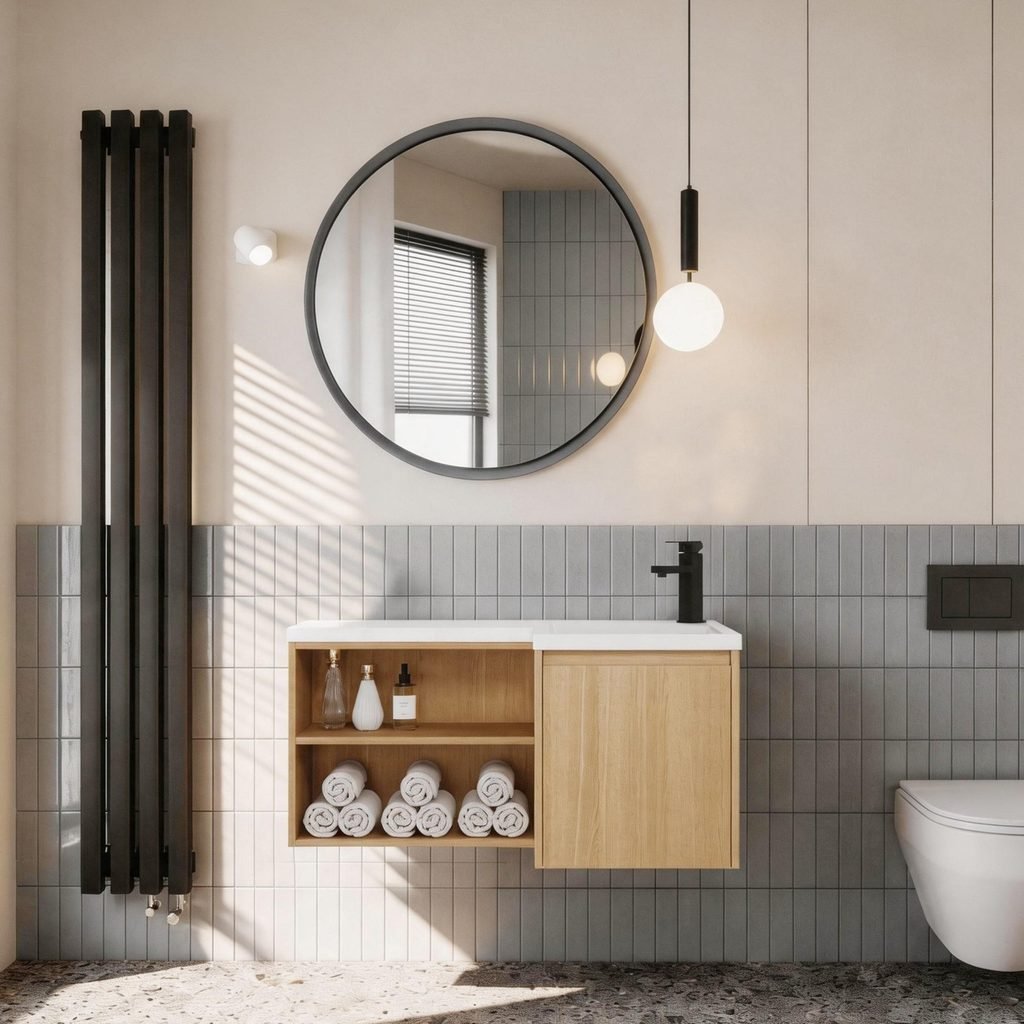
An open shelf bathroom vanity features a sink and countertop supported by a frame or base with visible storage space underneath rather than fully enclosed cupboards. Its shelves can hold neatly folded towels, storage baskets, and everyday bathroom essentials while creating a more open, airy appearance in the room.
Unlike a traditional vanity with a closed cabinet, this design makes storage part of the bathroom’s overall appearance. Depending on the model, it may feature a single bottom shelf, multiple tiers, side compartments, or a combination of open shelving and drawers.
Common features include:
- Open bottom shelf: A space beneath the sink for folded towels and storage baskets.
- Floating vanity design: A wall-mounted unit that leaves the floor visible underneath.
- Wood or metal construction: A sturdy wooden base or sleek metal structure that blends naturally with contemporary, rustic, or industrial bathroom styles.
- Mixed storage: A combination of exposed shelving and enclosed drawers or cabinets.
- Integrated countertop: A surface that supports the sink and provides room for daily grooming.
If you are unfamiliar with the different styles, read our guide to what a bathroom vanity is and how it works before choosing a design.
2. Benefits of an Open Shelf Bathroom Vanity
An open-shelf design offers several practical and visual advantages. It can make a bathroom feel less crowded, improve access to frequently used items, and provide an attractive way to organize everyday essentials.
Makes a Small Bathroom Feel More Spacious
Open shelving reduces the solid, bulky appearance created by a large cabinet beneath the sink. When more floor and wall space remain visible, a compact bathroom can feel more open.
This makes the design worth considering for a small full bathroom, powder room, or guest bathroom. A wall-mounted model can strengthen this effect by exposing the flooring beneath the vanity.
However, an open design does not physically increase the room’s dimensions. Its main advantage is the lighter visual appearance.
Keeps Towels and Essentials Within Reach
An exposed shelf makes it easy to grab a clean hand towel or replace bathroom supplies without opening cabinet doors. This can be helpful in a guest bathroom where visitors need straightforward access to essentials.
Store clean towels in neat stacks, place extra toilet paper inside a decorative basket, and use a small organizer for daily bathroom essentials. Leave some shelf space free to maintain a tidy, practical, and visually balanced appearance.
Creates a Decorative Focal Point
A bathroom vanity with open shelves gives you an opportunity to introduce texture and color through natural wood, woven baskets, neatly folded linens, and simple accessories.
For example, A rich walnut finish can bring a cozy feel to a bathroom with white surfaces, while a dark metal base works well with industrial-inspired decor. For a softer, more natural look, pale oak pairs beautifully with neutral-colored tiles and simple bathroom fixtures.
The key is to coordinate the shelving with the countertop, faucet, mirror, and surrounding finishes.
Offers Flexible Storage
Open shelving can accommodate items that are awkward to fit into shallow drawers, including rolled towels and certain storage bins. You can also change the arrangement whenever your needs or decorating preferences change.
Still, the usable space depends on shelf depth, height, and the position of the plumbing. Measure these areas before assuming a particular item will fit.
3. Disadvantages to Consider Before Buying
An open-shelf vanity is not the best solution for every bathroom. Its exposed storage looks attractive when organized, but it also requires more attention to cleanliness and item placement.
Limited Hidden Storage
Because the shelves do not have doors, personal care products, cleaning supplies, and other everyday items remain visible. A crowded shelf can make an otherwise attractive bathroom look disorganized.
If you need plenty of concealed storage, consider a hybrid vanity with drawers or a closed cabinet. You can also add a separate linen cabinet or wall-mounted storage unit.
More Dusting and Cleaning
Exposed shelves collect dust, water spots, and residue from bathroom products. Items stored close to the sink may also experience splashes during daily use.
Clean the shelves regularly and wipe up spills before they damage the finish. Baskets can help contain smaller objects, but they should also be cleaned occasionally.
Greater Exposure to Bathroom Humidity
Bathroom moisture can affect wood finishes, particleboard, fabric baskets, and stored linens. Repeated exposure to steam and splashes may cause some materials to swell, discolor, or deteriorate.
Choose materials and finishes intended for bathroom conditions, and use an exhaust fan during showers when appropriate. Do not assume that an open shelf alone will prevent moisture problems.
Plumbing May Remain Visible
Many open vanities expose the drain trap and water supply lines beneath the sink. This can be part of the intended minimalist look, but it may not suit everyone.
Before purchasing, check whether the plumbing arrangement looks acceptable and whether the shelf leaves enough room for pipes, valves, and future repairs.
4. Popular Open-Shelf Vanity Design Ideas
The best design depends on the room’s style, available space, and how much storage you need. These options offer different ways to combine appearance and function.
Floating Open-Shelf Vanity
A floating vanity attaches to the wall instead of resting directly on the floor. The open area underneath creates a contemporary appearance and makes it easier to clean the floor around the fixture.
This option can work well in small bathrooms, minimalist interiors, and modern guest suites. However, the wall structure and mounting system must be suitable for the vanity’s weight and expected load.
Natural Wood Open Shelving
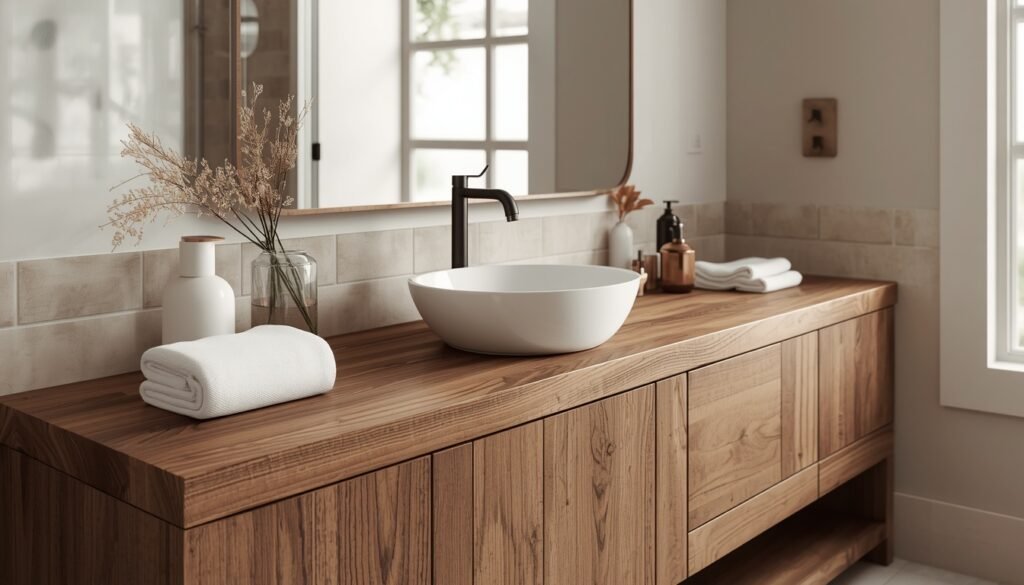
Wood adds warmth to bathrooms with white tile, neutral walls, stone countertops, or black fixtures. Oak, walnut, and other wood finishes can create anything from a Scandinavian-inspired look to a more traditional atmosphere.
Because bathrooms experience frequent humidity changes, select a suitable wood product and a moisture-resistant finish. Wipe away standing water instead of allowing it to remain on the surface.
If you prefer customizing the finish, explore our guide to an unfinished bathroom vanity for ideas about choosing and protecting an unfinished unit.
Open Vanity With Baskets
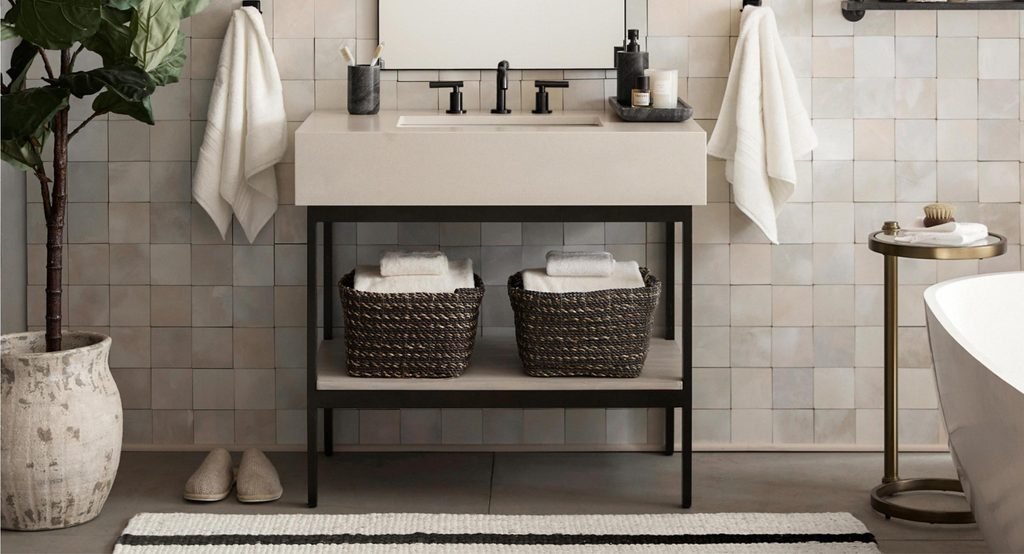
Woven baskets, fabric bins, and simple containers can make exposed storage look more organized. They also group smaller items together instead of leaving individual products scattered across the shelf.
Use baskets that fit the shelf dimensions and can be removed easily for cleaning. Avoid storing damp towels in enclosed baskets, since trapped moisture can encourage unpleasant odors.
Modern Black and White Vanity
A black metal frame paired with a white countertop creates contrast without requiring elaborate decoration. This combination can work in contemporary bathrooms with simple hardware, light walls, and a frameless mirror.
Keep the accessories limited to a few practical items so the contrast remains the main visual feature.
Sage Green and Natural Wood
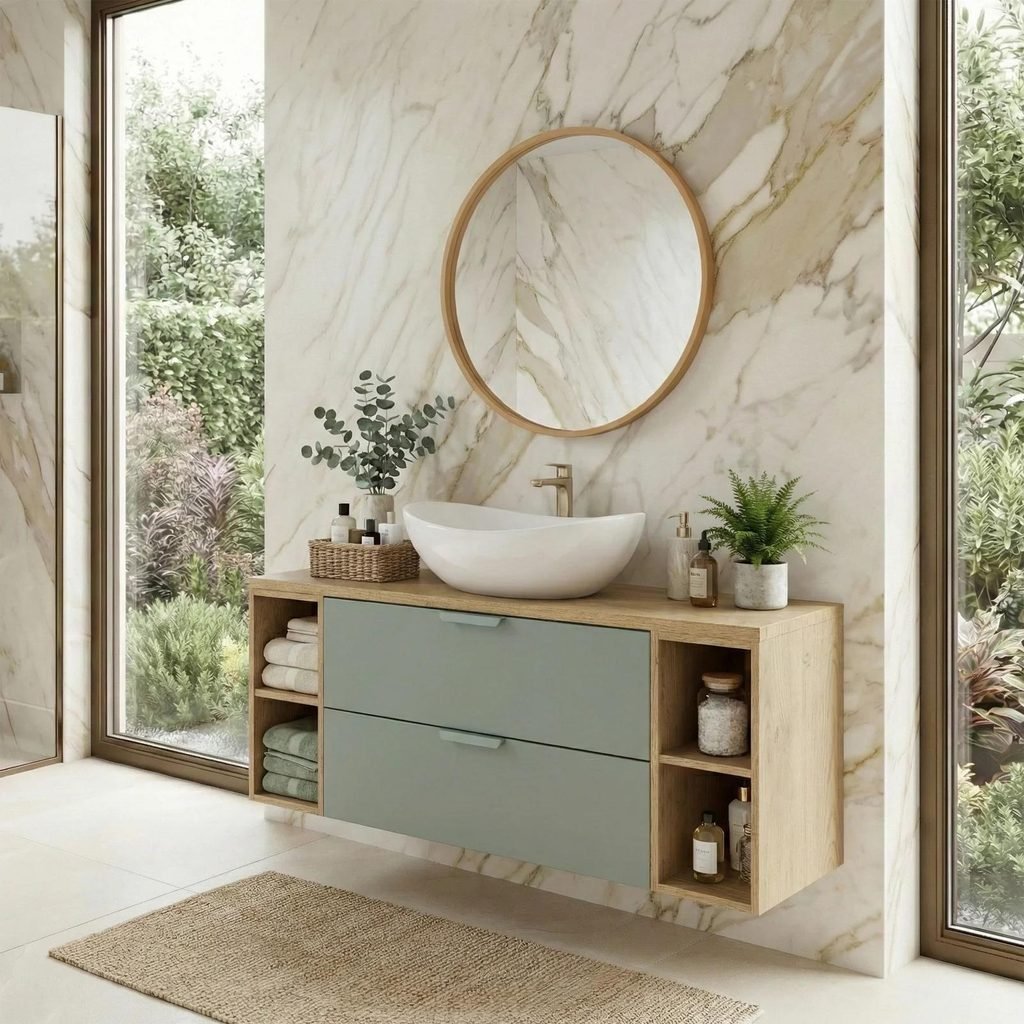
A muted green vanity or green bathroom accents can pair nicely with a natural wood shelf, cream walls, and brushed-metal fixtures. The combination creates a softer appearance than a high-contrast black-and-white scheme.
For more color coordination ideas, see our guide to a sage green bathroom vanity.
5. How to Choose the Right Size
The right size depends on the available wall space, sink dimensions, walking clearance, and the amount of storage you need. Measure the bathroom before shopping instead of selecting a vanity based on appearance alone.
Vanity Width
Single-sink bathroom vanities come in different sizes to suit various bathroom layouts. A narrower model can work well in a limited space, while a wider unit provides extra room for toiletries and daily grooming. Before choosing one, measure the available wall space and make sure the vanity will not interfere with doorways or nearby fixtures.
Measure the available space between walls, toilets, showers, and other obstacles. Leave enough room to use the sink comfortably and access nearby fixtures.
Vanity Depth
Depth affects how far the countertop projects into the room. A deeper vanity may provide more usable surface area, while a shallower design can be helpful in a narrow bathroom.
Check the finished depth, including the countertop and sink, rather than relying only on the dimensions of the base. Our guide to standard bathroom vanity depth explains the measurements and clearances to consider.
Shelf Height and Clearance
The open shelf needs enough vertical room for the items you intend to store. Measure the distance between the floor, shelf, and underside of the sink structure.
Make sure baskets and folded towels fit without pressing against plumbing. If the shelf sits too close to the floor, it may also be more exposed to dust, splashes, and routine cleaning.
Single-Sink or Double-Sink Design
A single-sink bathroom vanity is a practical choice for small bathrooms because it requires less counter space and leaves more room for movement. In a shared or master bathroom, a double-sink vanity can make daily routines more convenient, provided the room has enough space for two sinks, adequate countertop width, and the necessary plumbing connections.
If you are planning a shared bathroom, our master bathroom double vanity guide can help you consider space, storage, and layout before deciding.
6. Best Materials for an Open-Shelf Vanity
The material you choose for an open shelf bathroom vanity influences its lifespan, appearance, upkeep, and overall price. Because bathroom surfaces regularly encounter humidity, splashes, and cleaning products, select materials that can handle these conditions rather than choosing based on looks alone.
Solid Wood
Solid wood adds natural warmth and character to a bathroom vanity. Its durability depends on the wood species, construction, protective finish, and exposure to moisture.
Wood can absorb and release moisture as humidity changes, which may cause it to expand or shrink. For this reason, choose a suitable protective finish, keep surfaces dry, and wipe up splashes promptly. The Oregon State University Extension Service guide to wood moisture relationships explains how humidity affects wood.
Plywood and Engineered Wood
Plywood and other engineered wood materials can be practical alternatives to solid wood. Their performance depends on how they are manufactured, the quality of their finish, and how well their edges and joints are protected.
Pay particular attention to exposed edges and connections around the sink, where repeated water exposure may cause damage if moisture gets inside. Regularly inspect these areas and address any signs of swelling or finish deterioration.
Metal
Metal frames can complement modern and industrial bathroom interiors. In a humid environment, the type of metal and its protective coating matter because moisture can contribute to corrosion on susceptible surfaces.
Look for a frame with a finish intended for bathroom conditions. Check the joints and coating periodically, and wipe away standing water to help preserve its appearance.
Stone and Quartz Countertops
Natural stone and engineered quartz can provide an attractive, durable surface for an open-shelf vanity. However, their care requirements differ depending on the material.
Some natural stones may require periodic sealing, while engineered quartz generally does not need sealing. For practical guidance, consult Iowa State University Extension and Outreach’s guide to stone countertop care. Use cleaning methods appropriate for your specific countertop and follow the manufacturer’s care instructions.
Before installation, also make sure the vanity frame and mounting system can safely support the combined weight of the countertop and sink.
7. How to Style and Organize Open Shelves
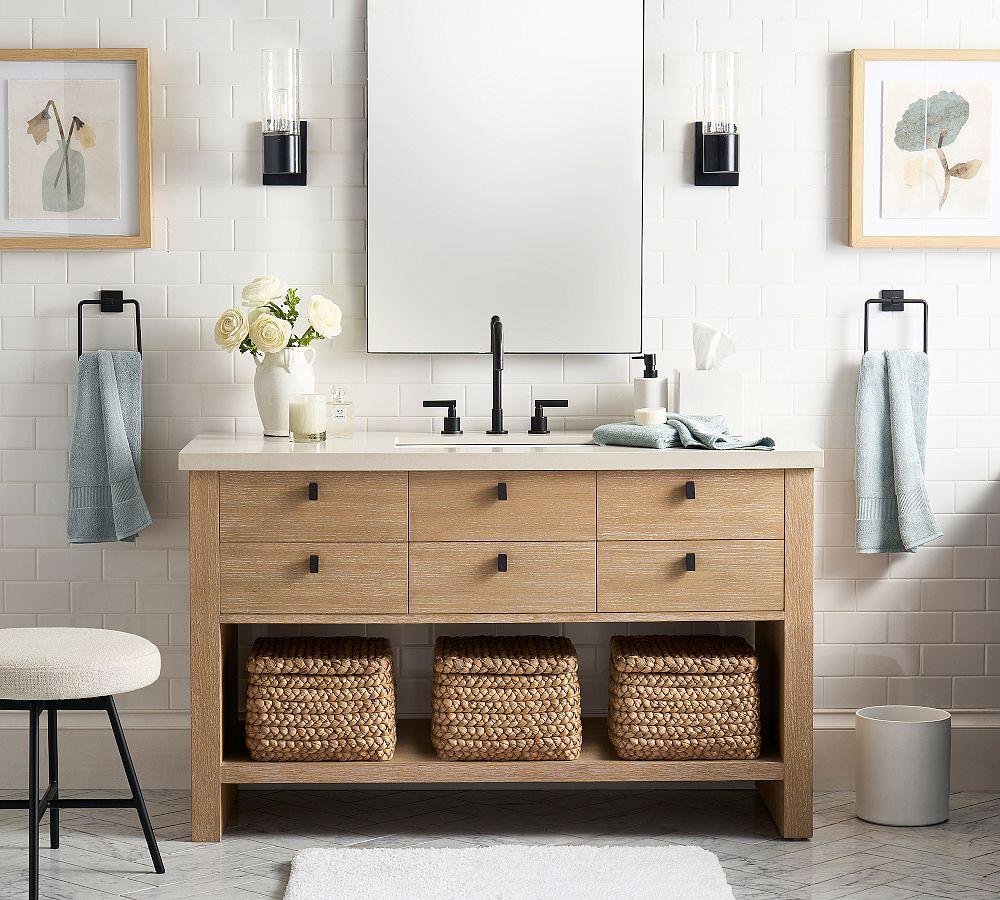
Good organization helps an exposed vanity look intentional without making it difficult to use. Start with the items you need every day, then add only a few decorative details.
- Arrange towels neatly. Fold towels into uniform stacks or roll them neatly to keep your open bathroom shelves organized and make clean towels easy to grab when needed.
- Use matching baskets. Choose two or three containers that fit the shelf rather than filling every available space.
- Group similar items. Keep spare toilet paper together and place bathroom accessories in a designated container.
- Limit decorative objects. A small plant or simple accessory can add interest without taking over useful storage space.
- Leave some space empty. Unfilled shelf space helps the vanity feel less crowded and makes cleaning easier.
Keep medicines, cleaning chemicals, sharp items, and electrical grooming tools out of reach of children and away from moisture as appropriate. Decorative baskets are not a substitute for secure, child-resistant storage.
8. Open Shelves vs. Closed Bathroom Vanity Cabinets
Both designs can work well, but they solve different storage problems. Compare their practical features before choosing one for your home.
| Feature | Open-Shelf Vanity | Closed-Cabinet Vanity |
| Appearance | Light and visually open | More solid and enclosed |
| Everyday access | Items are easy to reach | Doors or drawers must be opened |
| Hidden storage | Limited unless combined with cabinets | Better for concealing supplies |
| Cleaning | Exposed shelves need regular dusting | Interior areas are less exposed |
| Organization | Requires tidy, visible storage | Can conceal everyday clutter |
| Plumbing access | Often easier to see | May require opening doors or panels |
| Best suited for | Guest baths and minimalist spaces | Busy family and shared bathrooms |
A hybrid design may offer the best balance. Open shelves can hold towels and attractive accessories, while drawers or cabinet doors conceal personal items and less attractive supplies.
9. How to Maintain an Open-Shelf Bathroom Vanity
Regular maintenance protects the finish and keeps exposed storage looking tidy. A short cleaning routine is usually easier than waiting until water marks, dust, and clutter build up.
- Wipe surfaces regularly: Use a cleaner appropriate for the shelf and countertop materials.
- Dry standing water: Pay attention to areas around the sink, faucet, and shelf edges.
- Inspect the finish: Look for peeling coatings, swelling, loose joints, or signs of corrosion.
- Keep towels dry: Replace damp linens rather than leaving them stacked on the shelf.
- Check plumbing connections: Visible pipes make inspection easier, but any leak should be addressed promptly.
- Maintain ventilation: Use an appropriate exhaust fan and follow its recommended operating guidance to help manage bathroom humidity.
Avoid harsh cleaners or abrasive tools unless the material manufacturer specifically permits them. Proper care varies by finish, so check the product’s maintenance instructions.
10. Is an Open Shelf Bathroom Vanity Right for You?
An open-shelf vanity is a good choice if you prefer an airy appearance, want towels and essentials within easy reach, and are comfortable keeping exposed storage organized. It is particularly suitable for guest bathrooms, powder rooms, and spaces where a lighter visual design is a priority.
A fully enclosed vanity may be more practical if you share a busy bathroom, need substantial hidden storage, or prefer not to display personal care products. If you like the open look but still need privacy, a mixed design with shelves and drawers offers a useful compromise. You can also explore our guide to common bathroom vanity sizes to compare dimensions and storage needs before choosing a style.
Before making a final decision, consider the bathroom’s dimensions, plumbing layout, ventilation, material quality, and daily storage requirements. If you are still comparing different designs, our guide on what a bathroom vanity is and how it works explains the main vanity types and their practical uses. Choose a bathroom vanity that suits your available space, storage needs, and daily habits rather than making your decision based on appearance alone.
Conclusion
An open shelf bathroom vanity can bring a clean, modern look to your bathroom while keeping towels and everyday essentials accessible. The right choice depends on room dimensions, material quality, plumbing clearance, and how much visible storage you can comfortably maintain. Measure carefully, choose moisture-appropriate finishes, and organize the shelves with practical containers. With thoughtful planning, this vanity style can balance attractive design with the needs of everyday bathroom use.
FAQs
What Is the Current Trend for Bathroom Vanities?
Current bathroom vanity trends favor warm wood finishes, floating designs, practical storage, and simple, timeless colors. Open shelving and mixed storage are also popular options for creating a lighter, more functional bathroom.
What Are Some Ideas for Open Shelves in a Bathroom?
Use open shelves to display folded towels, woven baskets, neatly arranged toiletries, and a few decorative accessories. Natural wood shelves, floating designs, and a combination of open shelving and closed cabinets can provide both style and practical storage.
What Are the Bathroom Vanity Trends for 2026?
Bathroom vanity trends for 2026 include warm wood tones, floating vanities, textured cabinet fronts, integrated sinks, and functional storage. Soft neutral colors and natural materials also help create a comfortable, modern bathroom.
What Can I Use Instead of a Bathroom Vanity?
Alternatives include a wall-mounted sink with a shelf, a pedestal sink, a console sink, or a repurposed furniture piece designed for bathroom use. Choose an option that provides enough counter space, suits your plumbing, and meets your storage needs.
What Color Bathroom Vanity Never Goes Out of Style?
White, off-white, and natural wood finishes are timeless bathroom vanity choices. These colors work with many tile styles and hardware finishes, making it easier to update your bathroom decor without replacing the vanity.
How Can I Update My Bathroom Vanity Without Replacing It?
Refresh your existing vanity by repainting it, replacing the hardware, updating the faucet, or adding a new mirror and lighting. You can also organize exposed shelves with matching baskets to improve the appearance without the cost of a full replacement.
About the Author: Bilal khan
Bilal khan is an informational content writer with an interest in bathroom design, home decor, and practical interior improvement ideas. He enjoys researching vanity styles, storage solutions, materials, and design considerations to help readers make informed decisions for their homes. His goal is to share clear, useful, and easy-to-understand information that supports practical home design choices.

Pingback: Where to Buy Solid Wood Bathroom Vanity: Guide