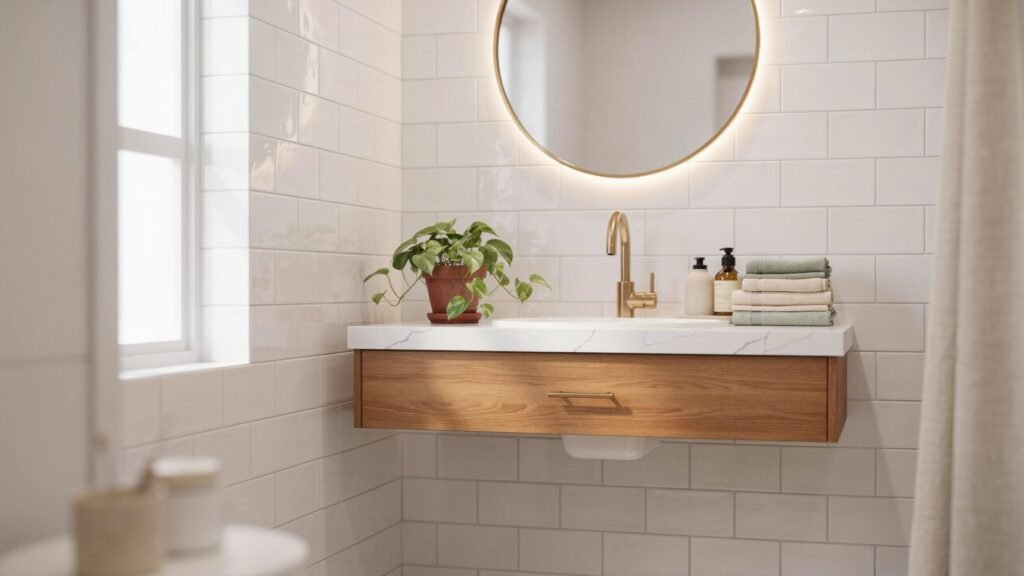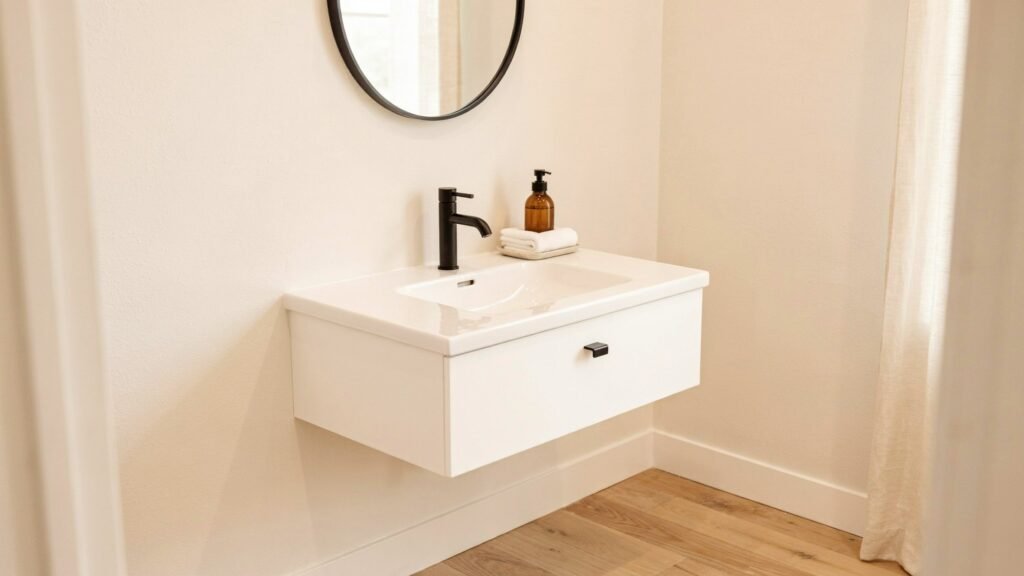
An unfinished bathroom vanity is a raw wood cabinet that ships without stain, paint, or sealer. You pick the color and finish yourself, which gives you full control over the look and often saves money compared to a factory-finished vanity.
This guide covers what to look for before you buy, how to finish it so it survives bathroom humidity, and what mistakes to avoid.
Table of Contents
What Is an Unfinished Bathroom Vanity?
An unfinished bathroom vanity is a bare cabinet made of solid wood, plywood, or a mix of both. The surface is usually lightly sanded at the factory, but it has no color, primer, or protective coating.
Most unfinished vanities are sold as cabinet bases only. The countertop, sink, faucet, and mirror are often bought separately. Some brands sell sets that include a top, so check the product details first.
Unfinished vs. Finished Vanity: Quick Comparison
| Feature | Unfinished Vanity | Finished Vanity |
| Color choice | Any stain or paint | Limited to what is sold |
| Upfront price | Usually lower | Usually higher |
| Labor | You sand and finish it | Ready to install |
| Finish quality | Depends on your work | Factory-applied, consistent |
| Best for | Custom looks, DIY projects | Fast remodels |
Pros and Cons of an Unfinished Bathroom Vanity
Pros
- You can match any wall color, tile, or hardware.
- The cabinet costs less than a comparable pre-finished one.
- You control the sealer, which matters in a humid room.
- It is easy to refinish later if your style changes.
Cons
- It takes time. Sanding, priming, and sealing can take a full weekend or more.
- A poor finish can lead to blotchy stain, peeling paint, or water damage.
- Mistakes are yours to fix, since there is no factory warranty on the finish.
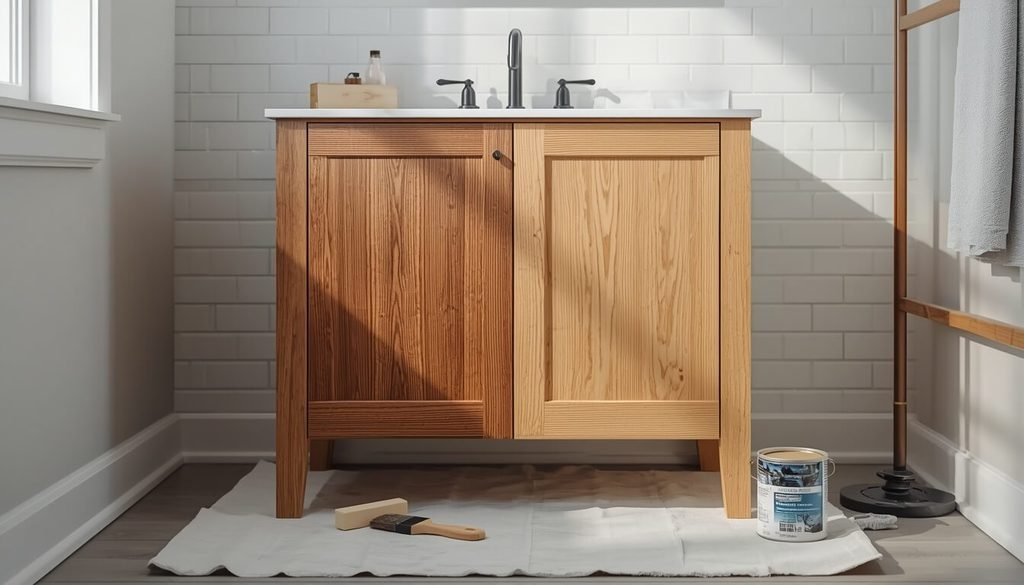
Best Wood Types for an Unfinished Bathroom Vanity
The wood you choose affects how the vanity looks and how well it handles moisture.
- Oak: Strong, with a visible grain. It takes stain well and holds up in bathrooms.
- Maple: Smooth and dense. Great for paint, but it can turn blotchy with stain unless you use a wood conditioner.
- Birch: Affordable and smooth. Works well for paint, and needs a conditioner before staining.
- Pine: Budget-friendly and soft. It dents easily and also needs a conditioner before stain.
- Poplar and rubberwood: Common in paint-grade vanities. They finish smoothly and cost less.
- Plywood and MDF parts: Plywood is stable and resists warping. MDF swells when it gets wet, so seal every edge well.
Tip: For a stained look, choose oak or a stain-grade wood. For a painted look, maple, birch, or poplar give a cleaner surface.
How to Choose the Right Size and Style
Measure Your Space First
Measure the wall width, the plumbing location, and the door swing before you order. Leave enough room to walk and open drawers freely.
Common vanity widths in the US:
- 24 to 30 inches for powder rooms and small bathrooms
- 36 to 48 inches for guest baths and standard bathrooms
- 60 to 72 inches for primary bathrooms with double sinks
Standard height is about 30 to 32 inches. Comfort height is about 34 to 36 inches, which many adults find easier to use. Short on space? A narrow 18-inch bathroom vanity can fit tight powder rooms and still offer usable storage.
Check the Plumbing Layout
Look at where the drain and supply lines enter the cabinet. Some vanities have a solid back that needs cutouts. Others have an open back that fits most plumbing setups. Confirm this before buying.
Pick a Countertop and Sink Type
If the vanity has no top, plan for one. Popular options are quartz, granite, marble, and cultured marble. Light tops like white quartz also pair well with a painted look, such as a sage green bathroom vanity. Sink styles include undermount, drop-in, and vessel. Make sure the cabinet is built to support the sink style and the weight of the top.
How Much Does an Unfinished Bathroom Vanity Cost?
Prices vary by size, wood, and construction. Small unfinished vanity cabinets often start around a few hundred dollars, while larger solid wood or double-sink models can run well above $1,000. Add the cost of a countertop, sink, faucet, and finishing supplies to get your real total.
How to Finish an Unfinished Bathroom Vanity
Bathrooms have steam, splashes, and temperature swings, so the finish needs to be thorough.
What You Need
- Sandpaper in 120 and 180 or 220 grit
- Tack cloth or a damp rag
- Wood conditioner (for pine, birch, or maple if staining)
- Stain, or a stain-blocking primer plus paint
- Water-based or oil-based polyurethane
- Foam brush or quality brush, and a small roller
Step-by-Step Process
- Sand the surface. Start with 120 grit, then finish with 180 or 220 grit. Sand with the grain and round sharp edges slightly.
- Clean off dust. Use a tack cloth or a slightly damp rag. Dust left behind causes a rough finish.
- Apply wood conditioner if staining. This helps prevent blotches on soft woods.
- Stain or prime. For stain, wipe on, let it sit as directed, and wipe off the excess. For paint, apply a stain-blocking primer first.
- Paint if needed. Painting an unfinished bathroom vanity? Use satin or semi-gloss cabinet paint, since both resist moisture. Apply two thin coats and let each dry fully.
- Seal it. Apply two to three coats of polyurethane, sanding lightly with fine grit between coats.
- Finish every surface. Seal the inside, the back edges, and the bottom. Unsealed wood absorbs moisture and can warp. The USDA Forest Products Laboratory’s guide to finishing wood explains how a proper finish protects wood and keeps the surface easy to clean.
- Let it cure. The finish may feel dry in a day, but full cure can take several days to a few weeks. Avoid heavy use and water contact during this time.
Common Mistakes to Avoid
- Skipping the wood conditioner on soft woods, which causes blotchy stain
- Using interior wall paint instead of cabinet-grade paint
- Leaving the inside and bottom unsealed
- Applying thick coats that drip or stay tacky
- Installing the vanity before the finish has cured
- Ignoring humidity by not running an exhaust fan
How to Care for a Finished Vanity
- Wipe up spills and splashes right away.
- Clean with a soft cloth and mild soap. Avoid harsh chemicals.
- Run the exhaust fan during and after showers.
- Check the caulk around the sink and backsplash once a year.
- Touch up small chips early before moisture gets in.
Is an Unfinished Bathroom Vanity Worth It?
Yes, if you are comfortable with basic sanding and finishing, or you are willing to hire a painter. You get a custom look at a lower price. If you need a fast remodel or have no time for prep work, a pre-finished vanity may be the better choice.
FAQs
Can you paint an unfinished bathroom vanity?
Yes. Sand it, apply a stain-blocking primer, then use cabinet-grade paint and a protective topcoat.
What is the best finish for a bathroom vanity?
Polyurethane over stain or paint is a solid choice. Water-based options dry faster and stay clearer, while oil-based options are durable but can add a slight amber tone.
Do you need to seal an unfinished vanity?
Yes. Bathrooms are humid, and unsealed wood can swell, warp, or grow mold.
Are unfinished vanities cheaper?
Usually, yes. The lower price comes from skipping factory finishing, but you should count your supplies and time.
How long does it take to finish one?
Plan for a weekend of work, plus extra days for drying and curing.
Author Box:
Bilal Khan
Bilal Khan writes about bathroom vanities and home improvement at Home Vanity Hub. He enjoys turning technical topics like sizing, wood types, and finishing steps into clear, practical guides. Before publishing, he checks each article against trusted sources such as manufacturer guidelines and USDA wood finishing research, so readers get accurate advice they can use.