Introduction
Choosing a countertop for your bathroom can be tricky when you want something attractive, durable, and easy to maintain. Granite vanity tops offer natural patterns and a range of colors that suit different bathroom styles. However, the right choice depends on your cabinet size, sink design, budget, and care requirements. This guide explains the benefits, costs, finishes, installation process, and maintenance tips to help you make a practical decision.
Table of Contents
1. What Are Granite Vanity Tops and How Are They Made?
Granite vanity tops are bathroom countertops made from natural stone, valued for their distinctive patterns, durability, and ability to complement different bathroom styles. Each piece has its own mineral colors and markings, making it different from manufactured surfaces with more uniform designs.
Granite forms when molten rock cools slowly beneath the Earth’s surface, allowing mineral crystals to develop. These minerals create the speckles, veins, and color variations found in granite bathroom countertops. Depending on the stone, you may see shades of white, gray, black, brown, or beige.
How Are Granite Vanity Tops Made?
The process begins with granite extracted from a quarry. Large blocks are transported to stone-processing facilities, where they are cut into slabs and prepared for countertop fabrication.
The main steps include:
- Slab cutting: Large granite blocks are sliced into slabs of the required thickness.
- Surface finishing: The stone is polished or given another finish to achieve the desired appearance and texture.
- Granite slab selection: Fabricators and homeowners examine the natural mineral patterns to choose a slab that suits the bathroom design.
- Cutting and shaping: The slab is measured and cut to fit the vanity cabinet, including openings for the sink and faucet.
- Edge finishing: The exposed edges are shaped and smoothed for a finished appearance.
- Final preparation: The countertop may receive a suitable stone sealer, depending on the granite and the manufacturer’s recommendations.
How Are They Used in Bathrooms?
A granite countertop for bathroom vanity installations provides a solid surface around the sink for everyday tasks such as washing your face, brushing your teeth, and storing frequently used toiletries. It can be installed on a single-sink vanity in a small bathroom or a double-sink cabinet in a larger primary bathroom.
For example, a homeowner replacing a 36-inch bathroom vanity might choose a prefabricated granite top with a matching backsplash and an undermount sink. This can simplify the project because the countertop is already sized for a common cabinet width, although the actual dimensions and sink cutout must still be checked.
Natural stone vanity tops are available in different thicknesses, edge styles, and finishes. The right choice depends on your cabinet dimensions, sink configuration, bathroom design, and budget.
Before buying, make sure the cabinet can support the stone’s weight and that the countertop measurements match the vanity. If you are also comparing materials, read our guide to standard bathroom vanity depth to check the available space and plan a suitable fit.
2. What Are the Pros and Cons of Granite Vanity Tops?
Granite offers a durable, attractive surface for bathroom vanities, but it also has a few drawbacks. It can handle everyday use and provides a natural stone appearance, yet it may require sealing, careful cleaning, and a higher upfront investment than some other countertop materials.
What Are the Main Benefits of Granite Vanity Tops?
One of the biggest advantages of granite is its natural stone durability. When properly installed and maintained, it can serve a bathroom for many years without losing its appeal. Its hard surface also offers good resistance to scratches and everyday wear, although sharp objects, heavy impacts, and abrasive materials can still cause damage.
Other benefits include:
- Unique natural patterns: Mineral crystals create individual markings and color variations, so no two slabs look exactly alike.
- Heat resistance: Granite tolerates heat better than many synthetic surfaces, although using a hot styling tool directly on the countertop is not recommended.
- Multiple design options: Homeowners can choose from light, dark, speckled, and other natural patterns to match their cabinets, flooring, and wall tiles.
- Long-term usefulness: With proper care, the surface can remain functional and attractive through years of daily bathroom use.
- Flexible design choices: Different edge profiles, thicknesses, and finishes make it suitable for both traditional and modern bathrooms.
For example, a busy household may prefer granite around a frequently used bathroom sink because the surface can withstand routine grooming activities. Wiping away toothpaste, cosmetics, and water promptly helps preserve its appearance.
What Are the Potential Drawbacks of Granite Vanity Tops?
Despite its strengths, granite is not completely maintenance-free. Its stone porosity and sealing requirements vary by type, so some slabs may absorb liquids more readily than others. Without suitable protection, certain granite surfaces can develop stains from cosmetics, hair products, or other substances.
Here are the main disadvantages to consider:
- Periodic sealing: Some granite surfaces need a penetrating sealer to reduce liquid absorption. Follow the stone supplier’s instructions and test whether the surface needs resealing.
- Possible staining: Spilled makeup, hair dye, and personal-care products can discolor susceptible stone if left in place.
- Higher installation expense: The total price may include measurements, cutting, sink openings, edge finishing, delivery, and professional installation.
- Heavy weight: Granite requires a properly supported, level vanity cabinet. A weak cabinet may need reinforcement before installation.
- Careful cleaning: Harsh acidic cleaners and abrasive products can damage the finish or affect the stone’s protective treatment.
- Limited flexibility after cutting: Once fabricated, the slab cannot easily be resized or modified without suitable equipment and professional work.
Granite countertop maintenance is usually straightforward: clean the surface with a soft cloth and a suitable stone-safe cleaner, wipe up spills, and avoid leaving standing water around the sink. These simple habits can help reduce staining and preserve the finish.
Consider your bathroom remodeling budget before choosing a slab. The purchase price is only one part of the cost; fabrication, sink cutouts, backsplash pieces, and labor can increase the final bill. Read our guide to bathroom vanity installation costs to understand how labor and additional services may affect your overall budget. Comparing the full installed cost with quartz and other countertop materials will help you choose an option that suits your bathroom and maintenance preferences.
3. Which Granite Colors and Patterns Are Best for Bathroom Vanities?
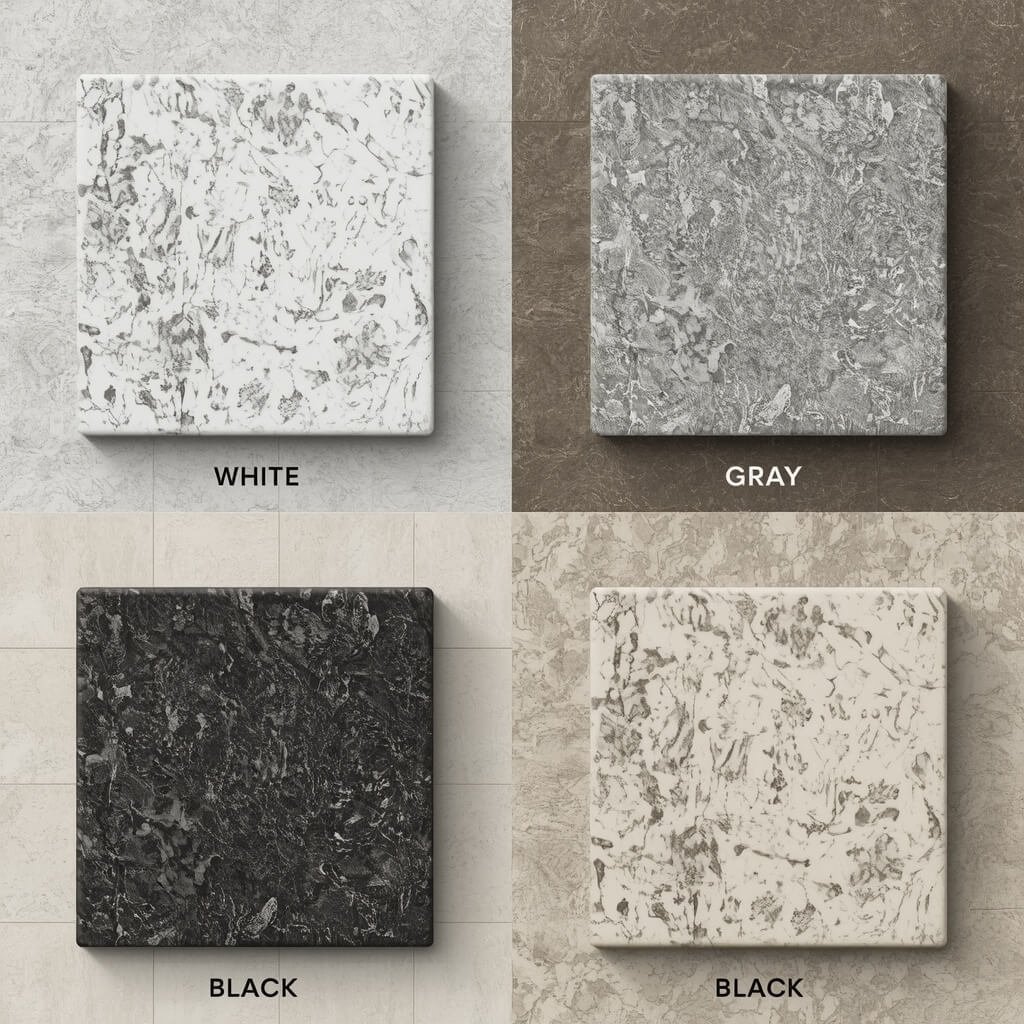
The best granite color for a bathroom vanity depends on your cabinet finish, wall tiles, lighting, and the look you want to create. Light shades can make a small bathroom feel more open, while darker stone adds contrast and works well in bathrooms with lighter cabinets or plenty of natural light.
Granite has natural mineral patterns that vary from slab to slab. Some surfaces have fine speckles, while others feature larger crystals, flowing marks, or contrasting shades. Viewing the actual slab before buying helps you understand how its colors will look in your bathroom.
Is a White Granite Vanity Top Right for Your Bathroom?
A white granite vanity top is a good choice if you want a bright, clean appearance that works with many bathroom styles. It pairs well with white, cream, light gray, and natural wood cabinets.
White granite is not always plain white. Depending on the stone, it may contain gray flecks, beige patches, dark mineral grains, or subtle veins. These variations add depth without making the countertop look too busy.
Consider white granite if you want to:
- Make a small bathroom feel brighter.
- Create a fresh look with white cabinets and light wall tiles.
- Contrast with navy, dark green, or walnut-colored cabinetry.
- Keep the room flexible enough for different towels, mirrors, and accessories.
Keep in mind that lighter surfaces may show certain stains, makeup marks, and discoloration more clearly. Proper cleaning and suitable sealing can help protect the stone, depending on its characteristics.
When Should You Choose Gray, Black, or Beige Granite?
Gray, black, and beige are useful alternatives when white does not suit your bathroom design. Each color creates a different effect, so consider the room’s lighting and existing finishes before making a decision.
Gray granite vanity top: Gray granite works well in modern bathrooms with white cabinets, brushed nickel fixtures, gray flooring, or cool-toned tiles. Light gray can keep the room looking calm, while darker gray creates stronger contrast.
Black granite vanity top: Black granite creates a bold appearance and pairs especially well with white cabinets, light-colored walls, and metallic fixtures. In a small bathroom with limited lighting, however, a large dark surface may make the room feel heavier. Good lighting and lighter surrounding finishes can balance the effect.
Beige granite countertops: Beige granite suits warm, traditional, and natural-looking bathrooms. It complements cream cabinets, tan floor tiles, warm wood, and bronze or brass hardware. Some beige slabs also contain brown or gray markings that help connect different finishes in the room.
Before choosing among these granite countertop colors, look at samples under your bathroom’s actual lighting. A stone that appears warm in a showroom may look cooler or darker at home.
How Do You Match Granite Colors With Cabinets and Tiles?
Good countertop color coordination starts with the finishes already present in your bathroom. Rather than trying to match every surface exactly, choose colors that complement one another and keep the overall design balanced.
Use these practical guidelines:
- With white cabinets: Gray, black, beige, and patterned white granite can all work. Choose based on whether you prefer a soft, coordinated look or a strong contrast.
- With natural wood cabinets: Beige, cream, brown, and warm gray stone often complement the wood’s natural tones.
- With dark cabinets: White or light gray granite can brighten the room and prevent the vanity area from looking too heavy.
- With patterned wall tiles: Choose a slab with a simpler pattern so the countertop and tiles do not compete for attention.
- With plain tiles: A granite slab with more noticeable mineral patterns can become a focal point.
For example, in a bathroom with a 36-inch walnut vanity and white subway tile, a beige or warm gray countertop can connect the wood tones with the lighter walls. If the flooring already has strong patterns, a more subtle slab may create a better balance.
Finally, examine the full granite slab whenever possible, not just a small sample. Natural mineral patterns can vary considerably across a large piece of stone. Checking the slab, cabinet finish, tile sample, and hardware together can help you avoid an expensive mismatch and choose a countertop that suits the entire bathroom.
4. What Sizes, Thicknesses, and Sink Options Are Available?
Granite vanity tops come in different widths, depths, thicknesses, and sink configurations to fit various bathroom layouts. Choosing the right size depends on your existing vanity cabinet, available space, sink placement, and the amount of counter space you need for everyday use.
How Do You Choose the Right Vanity Top Dimensions?
Start by measuring the existing vanity cabinet rather than estimating the countertop size. Measure its width and depth, check whether the cabinet is level, and confirm how much room is available around the sink, faucet, walls, and plumbing.
Common vanity widths in US bathrooms include 24, 30, 36, 48, 60, and 72 inches. These are common sizes, not universal measurements, so always check the actual cabinet and countertop specifications before ordering.
Keep these measurements in mind:
- Width: Measure from one outside edge of the cabinet to the other. Check whether the new top should sit flush with the cabinet or extend slightly beyond it.
- Depth: Measure from the back wall to the cabinet’s front edge. Account for the faucet location and any space needed for a backsplash.
- Thickness: Many stone countertops are available in approximately 2 cm (¾ inch) or 3 cm (1¼ inch) slabs. The finished appearance can vary depending on the edge treatment and fabrication method.
- Sink position: Check the distance between the sink opening, countertop edges, faucet holes, and backsplash.
- Wall clearance: Uneven walls and corners can affect how a slab fits, particularly in older bathrooms.
For example, a homeowner replacing a 36-inch vanity should measure the cabinet carefully before ordering a prefabricated top. Even if the width matches, the depth, sink opening, and faucet-hole positions may differ from the existing setup.
Countertop thickness and edge profiles also affect the finished appearance. A straight, eased edge gives a simple look, while a thicker-looking edge can create a more substantial appearance without necessarily requiring a thicker slab.
Which Sink Styles Work With Granite Vanity Tops?
A granite surface can accommodate several sink styles, provided the slab is fabricated for the chosen sink and faucet arrangement. The best option depends on the cabinet size, available counter space, plumbing layout, and bathroom design.
Undermount bathroom sink: This sink sits beneath the countertop, leaving the granite edge exposed around the opening. It creates a clean appearance and makes it easy to wipe water and debris from the counter into the basin. Proper fabrication and installation are essential to support the sink securely.
Drop-in sink: Also called a self-rimming sink, this style fits into a countertop opening and rests on the surface around its rim. It can be a practical option when replacing an existing sink, although the rim creates an edge where residue may collect.
Vessel sink: A vessel basin sits on top of the countertop rather than fitting entirely below it. This style can make the vanity a design feature, but it requires careful planning for faucet height, basin height, and available counter space.
You can choose a single-sink granite vanity top for a small bathroom or a shared space where one basin is enough. A double-sink granite vanity top may be more useful in a larger primary bathroom, provided the cabinet is wide enough to accommodate two basins, faucets, and usable counter space between them.
Before ordering a granite vanity top with sink, confirm the following details:
- Sink model, dimensions, and mounting style.
- Exact sink cutouts and faucet holes.
- Faucet type and required hole spacing.
- Plumbing locations and cabinet clearance.
- Backsplash dimensions and wall fit.
- Cabinet support and leveling requirements.
A matching backsplash can protect the wall behind the countertop from splashes and help create a finished appearance. Its height should suit the available wall space, faucet placement, and surrounding tile design. For help choosing the right style and height, see our guide to bathroom vanity backsplash options.
Measure twice before placing an order. Granite is heavy, and mistakes in cutting or sizing can be expensive to correct. If the walls are uneven, the cabinet is out of level, or the sink and faucet positions are changing, have a qualified countertop fabricator verify the measurements before cutting the slab.
5. Which Granite Countertop Finishes and Edge Profiles Can You Choose?
The finish and edge profile affect how a granite countertop looks, feels, and fits into your bathroom design. A polished surface creates a glossy appearance, while a honed surface has a softer, matte look. The edge profile adds another design detail, from simple straight lines to gently rounded corners.
What Is the Difference Between Polished and Honed Granite?
A polished granite finish has a smooth, reflective surface that brings out the stone’s natural colors and mineral patterns. It works well in modern and traditional bathrooms, especially when you want the countertop to stand out.
Honed granite has a matte or low-sheen appearance. Its softer look suits bathrooms with natural wood cabinets, muted colors, and understated finishes.
Here are the main differences to consider:
- Polished granite: Reflects more light and often makes the stone’s colors appear richer. Water spots, fingerprints, and residue may be noticeable, particularly on darker surfaces.
- Honed granite: Offers a more subdued appearance with little reflection. Depending on the stone, its surface may show oils, marks, or stains more readily, so proper care remains important.
- Cleaning needs: Both finishes benefit from a soft cloth and a cleaner suitable for natural stone. Avoid harsh products that could damage the surface or its protective treatment.
- Sealing requirements: Neither finish automatically eliminates the need for sealing. Requirements depend on the stone’s porosity and the products recommended by the supplier.
For example, a polished gray countertop can brighten a bathroom with limited natural light by reflecting some of the available light. A honed beige surface may be a better fit for a bathroom with warm wood cabinets and soft, natural colors.
When comparing granite surface finish options, ask the supplier how the particular stone responds to water, oils, and cleaning products. The appearance alone does not tell you how much maintenance the surface will need.
Which Countertop Edge Profile Suits Your Bathroom?
The edge profile determines how the exposed sides of the stone are shaped. Your choice should complement the vanity cabinet, sink style, and overall bathroom design while remaining practical for daily use.
Square edge: A square edge gives the countertop a clean, straight appearance. It works well in contemporary bathrooms, although the exposed corner may feel sharp if it is not eased slightly.
Eased edge: An eased edge has a mostly straight profile with small, softened corners. It is a versatile choice for many bathroom styles because it keeps the design simple without leaving a perfectly sharp edge.
Rounded edge: A rounded or bullnose edge has a curved profile that softens the countertop’s appearance. It can suit traditional bathrooms and vanities with curved or decorative details.
Your choice also affects how countertop thickness and edge profiles work together. A thicker slab may create a substantial look, while a thinner slab can give the vanity a lighter appearance. Some fabricators can create a built-up edge that makes a countertop appear thicker without using a single, thicker piece of stone.
Before deciding, consider these practical points:
- Match the edge to the style of your cabinet and bathroom fixtures.
- Ask to see a physical sample or photograph of the exact profile.
- Check the additional fabrication cost for decorative edges.
- Choose softened corners if you want to avoid sharp edges in a frequently used bathroom.
- Confirm that the selected profile works with the slab thickness and sink arrangement.
The best finish and edge combination balances appearance with everyday care. Comparing samples under your bathroom lighting and checking fabrication costs before ordering can help you choose a surface that suits both your design and budget.
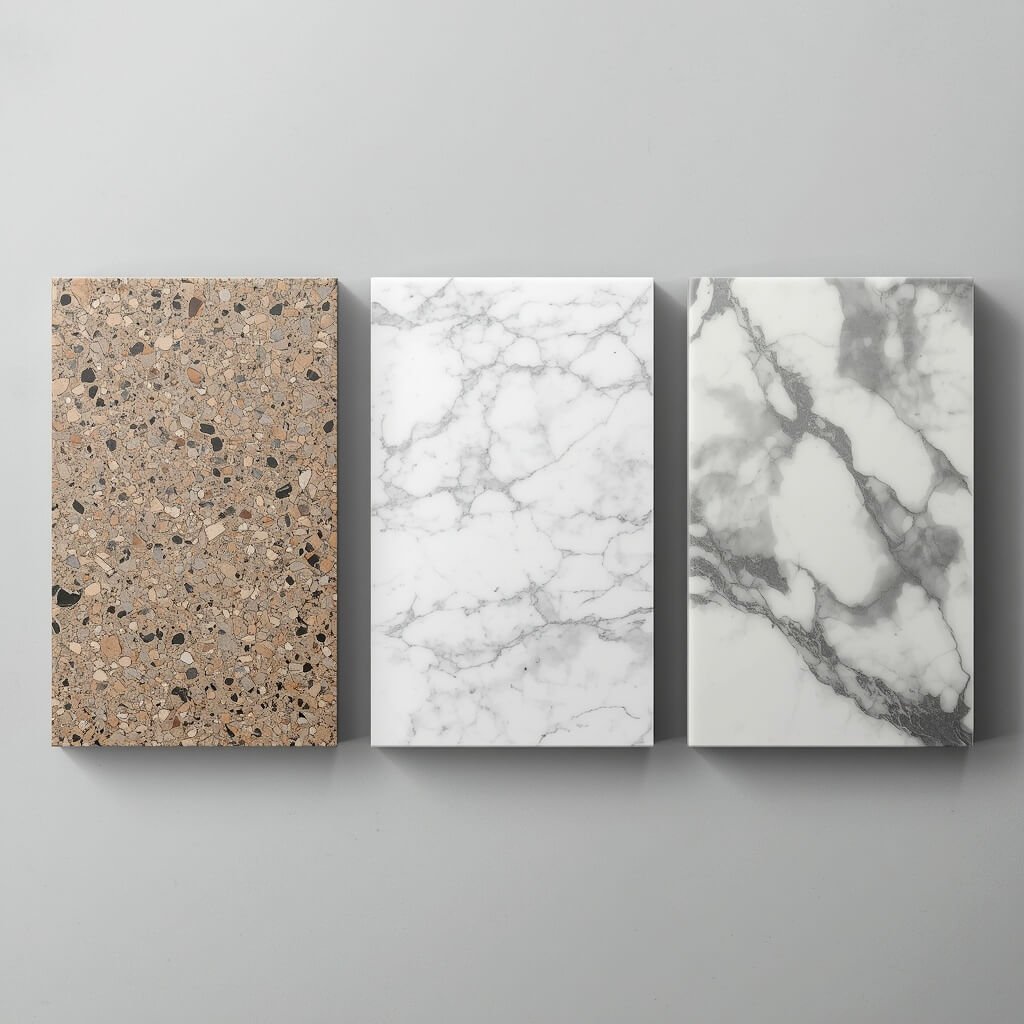
6. Granite vs. Quartz vs. Marble: Which Vanity Top Is Best?
Granite, quartz, and marble can all work well in a bathroom, but they differ in appearance, maintenance, durability, and cost. Granite suits homeowners who prefer natural patterns, quartz offers a more consistent look with relatively simple care, and marble appeals to those who want distinctive veining and a classic stone appearance.
How Do Granite, Quartz, and Marble Compare?
| Feature | Granite | Quartz | Marble |
| Material | Natural stone | Engineered stone made with quartz and other materials | Natural stone |
| Appearance | Speckled patterns and natural mineral variations | Consistent colors and controlled patterns | Veining and flowing patterns |
| Durability | Hard and durable, but can chip or crack under impact | Generally resistant to scratches and stains, but can be damaged by heat | Softer than granite and more prone to scratches |
| Sealing | Often benefits from sealing, depending on porosity | Usually does not require sealing | Commonly requires sealing |
| Maintenance | Regular cleaning and possible resealing | Routine cleaning with suitable products | Careful cleaning and prompt spill removal |
| Heat resistance | Generally good, but sudden temperature changes can cause damage | Can be damaged by high heat | Heat-tolerant, but sudden temperature changes may cause damage |
| Cost factors | Slab quality, thickness, fabrication, and installation | Brand, design, fabrication, and installation | Stone variety, veining, fabrication, and installation |
Actual performance depends on the specific material, finish, installation, and care instructions. Engineered quartz products also vary, so check the manufacturer’s guidance before choosing a countertop.
When Should You Choose Granite?
Granite is a strong option if you like natural stone and want a surface with distinctive patterns. Its mineral variations can add character to both modern and traditional bathrooms. The Natural Stone Institute explains granite’s strength and durability in its informational guide to granite.
Natural Stone Institute
Natural stone durability is one of granite’s main advantages, although it is not indestructible. Heavy impacts can cause chips or cracks, and some varieties benefit from periodic sealing to reduce liquid absorption.
Consider granite if you:
- Prefer natural colors and patterns rather than a uniform design.
- Want a hard surface for everyday bathroom use.
- Are comfortable following the recommended cleaning routine.
- Have a vanity cabinet that can support the stone’s weight.
For example, a homeowner with a 48-inch vanity and natural wood cabinets might choose gray granite to complement the warm wood grain while adding a durable surface around the sink.
When Is Quartz a Better Choice?
Quartz may be a better fit if you prefer consistent colors, controlled patterns, and straightforward maintenance. Because it is engineered, it can provide a more uniform appearance than many natural stone slabs.
Most quartz countertops do not require sealing. However, they are not immune to damage, and high heat can discolor or harm the resin used in many engineered quartz products.
Quartz is worth considering if you want a coordinated bathroom design, prefer less routine maintenance, or want a countertop color that matches other surfaces more closely.
When Should You Consider Marble?
Marble is popular for its elegant veining and distinctive natural appearance. It can create a refined look in a bathroom with classic cabinetry, decorative mirrors, or light-colored tiles.
However, marble is generally more vulnerable to scratching and etching than granite. Acidic products can dull its surface, and certain spills may cause staining if the stone is not properly cared for.
Choose marble if its appearance is your priority and you are willing to handle it carefully. It may be less suitable for a busy family bathroom where cosmetics, cleaning products, and frequent spills are common.
What About Sealing, Maintenance, and Total Cost?
The stone’s material and porosity affect how much care it needs. Granite and marble may benefit from sealing, while most engineered quartz surfaces do not require it. Sealing helps reduce absorption on suitable stone surfaces, but it does not make them completely stain-proof. The Natural Stone Institute’s guide to sealing natural stone countertops explains why sealing needs vary by stone and treatment.
Sealing Natural Stone Countertops
When comparing prices, look beyond the cost per square foot. Your total project budget may also include:
- Slab selection and countertop thickness.
- Sink cutouts and faucet holes.
- Edge finishing and backsplash pieces.
- Delivery, removal, and installation labor.
- Cabinet reinforcement or plumbing adjustments.
The most affordable material upfront may not be the least expensive option for every project. Ask local fabricators for complete installed estimates using comparable dimensions and sink configurations.
Which material should you choose? Pick granite if natural patterns and stone character matter most, quartz if consistent appearance and easy upkeep are your priorities, or marble if you value distinctive veining and accept more careful maintenance. Comparing actual samples, care requirements, and installation estimates will help you make the right choice for your bathroom.
7. How Much Do Granite Vanity Tops Cost?
In the United States, granite vanity tops can cost a few hundred dollars for a small, prefabricated top or over $1,000 for a larger custom installation. The final bathroom vanity countertop cost depends on the stone you select, the size of the vanity, fabrication work, sink openings, delivery, and local labor rates.
SlabWise+2
For budgeting purposes, current cost guides show that a typical installed granite vanity top may fall around 200–1,200, although premium stone, complex designs, and larger double-sink projects can cost more. Treat this as a planning range, not a guaranteed quote.
SlabWise+1
What Factors Affect Bathroom Vanity Countertop Cost?
Several details determine how much you pay for the stone and the work needed to prepare it for your bathroom.
- Stone selection: Common granite colors may cost less than rare colors or slabs with sought-after patterns. Inspect the actual slab before making a decision.
- Size and dimensions: A wider or deeper countertop requires more material. A double vanity generally needs a larger top than a small guest-bath vanity.
- Thickness: Granite is commonly available in 2 cm and 3 cm slabs. The thickness you choose can affect material costs, handling, and support requirements.
- Edge profiles: A simple eased edge is generally less expensive to fabricate than a detailed decorative edge.
- Custom countertop fabrication: Cutting the slab, polishing its edges, preparing sink openings, and shaping it to fit the cabinet all contribute to the price.
- Installation conditions: Difficult access, uneven cabinets, or additional support work can increase labor costs.
A standard color and straightforward design can help keep the project within your bathroom remodeling budget. However, compare the full price of each option rather than choosing a slab based only on its advertised material cost.
Do Sink Cutouts, Backsplashes, and Installation Increase the Price?
Yes. Sink cutouts, decorative edges, backsplashes, delivery, and professional installation labor can increase the total price beyond the cost of the stone itself. Some suppliers include these services in a package, while others list them as separate charges.
SlabWise+1
Here are the additional costs to check in your estimate:
- Sink cutouts and faucet holes: Each opening requires careful measurement and fabrication. A double-sink vanity may need two sink openings and additional faucet holes.
- Matching backsplash: A stone backsplash adds material and fabrication costs but helps protect the wall behind the sink from splashes.
- Delivery: Granite is heavy, so transportation and access to the bathroom can affect delivery charges.
- Professional installation labor: Installers must position and secure the countertop correctly. Complex layouts or difficult access can increase labor costs.
- Old countertop removal: Removing and disposing of the existing surface may be charged separately.
- Plumbing work: Reconnecting a sink and faucet may cost extra, particularly if pipes or drain locations need to change.
For example, replacing an existing countertop with a new top of the same dimensions may require less work than switching to a different sink style or moving the faucet. Keeping the existing layout can help control expenses, provided the cabinet and plumbing remain suitable.
How Can You Estimate Your Total Project Budget?
Start by measuring the countertop area, choosing a granite slab, and deciding which features you need. Then request an itemized estimate that separates material, fabrication, delivery, installation, and any removal or plumbing work.
Use this checklist when comparing quotes:
- Granite slab and selected thickness
- Countertop dimensions and edge profile
- Sink cutouts and faucet holes
- Backsplash and side splashes, if needed
- Fabrication and polishing
- Delivery and installation
- Old countertop removal and disposal
- Sink, faucet, and plumbing reconnection
- Sealing, if required
- Allowance for unexpected work
Example: Suppose you receive a quote of $650 for the stone and fabrication, $250 for installation, and $100 for delivery and removal. Your subtotal would be $1,000 before any additional plumbing work, taxes, or other excluded charges. This is an illustrative calculation, not a current contractor quote.
Get at least two or three estimates from local countertop fabricators, and make sure each quote covers the same dimensions, sink arrangement, and services. This makes it easier to compare prices fairly and avoid unexpected charges.
The most useful estimate is the one that shows the complete installed cost, not just the price of the granite. With clear measurements and an itemized quote, you can choose a countertop that fits your bathroom design without stretching your budget unnecessarily.
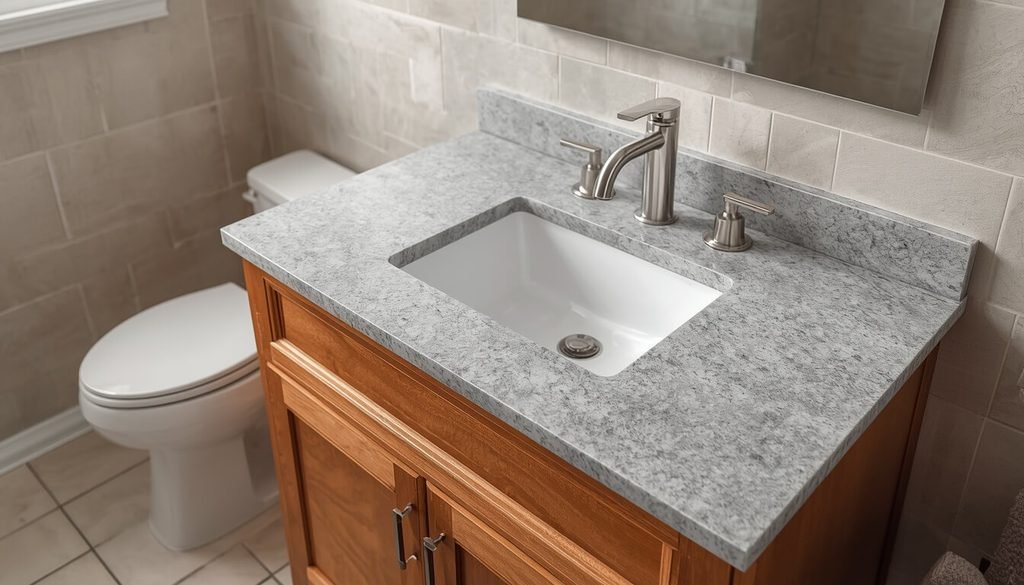
8. How Do You Choose the Right Granite Vanity Top for Your Bathroom?
Choose a granite vanity top that fits your bathroom, matches your cabinet dimensions, suits your sink configuration, and stays within your budget. Before buying, compare granite slab samples, check cabinet support, and consider how much cleaning and maintenance you are willing to do.
Check Your Bathroom Size and Cabinet Dimensions
Start by measuring the vanity cabinet’s width and depth. The countertop should fit the cabinet properly, with enough room for the sink, faucet, and any required backsplash. Accurate vanity cabinet dimensions also help prevent problems during countertop fabrication and installation.
Consider how much usable space you have around the sink. For example, a 36-inch vanity in a small guest bathroom may work well with a single sink, while a larger primary bathroom might have enough room for a double-sink setup. Always confirm the cabinet measurements before ordering a custom top.
Choose a Color That Matches Your Bathroom
Granite comes in many shades, from white and beige to gray and black, with natural mineral patterns that make each slab different. Good countertop color coordination helps the vanity look balanced with your cabinets, wall tiles, flooring, and bathroom lighting.
Use these simple guidelines when comparing granite countertop colors:
- White or light granite: Works well with dark cabinets and can help a small bathroom feel brighter.
- Gray granite: Pairs easily with white cabinets, neutral tiles, and modern fixtures.
- Black granite: Creates a strong contrast with light-colored cabinets but may show dust, water spots, or soap residue.
- Beige granite: Complements warm wood cabinets, cream walls, and traditional bathroom designs.
Do not choose a color based only on a small online photo. View samples under lighting similar to your bathroom, and check the actual slab when possible. Natural stone patterns and colors can vary, even between pieces sold under the same name.
Check Cabinet Support Before Choosing the Stone
Granite is heavy, so the vanity cabinet must be level, stable, and strong enough to support the finished countertop. Inspect the cabinet structure before ordering, especially if it is old, damaged by moisture, or made from materials that have started to weaken.
Ask the fabricator or installer whether the cabinet needs reinforcement. A countertop that rests on an uneven or poorly supported base may develop problems after installation. Natural stone durability is valuable, but proper support and fitting are still essential.
Select the Right Sink Configuration
Your sink choice affects the countertop layout, available workspace, and fabrication requirements. Decide whether you need an undermount sink, a drop-in sink, or a vessel sink before the granite is cut.
- Single-sink vanity: A practical choice for smaller bathrooms and guest spaces.
- Double-sink vanity: Useful for shared bathrooms, provided the cabinet has enough width for both sinks and adequate counter space.
- Vessel sink: Sits above the countertop, so its height and faucet placement need careful planning.
- Undermount sink: Fits beneath the granite surface and provides a clean countertop edge around the basin.
Confirm sink dimensions, faucet-hole positions, and backsplash requirements with the supplier before fabrication begins. Changing these details after the stone has been cut can create extra costs.
Compare Your Budget With Maintenance Needs
Your budget should cover more than the granite itself. Include fabrication, delivery, installation, sink cutouts, backsplash materials, and any cabinet reinforcement or plumbing work. Compare complete estimates from local suppliers rather than choosing a top based only on its initial price.
Also consider the upkeep you can manage. Granite may need periodic sealing, depending on the stone and the sealer used. Clean it with a suitable stone-safe product, wipe away spills, and follow the fabricator’s care instructions. If you prefer a surface that requires less routine maintenance, compare granite with quartz before making your final choice.
Practical tip: Before placing an order, bring together your cabinet measurements, sink specifications, cabinet color, tile sample, and budget. Reviewing these details at the same time makes it easier to select a top that suits your bathroom and avoids expensive changes later.
If you are still planning the vanity layout, you can also review HomeVanityHub’s related guide to standard bathroom vanity depth to help check the available space before ordering.
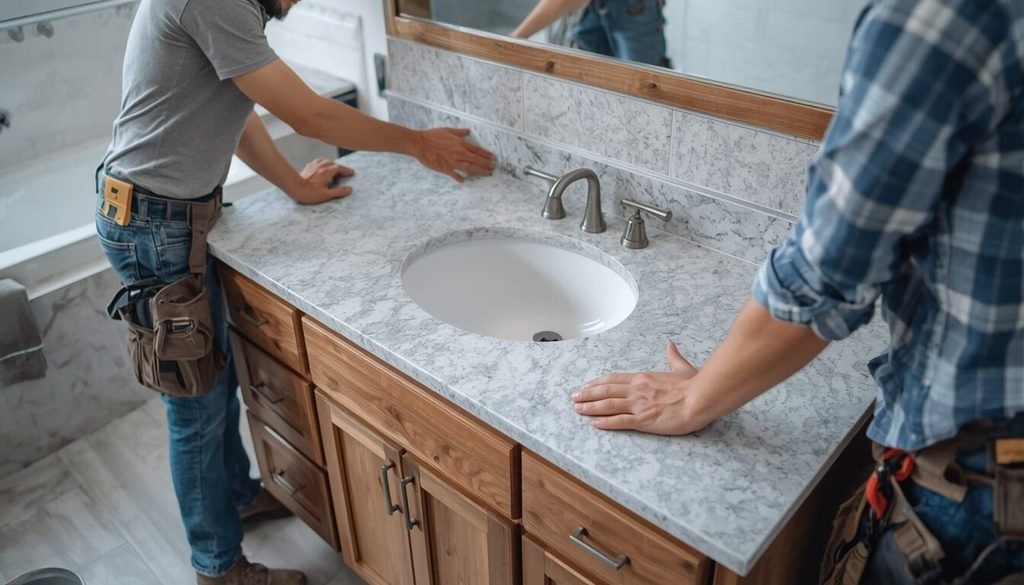
9. How Is a Granite Vanity Top Installed?
Installing a granite vanity top involves measuring the cabinet, checking its support, fitting the stone, attaching the sink, and reconnecting the plumbing. Because granite slabs are heavy and can crack if handled incorrectly, careful preparation and proper lifting equipment are essential.
How Should You Prepare the Vanity Cabinet?
Before installation, measure the cabinet and confirm that the countertop dimensions, sink cutouts, and faucet holes match the planned layout. The cabinet must be level, stable, and strong enough to support the stone.
- Remove the old countertop and clean the cabinet surface.
- Check for water damage, loose joints, or weak supports.
- Level the cabinet and add reinforcement if the installer recommends it.
- Dry-fit the countertop to check its position before applying adhesive.
Accurate measurements help prevent costly changes during countertop fabrication and installation.
How Are the Countertop, Sink, and Backsplash Fitted?
During granite vanity installation, installers carefully position the slab and secure it using suitable products recommended for the stone and cabinet. The sink is then fitted according to its design, followed by the faucet and any matching backsplash.
For an undermount bathroom sink, the sink is secured beneath the granite using the appropriate mounting system and support. The installer seals the joints where needed and checks that the sink openings and faucet holes align correctly.
Once the countertop is secure, a plumber can reconnect the water supply and drain. Granite may also need sealing, depending on the stone’s porosity and the product used. Follow the fabricator’s instructions for the correct timing and care.
When Should You Hire a Professional Installer?
Hire a professional when the slab is large, the cabinet needs reinforcement, the layout requires complex cuts, or plumbing connections need changes. Professional installation labor can also help reduce the risk of damaging the stone, cabinets, or surrounding walls.
For example, a 60-inch double-sink countertop is difficult to lift and position safely without enough people and proper equipment. Avoid lifting or carrying heavy granite slabs alone. Ask the supplier whether delivery, installation, sink fitting, and removal of the old countertop are included in the quote.
If your project also involves connecting the sink or adjusting drainpipes, see HomeVanityHub’s guide to installing bathroom vanity plumbing for more details about plumbing connections and leak checks.
Proper installation helps the countertop sit securely, keeps the sink connections watertight, and reduces the chance of damage over time.

10. How Do You Clean, Seal, and Maintain Granite Vanity Tops?
Clean granite vanity tops daily with a soft cloth and a suitable stone-safe cleaner, wipe up spills quickly, and seal the surface when its condition and manufacturer’s instructions indicate it is needed. Proper granite countertop maintenance helps reduce staining, water marks, and damage to the finish.
Which Cleaning Products Are Safe for Granite?
Use warm water, a soft microfiber cloth, and a cleaner approved for natural stone. Avoid acidic products, abrasive powders, and harsh chemicals that may damage the surface or affect its finish.
- Wipe away toothpaste, makeup, and soap after use.
- Dry the countertop to limit water spots and soap residue.
- Clean spills promptly instead of letting them sit.
- Follow the stone supplier’s care instructions.
Both a polished granite finish and honed granite need gentle cleaning. Polished stone has a glossy appearance, while honed granite has a more matte look; water marks may be more noticeable on some darker surfaces.
How Often Should Granite Vanity Tops Be Sealed?
Granite countertop sealing depends on the stone’s porosity, its existing treatment, and the sealant used. Some granite needs regular sealing, while other varieties may need it less often.
To check whether sealing may be needed, place a few drops of water on a clean, dry area and follow the stone supplier’s testing guidance. If the water absorbs and darkens the stone rather than remaining on the surface, ask the supplier whether resealing is appropriate. Always follow the sealant manufacturer’s instructions instead of assuming every countertop needs annual treatment.
How Can You Prevent Water Spots, Soap Residue, and Stains?
The easiest way to protect the surface is to avoid leaving water, cosmetics, or cleaning products sitting on it. Dry the area around the faucet and sink after use, and inspect the countertop periodically for dull patches or signs of moisture absorption.
For more guidance on keeping the surrounding area clean, read HomeVanityHub’s bathroom vanity backsplash maintenance tips. Regular care around the sink and backsplash helps keep the whole vanity area looking neat.
11. What Mistakes Should You Avoid When Buying Granite Vanity Tops?
Avoid ordering before confirming measurements, checking the actual stone pattern, verifying sink compatibility, and calculating the full installation cost. A little planning helps prevent fitting problems, unexpected expenses, and maintenance issues.
- Taking incorrect measurements: Check the width and depth of your vanity cabinet, wall clearance, and countertop overhang. Use HomeVanityHub’s guide to common vanity sizes before ordering.
- Choosing from a small photo: Granite patterns vary naturally. Inspect the actual slab or a large sample before making your final granite slab selection.
- Ignoring thickness and edges: Compare countertop thickness and edge profiles to make sure they suit your bathroom design and cabinet structure.
- Forgetting sink compatibility: Confirm the sink dimensions, sink cutouts and faucet holes, and faucet placement before fabrication.
- Overlooking cabinet support: Check cabinet support and leveling before placing a heavy stone surface on the vanity.
- Underestimating the total cost: Include fabrication, delivery, installation, plumbing, and removal when calculating your bathroom vanity countertop cost.
- Skipping sealing requirements: Ask the supplier about the stone’s porosity, suitable sealant, and recommended maintenance routine.
Before paying, request an itemized quote and confirm the measurements, sink layout, finish, and installation services in writing. This simple check can save time and help you avoid costly changes later.
FAQs
Are Granite Vanity Tops Good for Bathrooms?
Yes, granite is a durable natural stone that offers unique patterns and a premium appearance. With proper cleaning and care, it can work well in both small and large bathrooms.
Do Granite Vanity Tops Need to Be Sealed?
Some granite surfaces need periodic sealing to reduce moisture absorption and staining. Follow the stone supplier’s recommendations because sealing needs vary by granite type.
Can Granite Vanity Tops Get Water Stains?
Yes, water spots can appear when mineral deposits dry on the surface. Wipe the countertop dry after use and clean it with a suitable stone-safe product.
Is Granite Better Than Quartz for a Bathroom Vanity?
Granite offers natural patterns, while quartz provides more consistent colors and generally does not require sealing. The better choice depends on your preferred appearance, maintenance needs, and budget.
How Long Can a Granite Vanity Top Last?
A well-installed granite countertop can last for decades. Proper cabinet support, routine cleaning, and suitable maintenance help extend its service life.
Can You Replace a Vanity Top Without Replacing the Cabinet?
Yes, if the existing cabinet is stable, level, and strong enough to support the new top. Check the dimensions and sink connections before ordering a replacement.
Can You Install a Granite Vanity Top Yourself?
It is possible for experienced DIYers, especially with smaller prefabricated tops. However, heavy slabs and precise sink cutouts often make professional installation the safer choice.
Conclusion
Choosing the right granite vanity tops comes down to balancing your bathroom’s style, available space, budget, and maintenance needs. Take time to compare stone samples, confirm measurements, and understand the full installation cost before making a decision. A well-chosen countertop should do more than look beautiful—it should serve your daily needs and remain a practical part of your bathroom for years to come.