
Introduction
You spot a beautiful old dresser at an estate sale and wonder if it could work in your bathroom. It’s a common thought, and it’s a big reason the antique style bathroom vanity remains popular in traditional and modern homes alike. In this guide, we’ll cover the main styles, the best materials, sizing tips, and simple care advice, so you can choose a vanity that looks good and holds up to daily use.
Table of Contents
Antique Style Bathroom Vanity: Types, Materials & Buying Guide
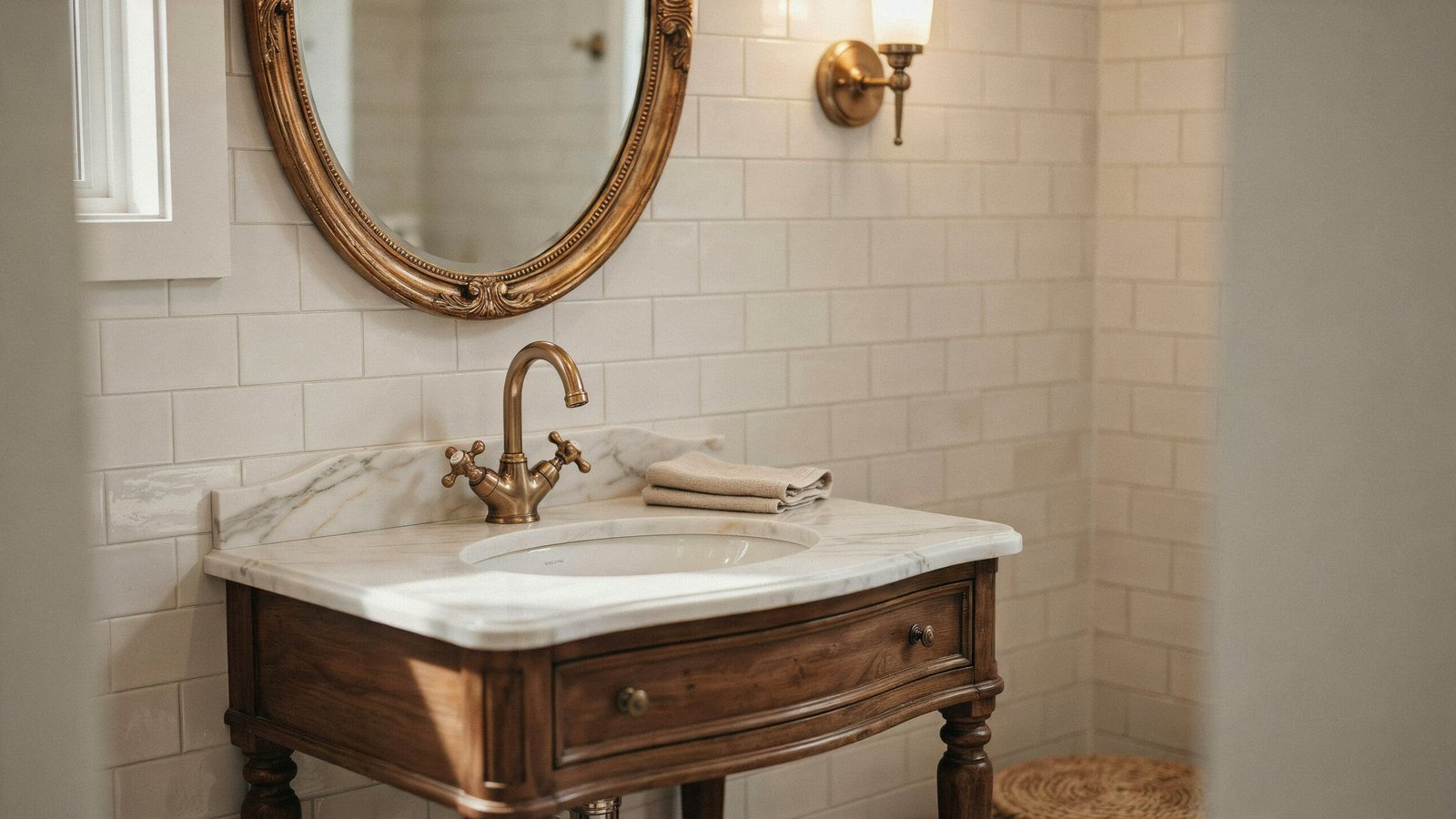
An antique style bathroom vanity can turn a plain, forgettable bathroom into a room with real personality. Turned legs, carved details, marble tops, and warm aged finishes bring a sense of history that most modern cabinets simply don’t have.
This guide explains what an antique style bathroom vanity is, which styles and materials are most popular, how to pick the right size, including the standard bathroom vanity depth, and how to keep it looking beautiful for years.
What Is an Antique Style Bathroom Vanity?
An antique style bathroom vanity is a sink cabinet designed to look like a traditional piece of furniture from an earlier era. It usually features decorative legs, detailed molding, and a rich, aged finish.
There are two routes to get this look:
- A true antique: an original piece, such as an old dresser, washstand, or sideboard, converted into a vanity.
- A reproduction: a newly built vanity made with modern construction but styled and finished to look aged.
Both are popular, and the right choice depends on your budget, your bathroom, and how much work you’re willing to take on.
Antique vs. Vintage Bathroom Vanity: What’s the Difference?
People often use these words interchangeably, but they suggest slightly different looks.
| Feature | Antique Style | Vintage Style |
| Overall feel | Formal, ornate, elegant | Relaxed, casual, nostalgic |
| Details | Heavy carving, Victorian or French lines | Simpler shapes, softer detailing |
| Best for | Period homes, traditional or luxe bathrooms | Cottage, farmhouse, eclectic spaces |
| Typical finish | Dark wood, glazed, or antique white | Painted, distressed, or worn look |
If you want drama and grandeur, lean antique. If you want warmth and a lived-in feel, vintage may suit you better.
Popular Antique Bathroom Vanity Styles
Victorian Vanities
Victorian designs are known for marble tops, curved aprons, decorative feet, and rich wood tones. They work beautifully in larger bathrooms where the vanity can act as a focal point.
French Country and French Provincial
These vanities have gently curved lines, softer colors, and elegant hardware. They pair well with light walls and natural stone tiles.
Art Deco Vanities
Art Deco pieces feature geometric shapes, mirrored surfaces, and metallic accents. They suit bathrooms that want a glamorous, retro look.
Dresser-Style and Furniture-Style Vanities
These look like real bedroom furniture, with drawers and paneled doors. They are a favorite for powder rooms because they feel like a piece of decor rather than a fixture.
Pedestal and Washstand Styles
Slim and open, these suit small bathrooms. They give the antique look without the visual weight of a large cabinet.
Best Materials for an Antique Style Bathroom Vanity
Solid Wood
Walnut, cherry, mahogany, and oak are traditional choices. Solid wood offers lasting beauty and a finish that deepens with age. It must be properly sealed to handle bathroom humidity.
Wood Veneer
Veneer gives the look of fine wood at a lower cost. Quality veneer over a stable core can perform well, but water exposure at the edges is a risk, so check the sealing.
Marble Tops
White or veined marble is the classic pairing for antique cabinets. It looks elegant, but it is porous and can stain, so it needs sealing and gentle cleaning.
Granite and Quartz Tops
These are more durable alternatives. Quartz in particular resists stains and needs less maintenance while still looking refined.
Painted and Antiqued Finishes
Antique white, soft gray, sage, and deep navy finishes with light distressing create an aged look without needing a genuinely old piece.
Hardware and Fixtures That Complete the Look
The right details matter as much as the cabinet itself.
- Faucets: cross-handle or widespread faucets in brass, bronze, or nickel.
- Knobs and pulls: antique brass, porcelain, or crystal.
- Mirrors: ornate framed mirrors, oval shapes, or gilded frames.
- Lighting: sconces with warm-toned bulbs and aged brass finishes.
- Tile: classic subway, hexagon, or black-and-white patterns.
Keep the metal finishes consistent across the room so the design feels intentional rather than cluttered.
How to Choose the Right Size
Before you shop, measure carefully.
- Check clearance: leave enough space in front of the vanity to move comfortably and open drawers or doors fully.
- Consider the door swing: make sure the bathroom door and vanity doors don’t collide.
- Match the plumbing: note where your supply lines and drain are located.
- Choose single or double sink: double sinks suit shared bathrooms, but only if you have the width.
- Think about height: standard vanity heights work for most people, but remember that the countertop adds to the total height. A Calacatta quartz vanity countertop is one example of a top that suits an antique cabinet, so check what feels comfortable for your household.
In small bathrooms, a slim or pedestal-style piece often works better than a bulky cabinet.
Can You Turn an Antique Dresser Into a Bathroom Vanity?
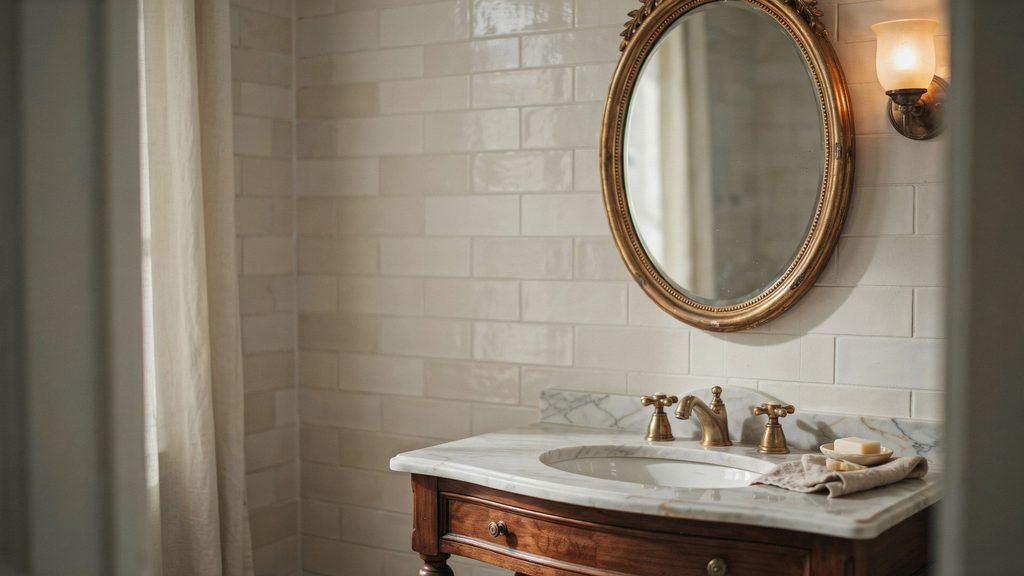
Yes, and it’s one of the most creative ways to get a one-of-a-kind look. But it takes planning:
- Get a custom top. A stone or solid surface top cut to fit the piece protects the wood underneath.
- Choose the sink type. A vessel sink sits on top, while an undermount or drop-in sink requires cutting an opening.
- Modify for plumbing. Drawers often need to be cut out or reshaped to make room for pipes.
- Seal the wood. Use a durable, water-resistant finish on every surface, inside and out.
- Ventilate well. Good airflow prevents moisture damage to older wood.
Because of the cutting and sealing involved, many people hire a carpenter or plumber for this project. Also remember that modifying a valuable antique can reduce its collectible value, so consider using a less valuable piece.
Pros and Cons of an Antique Style Bathroom Vanity
Pros
- Adds character and a strong focal point
- Blends well with traditional, transitional, and eclectic designs
- Reproductions offer modern durability with classic looks
- Aged finishes tend to hide everyday wear
Cons
- Can cost more than basic modern vanities
- True antiques may need custom work and extra sealing
- Some materials, like marble, need regular care
- Ornate designs can collect dust in the details
Care and Maintenance Tips
- Wipe up splashes quickly to protect wood finishes.
- Use mild, non-abrasive cleaners on wood and stone. Marble is sensitive to acids, so a pH-neutral, non-acidic cleaner is the safer choice.
- Reseal marble and wood periodically according to the manufacturer’s advice.
- Run the exhaust fan during and after showers to reduce humidity. The US EPA notes that more ventilation and regular cleaning usually help when mold keeps returning in a bathroom.
- Check the plumbing connections occasionally for slow leaks.
- Dust carved details with a soft brush.
Design Ideas to Try
- Powder room jewel box: a small, ornate vanity with bold wallpaper.
- Classic white and marble: an antique white cabinet with a marble top and brass fixtures.
- Dark and moody: a deep walnut vanity against dark green walls.
- Soft cottage look: a distressed pastel vanity with a simple framed mirror.
Frequently Asked Questions
What is an antique style bathroom vanity?
It is a bathroom sink cabinet designed with the look of traditional furniture, featuring ornate details, aged finishes, and classic materials.
Is an antique style bathroom vanity practical for daily use?
Yes, especially reproduction models, which combine period looks with modern construction and moisture-resistant finishes.
What wood is best for an antique bathroom vanity?
Walnut, cherry, mahogany, and oak are popular because they are strong and attractive, provided they are well sealed.
Can I use a real antique piece as a vanity?
Yes, but it usually needs a custom top, plumbing modifications, and proper waterproofing.
Which countertop suits an antique vanity best?
Marble is the classic option, while granite and quartz offer easier maintenance.
Do antique vanities suit small bathrooms?
They can, if you choose a slim, pedestal, or compact single-sink design.
Final Thoughts
An antique-style bathroom vanity is more than storage for a sink. It is a statement piece that can define your whole bathroom. Whether you choose a genuine restored piece or a well-made reproduction, focus on quality construction, proper sealing, and details that match your home’s style. If your bathroom is shared, it’s also worth looking at layout options such as two separate vanities placed kitty-corner before you decide on one large cabinet. With good planning and regular care, it will stay beautiful for years.
Written by Bilal Khan
Bilal Khan is a content writer at Home Vanity Hub with a keen interest in bathroom design, vanities, and home decor. He researches materials, styles, and practical buying factors so readers can make confident choices for their homes. His goal is to explain design ideas in simple, honest language without unnecessary jargon.
Pingback: Typical Vanity Depth: Complete Sizing Guide