
Introduction
A sage green bathroom vanity looks like an easy upgrade until you actually try it. You tape a paint sample to your old white cabinet, and in the morning it looks like a soft, dusty green. By evening, under your bulbs, the same color turns gray, or worse, a little muddy.
That confusion is why so many homeowners stall halfway through this project. White vanities have started to feel flat, but choosing the wrong green is a risky, expensive mistake.
This guide clears that up. You will see what pairs well with sage green, how lighting changes the color, which faucet and hardware finish fits best, and how to test a shade before you commit. By the end, you can pick your vanity with confidence.
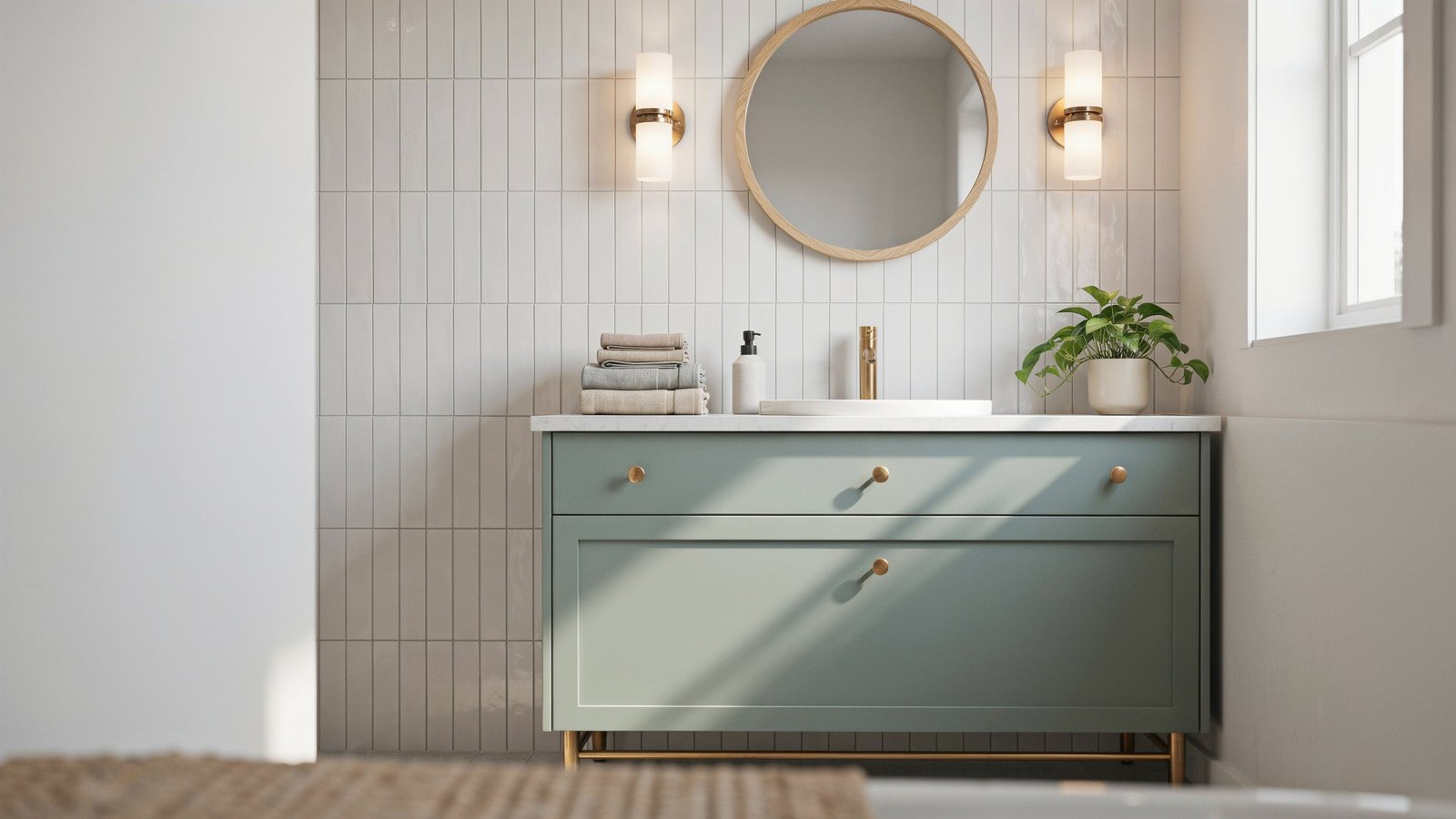
Table of Contents
What Makes a Sage Green Bathroom Vanity Different From Other Green Vanities?
A sage green bathroom vanity is a muted, gray-green color that looks soft and almost neutral. Mint, emerald, and olive all carry more color: mint is bright and cool, emerald is deep and jewel-like, and olive leans yellow and brown.
The gray in sage is what sets it apart. It takes the edge off the green, so the cabinet reads as calm instead of bold. That is why sage green cabinets sit comfortably next to white tile, a wood mirror, or a marble top without competing with them. A mint vanity in the same room would stand out, and an emerald one would take over the space.
Once you have picked your shade, check the average vanity height too, so the cabinet looks right and feels comfortable to use every day.
Here is a quick way to tell them apart:
| Shade | Undertone | How it feels in a bathroom |
| Sage green | Gray | Quiet, earthy, easy to pair |
| Mint green | Cool, slightly blue | Bright and fresh |
| Emerald green | Rich, saturated | Dramatic, statement piece |
| Olive green | Yellow and brown | Warm and grounded |
Sage is not one fixed color, either. The lighter versions reflect roughly 60 percent of the light that hits them, while deeper, smoky ones reflect closer to 30 percent. In a small bathroom with one narrow window, the lighter end usually keeps the room open, and the deeper end can make it feel tighter.
Undertone matters just as much as depth. A gray-green vanity looks clean next to white grout and gray-veined stone. A yellow-leaning sage can start to look muddy beside cold blue-gray tile, so check the undertone before you commit.
Why Do Homeowners Choose a Sage Green Bathroom Vanity Over White or Wood?
Homeowners choose a sage green bathroom vanity because it adds color without the risk of a bold shade. It behaves almost like a neutral, so it feels calm, and it fits many design styles that a plain white or wood vanity can leave flat.
Picture a common setup: white walls, white subway tile, and a white vanity. Everything is clean, but nothing stands out, and the vanity disappears into the room. Swap in a sage green vanity and the same bathroom suddenly has a focal point. The walls, tile, and fixtures can stay exactly as they are, so you get a fresh look without redoing the whole room.
A Color That Feels Calm and Easy to Live With
Sage has gray in it, which mutes the green and keeps it quiet. That is why many people find it restful in a room where they start and end the day. It also plays well with almost any material next to it, including marble, quartz, white oak, brushed brass, and matte black.
Compared with the alternatives, the trade-offs look like this:
- White vanity: Clean and bright, but it can feel plain, and it gives the room no character on its own.
- Wood vanity: Adds warmth and texture, but it can clash with wood flooring or a wood mirror if the tones do not match.
- Sage green vanity: Brings color and warmth, and it still lets other finishes take the lead.
It Fits Many Design Styles
A sage green vanity is flexible because the shade itself is not tied to one look. The style comes from the door profile and the hardware:
- Modern farmhouse: Shaker doors with matte black pulls
- Transitional: A simple flat front with brushed nickel or brass hardware
- Traditional: Raised panels with a marble top and polished fixtures
- Cottage: Beadboard or paneled doors with light wood accents
Because of this, you can change the hardware or the mirror later and the vanity still looks right. A bold emerald or a bright mint vanity gives you far less room to do that.
A Low-Risk Way to Add Color
Paint on a wall is easy to change, but a vanity is a bigger purchase. Sage is a safer choice than a saturated color for that reason. It reads as a soft, earthy shade, so it is less likely to feel dated or out of place as your taste changes. Many designers point to a sage or gray-green vanity under white walls as an easy way to make a bathroom look custom without committing the whole room to color.
Lighting can change how a sage green bathroom vanity looks. The same shade can turn gray in a dim room and look fresh in bright light, so we cover lighting in detail later in this guide.
Which Countertop Looks Best With a Sage Green Vanity?
For most bathrooms, a white or light countertop looks best on a sage green bathroom vanity. It keeps the room bright and lets the green stand out. If you want more contrast, black quartz or a warm natural stone can work just as well, as long as you match the material to how the bathroom is actually used.
Sage is soft and gray-toned, so it does not fight with much. The real question is less about color and more about upkeep, because a vanity top takes daily hits from toothpaste, perfume, and water.
Light Countertops (White Marble, Quartz)
A white countertop on a sage base is the safest pairing. The light top reflects light back into the room, and the white against the muted green gives a clean, two-tone look that suits almost any style.
White marble is the classic choice. Marble with soft gray veining echoes the gray in sage, so the two look like they belong together. The catch is upkeep. Marble is porous, and acids in everyday products can etch it, which leaves a dull spot that sealing does not prevent. A bottle of perfume, mouthwash, or a citrus cleaner left standing can be enough to mark it. If you love the look, plan to wipe spills quickly and use a stone-safe cleaner.
White quartz gives you a similar look with far less worry. Engineered quartz is non-porous, so it does not need sealing and is much harder to stain. Many quartz slabs are made with Carrara-style veining, so you can still get the marble look on a busy family bathroom.
A quick way to decide:
- Choose marble if you value natural variation and are fine with a little patina over time.
- Choose quartz if the bathroom is shared, used by kids, or you want a top you never have to think about.
For a small bathroom, the white top also helps a deeper sage base feel lighter, since the vanity is not all one dark block.
Dark and Natural Stone Options (Black Quartz, Travertine)
If you want the sage to feel richer, a dark or earthy countertop can do that, but the result is more dramatic and shows wear differently.
Black quartz makes the green pop and gives the bathroom a modern edge. It works well with a matte black faucet and a black-framed mirror. One thing to know is that polished dark surfaces show water spots more easily, and a matte finish hides them better, so ask to see both finishes before you order.
Travertine goes the opposite way, adding a warm, earthy feel that suits sage’s natural tone. It works well in a spa-style or Mediterranean-leaning bathroom. It is also porous and can etch, so it needs sealing and pH-neutral cleaners, and harsh bathroom cleaners can damage it quickly.
Here is how the four stack up:
| Countertop | Look with sage | Upkeep |
| White quartz | Clean, bright, modern | Very low, no sealing |
| White marble | Soft, classic, natural veining | High, seal and wipe spills fast |
| Black quartz | Bold, high contrast | Low, matte hides spots better |
| Travertine | Warm, earthy, spa-like | High, seal and use gentle cleaners |
If you are not sure, start with white quartz. It works with almost every sage shade and almost every hardware finish.
What Faucet and Hardware Finish Works With Sage Green?
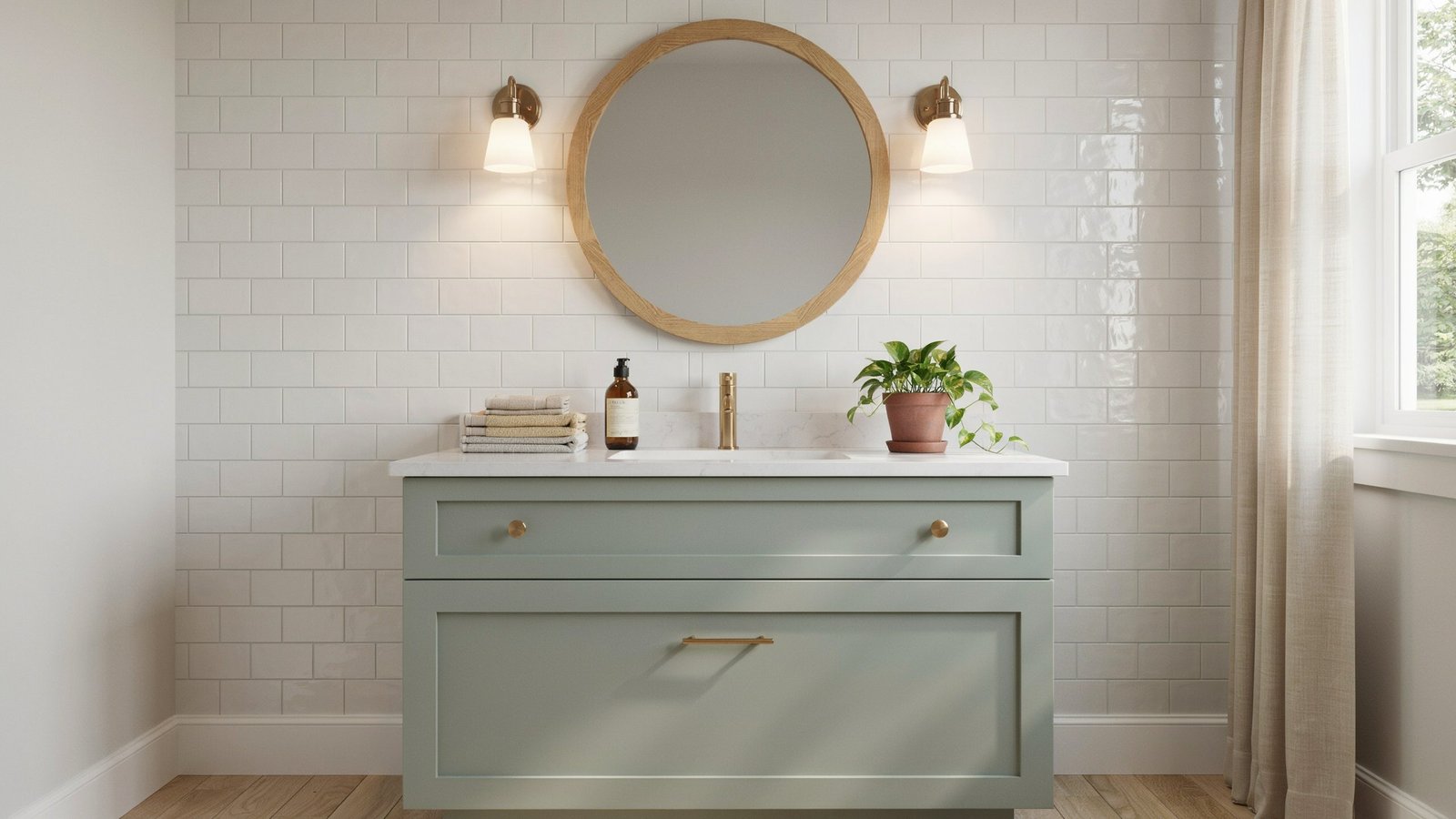
Unlacquered or satin brass is the safest match for a sage green bathroom vanity, with brushed nickel and matte black as strong alternatives depending on your style. The right pick comes down to the undertone of your green and the look you want the room to have.
Brass and Gold: Warm, Classic, and Forgiving
Brass brings out the yellow in sage green and gives the vanity a collected, traditional feel. It suits transitional and vintage-inspired bathrooms especially well. Satin or brushed brass hides fingerprints better than polished, and unlacquered brass develops a soft patina over a couple of years, which many homeowners find adds character. If your sage leans warm and earthy, this is the pairing that looks most intentional.
Brushed Nickel: The Balanced Choice
Brushed nickel is quieter than brass. It works best with cooler, grayer sage tones and suits a spa-like or coastal bathroom. It also hides water spots well, which matters if this is a busy family bathroom. If you are unsure, this finish rarely looks wrong.
Matte Black: Modern Contrast
Matte black gives a sage green vanity a crisp, graphic edge. It fits modern farmhouse and contemporary spaces, particularly with a white quartz or marble-look countertop. The tradeoff is upkeep. Soap residue and hard water marks show up more on dark finishes, so it is a better fit if you wipe surfaces down regularly.
Polished Chrome: Clean but Cooler
Chrome feels bright and fresh, but it can look slightly cold beside a muted green. It works in smaller bathrooms where you want reflected light, though it is less common in current sage green designs.
HHow to Coordinate Your Finishes
A typical 5-by-8 bathroom has at least six metal touchpoints: the faucet, two cabinet pulls, a towel bar, a paper holder, and a light fixture. A few simple rules keep them looking cohesive:
- Stick to one main finish, and add a second only as a deliberate accent, such as a black mirror frame with brass hardware.
- Match the faucet to the cabinet pulls first, then the lighting.
- Check samples next to the actual cabinet color under 2700K to 3000K bulbs, since warm lighting shifts how metals and green read.
If you are still choosing the vanity itself, a master bathroom double vanity adds two faucets and more hardware, so keeping your finishes consistent matters even more.
What Wall Color and Tile Should You Put Around a Sage Green Vanity?
Warm white or soft cream walls with simple white subway tile are the easiest way to make a sage green bathroom vanity look polished. The main rule is to keep the undertones consistent, so the green looks fresh instead of muddy.
White and Cream Walls
Sage is a muted color, so it needs a calm backdrop. A warm white with a slight cream or yellow base lifts the green and keeps the room soft. A stark, blue-leaning white can make a warm sage look dull by comparison, especially in a bathroom without much natural light. If your walls are painted, choose a finish with a satin or eggshell sheen, since it handles humidity better than flat paint.
Subway Tile and Other Tile Options
Classic 3-by-6-inch white subway tile is a reliable choice behind or beside the vanity. It reflects light, stays out of the way, and suits nearly every hardware finish. Set it with warm white or light gray grout. Dark grout adds a busy grid pattern that competes with the cabinet color.
For a little more character, consider these options:
- Zellige or handmade-look tile in cream or pale green for a soft, uneven shine
- Marble-look porcelain with gentle gray veining for a spa feel
- Warm gray or white hexagon tile on the floor to ground the vanity without matching it
Keep the tile pattern simple. When the vanity is the color statement, the tile should support it, not fight it.
Wood Mirrors and Natural Textures
A white oak or light walnut mirror frame pairs naturally with sage green because both come from the same earthy palette. It adds warmth without adding another color. You can repeat that wood tone in a small stool, a shelf, or a tray on the countertop so the room feels layered rather than flat. Add a woven basket or linen towels for texture, and you have a bathroom that feels designed, not just painted.
How to Avoid Undertone Clashes
Most sage green problems come from undertones. Pink-beige walls tend to turn the green gray and lifeless, while cool gray walls can make a warm, olive-leaning sage look dingy. A simple test saves a lot of regret. Paint two large sample swatches on different walls, then check them in the morning and again in the evening under your actual 2700K to 3000K bulbs. Lighting changes how green reads more than most people expect, and a quick sample check costs far less than repainting a bathroom.
If you are planning the lighting as part of this look, that topic could link to a related article on the best bathroom vanity lighting for green cabinets.
How Does Lighting Change the Look of a Sage Green Vanity?
Lighting can shift a sage green bathroom vanity from soft and earthy to flat and gray. Warm bulbs around 2700K to 3000K keep the green fresh, while cool bulbs and weak daylight tend to dull it.
Warm vs. Cool Bulbs
Warm white LEDs bring out the yellow undertone in sage green cabinets and make the color feel calm and inviting. Cool bulbs at 4000K or higher push the green toward gray-blue, which can make a muted green vanity look lifeless. Choose bulbs with a high CRI of 90 or above so the color reads true. If the Kelvin numbers feel confusing, this overview of color temperature shows how warm and cool light differ.
Natural Light and North-Facing Bathrooms
A north-facing bathroom gets cooler, softer daylight, so the same sage can look noticeably grayer than the paint chip did in the store. In that case, pick a sage with a warmer, slightly yellow base, and lean on warm bulbs to balance it. South-facing rooms show the color brighter and more saturated, so a grayer sage often works better there.
Layered Lighting Around the Vanity
For a typical 36-inch vanity, side sconces at face height cast more even light than a single overhead fixture, which creates shadows. A backlit mirror adds a gentle glow, and a dimmer lets you adjust the mood from morning to evening.
Before you commit, check a paint sample at 8 a.m. and again at 8 p.m.
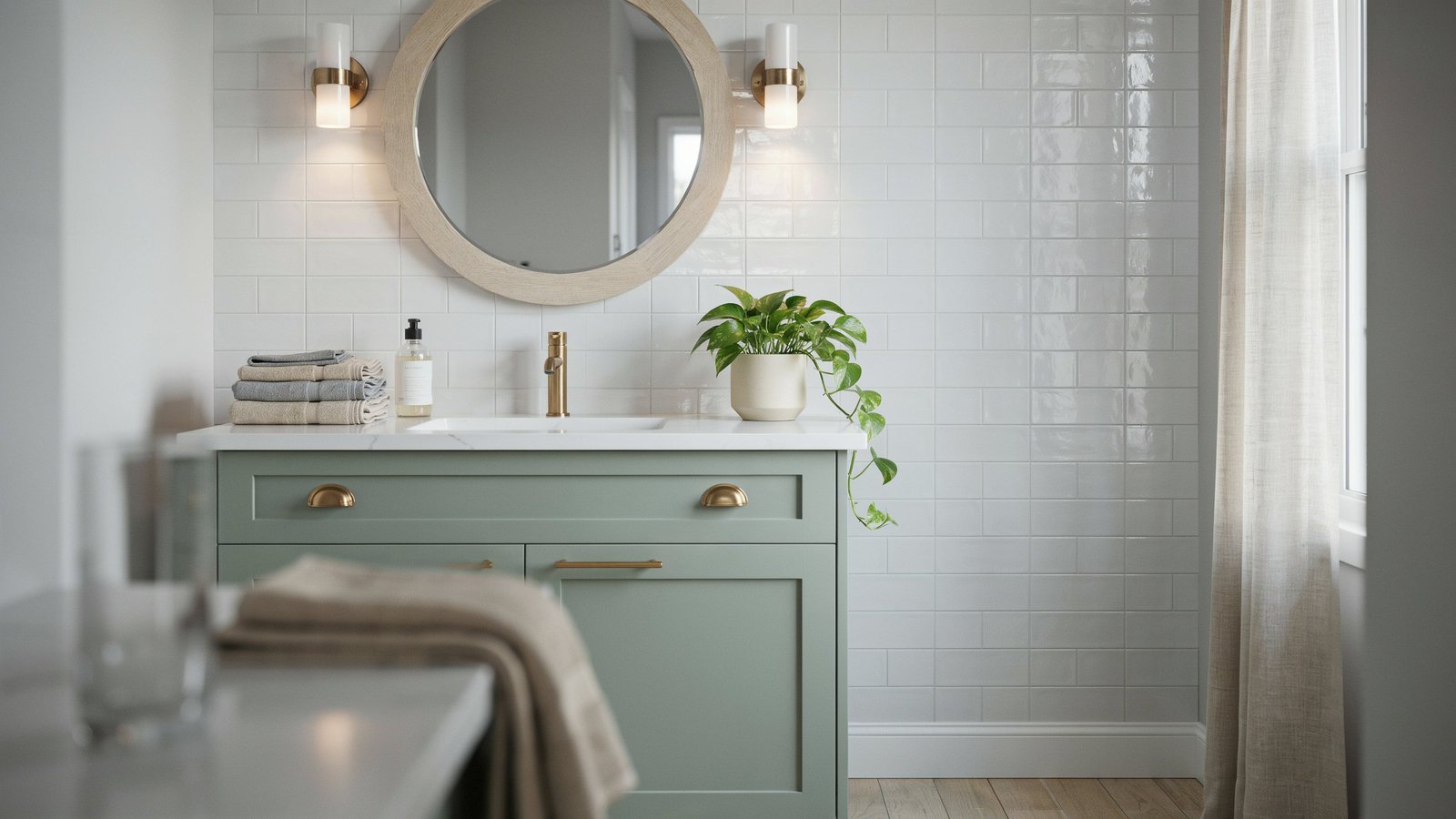
Should You Buy a Pre-Finished Sage Green Vanity or Paint Your Own?
For most homeowners, a pre-finished sage green bathroom vanity is the better choice because the factory coating lasts longer in a humid room. Painting your own makes sense when you want an exact shade, or you are refreshing a vanity you already own.
Factory Finish vs. Painted Vanity
Factory-finished cabinets are usually sprayed and cured in a controlled setting, which creates a harder, more even surface than a brush or roller can. That matters in a bathroom, where steam and splashes are daily. A painted vanity can look great, but it typically needs more upkeep and may show chips around the edges and pulls within a few years.
The tradeoff is color choice. Store-bought sage green vanities come in a limited range of undertones, so you may not find the exact gray-green you had in mind. Painting gives you full control, and you can match the vanity to your walls or tile.
Durability and Sheen: Satin vs. Semi-Gloss
Satin is the popular pick for sage green because it hides brush marks, looks soft, and wipes clean. Semi-gloss is tougher and more moisture resistant, but it reflects more light and can highlight dents or uneven surfaces. For a busy family bathroom, semi-gloss on the doors and satin on a larger surface is a reasonable compromise, though most people simply choose one finish for consistency.
How to Prep and Paint a Vanity
Good prep decides how long the paint lasts. A typical weekend project looks like this:
- Remove doors and hardware, then clean with a degreaser to strip soap and oil residue
- Lightly sand, and fill any dings or old hardware holes
- Apply a bonding primer, then two thin coats of cabinet-grade enamel, allowing full drying time between coats
- Let the finish cure for several days before heavy use
A common mistake is rushing the cure. Paint may feel dry in 24 hours but stay soft for a week or more, which is when most scratches happen.
If you are weighing the cost of each route, this topic could link to a related article on sage green vanity budget and pricing.
How Do You Choose the Right Sage Shade for Your Own Bathroom?
Before you settle on a sage green bathroom vanity, judge the color where it will live, next to your real finishes and under your own bathroom lighting. Paint chips are a starting point only, so always test the color in the room before you buy or paint.
Sage greens vary more than most people expect. Some lean yellow and earthy, others lean gray or even slightly blue. A warm sage suits a north-facing bathroom with cooler daylight, while a grayer sage holds up better in a bright, sunny room. Check the light reflectance value (LRV) on the paint card too. A mid-range LRV usually gives that soft, muted green look without turning too dark in a small space. If your bathroom is tight, look at the typical vanity depth as well, since a deeper cabinet in a dark shade can make the room feel even smaller.
A Simple Sample-Testing Routine
A few inexpensive steps will save you from repainting or returning a vanity:
- Paint a two-foot square sample on a board or poster board, not directly on the cabinet, so you can move it around
- Place it next to your countertop, tile, and hardware finish, since undertones show up in comparison
- Check it in the morning, at midday, and at night under your actual 2700K to 3000K bulbs
- Live with it for two or three days before deciding
If you are buying a pre-finished vanity, ask the retailer for a door sample or swatch and run the same test.
Common Mistakes to Avoid
The biggest mistake is choosing from a small paint chip under store lighting. A shade that looks like a soft sage on a card can look much darker once it covers a full 36-inch vanity. Another common issue is ignoring the countertop. A cool white quartz can make a warm, olive sage look yellowish, while a cream marble often flatters it.
Other slip-ups include picking a sage that clashes with the wall color and skipping the sample test because the color “looks right” online. Screens rarely show true undertones.
If readers want more help matching colors, this section could link to a related article on the best paint colors that go with sage green cabinets.
Is a Sage Green Bathroom Vanity Worth It?
Yes, a sage green bathroom vanity is worth it for most homeowners. It adds calm color without the heaviness of a dark cabinet, and it stays stylish for years because it works with brass, brushed nickel, and matte black alike.
The results depend on a few smart choices. Pick a sage with the right undertone for your light, pair it with warm white walls and a simple countertop, and keep your hardware finish consistent. Warm 2700K to 3000K bulbs will keep the green looking fresh, and a pre-finished vanity or a properly primed and cured paint job will help it hold up against daily humidity.
A good example is a small guest bathroom with a 30-inch vanity. Swapping a plain white cabinet for a muted green one, along with brass pulls and a wood-framed mirror, can change the whole room without a full remodel.
Not sure your sage green bathroom vanity will look right at home? Try a sample on the wall or a spare board and watch it through the day. Once it looks good in your own light, you can buy or paint with confidence.
FAQs
What colors go with sage green vanity?
Warm white, cream, soft beige, and light gray are the safest choices. Brass, brushed nickel, and matte black hardware all work, and white oak or walnut accents add natural warmth.
Is sage green a good color for a bathroom?
Yes. A sage green bathroom vanity gives the room a soft, relaxing look and suits any bathroom size. Match the undertone to your light and check a sample before you commit.
What is the current trend for bathroom vanities?
Homeowners are moving toward earthy, muted colors, furniture-style vanities, and natural textures like wood and stone. Warm metal hardware and simple, clean lines are also popular.
What are the latest trends in green bathroom vanities?
Muted greens, especially sage and gray-green, are leading. They are often paired with brass hardware, marble-look or white quartz countertops, and zellige or subway tile.
What color bathroom vanities are in style for 2026?
Soft greens, warm neutrals, natural wood tones, and deep blues are all in style. Sage green stands out because it feels fresh but still easy to live with.
What color bathroom vanity never goes out of style?
White and natural wood are the most timeless. Soft neutrals like greige also age well, and a muted sage green has become a dependable option for people who want a bit more personality.
What colors make a bathroom look expensive?
Layered neutrals, deep greens, and warm whites with metallic accents tend to look upscale. Consistent hardware finishes and good lighting matter as much as the color itself.
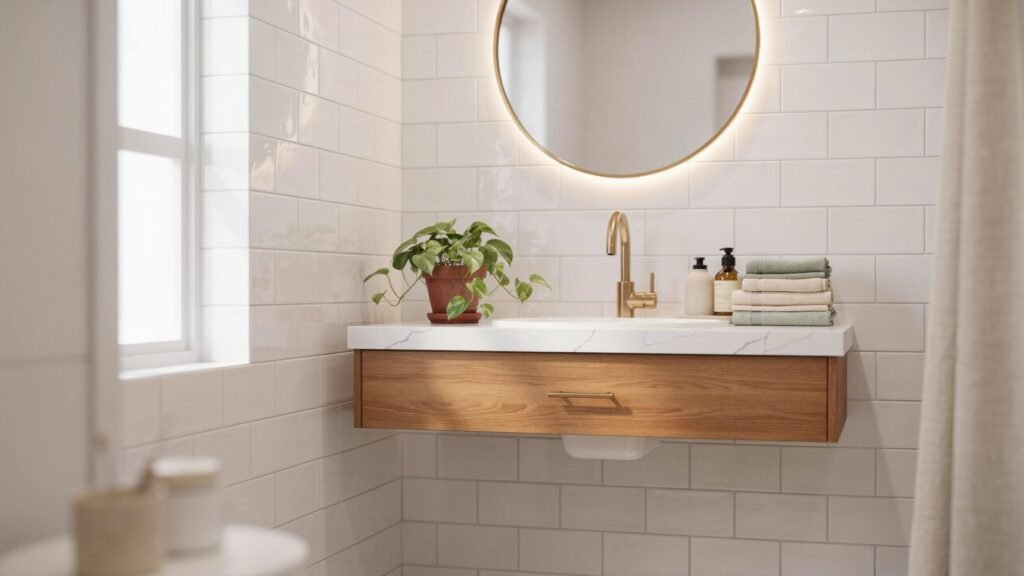
Pingback: Bedroom Sets With Vanity Dresser: Complete Guide
Pingback: Blossom Vanity Guide: Features, Sizes, Costs & Setup
Pingback: Natural Wood Vanity Bathroom Guide: Top Wood Types & Care