Introduction
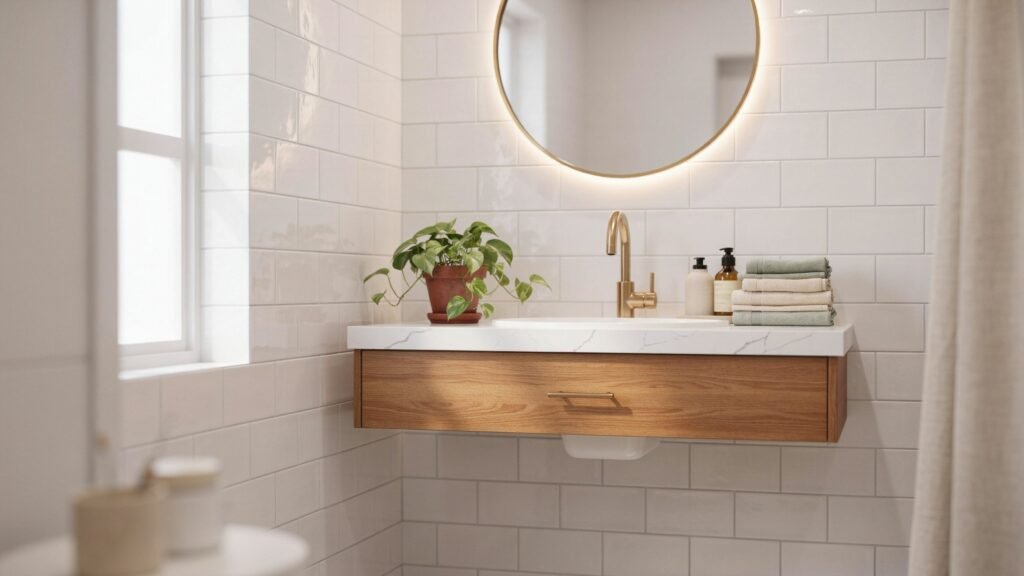
A natural wood vanity bathroom design brings warmth, organic texture, and timeless elegance to any home. While painted cabinets have dominated modern renovations for years, homeowners across the USA are increasingly turning to real wood grains like oak, walnut, teak, and maple. This shift stems from a desire to create a grounding, spa-like atmosphere that softens the clean, hard lines of modern tiles and fixtures. Incorporating a natural wood vanity into your layout instantly transforms a purely functional washing space into an inviting retreat.
Table of Contents
Why Choose a Natural Wood Vanity for Your Bathroom?
Selecting a natural wood vanity provides unmatched organic beauty that engineered laminates or plain painted surfaces simply cannot replicate. Every timber species features unique grain patterns, subtle knots, and natural color variations, ensuring your bathroom cabinet looks truly one-of-a-kind.
Here are the main advantages of installing a natural wood vanity:
- Warmth and Character: Wood brings tactile richness and organic warmth, making cold, tile-heavy bathrooms feel cozy, relaxed, and welcoming.
- Durability and Longevity: High-grade hardwood cabinetry treated with quality moisture-resistant sealants can withstand daily humidity and perform reliably for decades.
- Timeless Appeal: Unlike short-lived paint trends, natural wood tones remain classic and adaptable over time. However, if you prefer a subtle hint of soft color alongside natural elements, pairing wood accents with a trending sage green bathroom vanity creates a beautifully balanced, nature-inspired palette.
- Design Versatility: Organic wood grains complement a wide range of interior aesthetics, transitioning effortlessly from rustic farmhouse and traditional setups to modern organic and minimalist Japandi layouts.
Popular Wood Types for Bathroom Vanities
Choosing the right timber species for your bathroom cabinet involves balancing aesthetic preference with long-term moisture resistance. Because bathrooms experience high humidity and daily steam, selecting stable wood types is essential for preventing warping, swelling, or structural damage over time.
Here are the most reliable hardwood options for custom and pre-made vanity cabinets:
Maple: Maple features an ultra-smooth, dense grain structure that absorbs stains and paints evenly. This versatility gives homeowners total freedom to customize their cabinet with light, medium, or custom wood stains without blotching.
White Oak and Red Oak
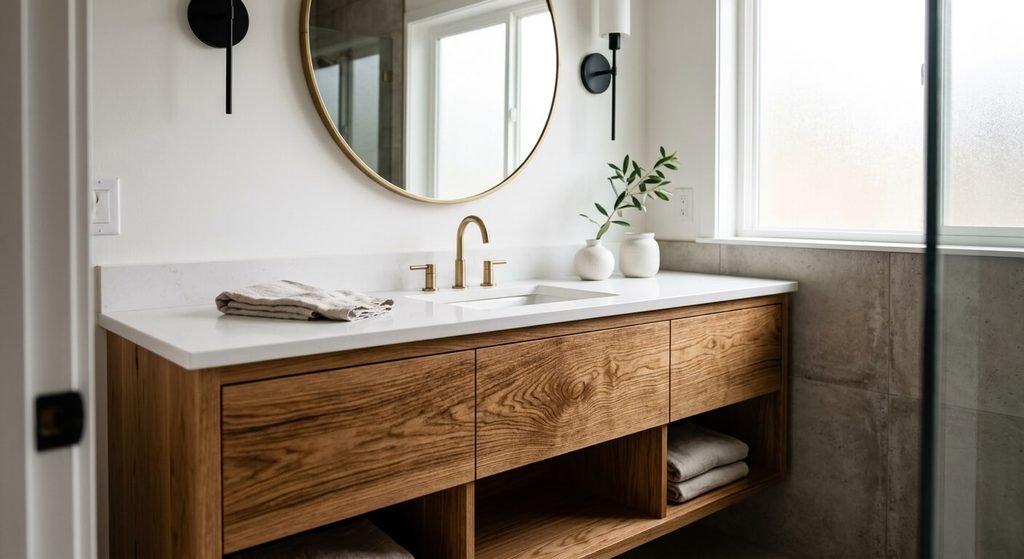
White Oak: White oak stands out as a top pick for modern organic interiors, thanks to its understated grain structure, solid durability, and neutral blonde or warm honey undertones. Its dense composition naturally resists moisture when sealed, pairing effortlessly with modern matte black or warm brushed brass hardware.
Red Oak: Red oak features a more pronounced grain pattern with subtle reddish undertones. It offers excellent structural strength and serves as a budget-friendly alternative for traditional or rustic bathroom styles.
Walnut
Walnut offers a rich, dark chocolate color with striking natural grain variations.
It adds a sophisticated, high-end look to master ensuites, creating a luxurious contrast when paired with light marble countertops, ceramic undermount sinks, and crisp white walls.
Teak and Maple
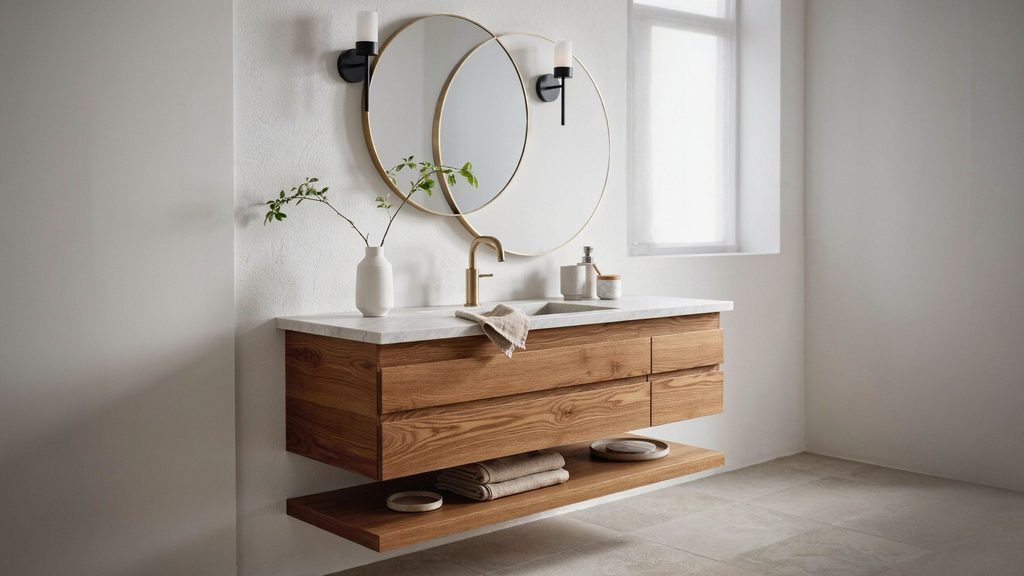
Teak: Teak is globally renowned for its exceptional water resistance, courtesy of its rich natural oils that shield the wood fibers in humid bathroom environments. It is ideal for spa-inspired floating vanities and wet room layouts.
Best Design Styles to Pair with Wood Vanities
A natural wood vanity serves as a versatile focal point that adapts effortlessly to diverse interior design directions. Matching your wood cabinet with complementary fixtures, tiles, and countertops creates a cohesive, well-balanced bathroom space.
Here are three popular design styles that pair exceptionally well with natural wood cabinetry:
- Modern Organic and Japandi: Combine a light white oak vanity with fluted drawer fronts, durable quartz countertops, and minimalist stone vessel sinks to create a calm, uncluttered, spa-inspired atmosphere.
- Rustic and Transitional: Pair a warm walnut vanity or a customizable unfinished bathroom vanity with oil-rubbed bronze faucets, framed wooden mirrors, and warm terracotta or beige ceramic floor tiles for a cozy, time-tested look.
- Contemporary Contrast: Position a dark walnut or stained wood vanity against crisp white walls, light marble backsplashes, or textured green wall tiles to generate striking visual interest while keeping the room feeling open and airy.
Practical Tips for Protecting Wood in Humid Spaces
Protecting a natural wood vanity bathroom installation from moisture requires proper surface sealing and good ventilation habits. While solid wood handles humidity well when finished correctly, standing water and trapped steam can degrade wood fibers over time. To preserve the finish long-term, adopting effective protective care for wood furniture ensures your vanity stays shielded against daily wear.
- Use Moisture-Resistant Sealants: Ensure your cabinet is finished with marine-grade polyurethane, conversion varnish, or hardwax oil that locks out water vapor.
- Run the Exhaust Fan: Always turn on your bathroom ventilation fan during showers and leave it running for twenty minutes afterward to lower room humidity.
- Wipe Spills Immediately: Clean up toothpaste splatters, soap drips, and standing water around the sink basin right away using a soft microfibre cloth.
- Avoid Harsh Cleaners: Skip ammonia-based or abrasive chemical sprays that strip away protective sealants, and stick to mild soap with warm water.
Conclusion
A natural wood vanity bathroom upgrade delivers an ideal blend of organic beauty, everyday durability, and architectural warmth. By choosing stable timber species like oak or walnut, ensuring proper moisture sealing, and styling your space with balanced lighting and hardware, you create a timeless centerpiece that elevates your home’s comfort and long-term value. If you want to extend this warm, cohesive wood aesthetic throughout your home, pairing your bathroom design with matching bedroom sets with vanity dresser creates a seamless, natural style flow from the master suite to your private washroom.
FAQs
Where can I find real wood bathroom vanities?
You can buy authentic real wood bathroom vanities from specialty home improvement retailers like Wayfair, Home Depot, Lowe’s, and Build.com, or through custom cabinetry makers and direct-to-consumer vanity brands online.
Is a solid wood vanity good for a bathroom?
Yes, a solid wood vanity is an excellent choice due to its natural strength, structural integrity, and long-term durability, provided it is treated with a moisture-resistant sealant to protect against steam and humidity.
What type of wood is best for a bathroom vanity?
Teak and white oak are the best woods for a bathroom vanity. Teak contains natural oils that naturally repel water, while white oak offers exceptional density, stability, and moisture resistance when sealed properly.
What are the trends for bathroom vanities in 2026?
In 2026, bathroom vanity trends focus on organic tactile textures like fluted or slatted fronts, warm natural wood finishes, wall-mounted floating cabinets, integrated stone basins, and brushed metallic hardware.
What is the in-colour for bathrooms in 2026?
The dominant bathroom colors in 2026 center around earthy, nature-inspired tones—such as warm alabaster white, terracotta, soft sage green, deep forest green, and rich espresso wood finishes.
What makes a bathroom look tacky?
Cheap plastic accessories, visible peeling laminates, mismatched hardware finishes, overcrowded countertops, and harsh overhead lighting can make a bathroom look outdated and unrefined.
What colors make a bathroom look expensive?
Deep charcoal grey, warm alabaster, rich dark walnut, subtle sage green, and matte black accents give a bathroom an instant high-end, luxury spa appearance.
About the Author: Bilal Khan
Bilal Khan is a home design writer and vanity research specialist focusing on modern bathroom aesthetics, timber selection, and practical layout planning. With years of hands-on experience evaluating cabinet materials, moisture-resistant finishes, and spatial configurations, Bilal translates complex design choices into clear, actionable advice. His work at Home Vanity Hub helps USA homeowners choose durable, stylish vanities—from solid oak setups to fluted designs—that balance long-term function with elevated interior style.