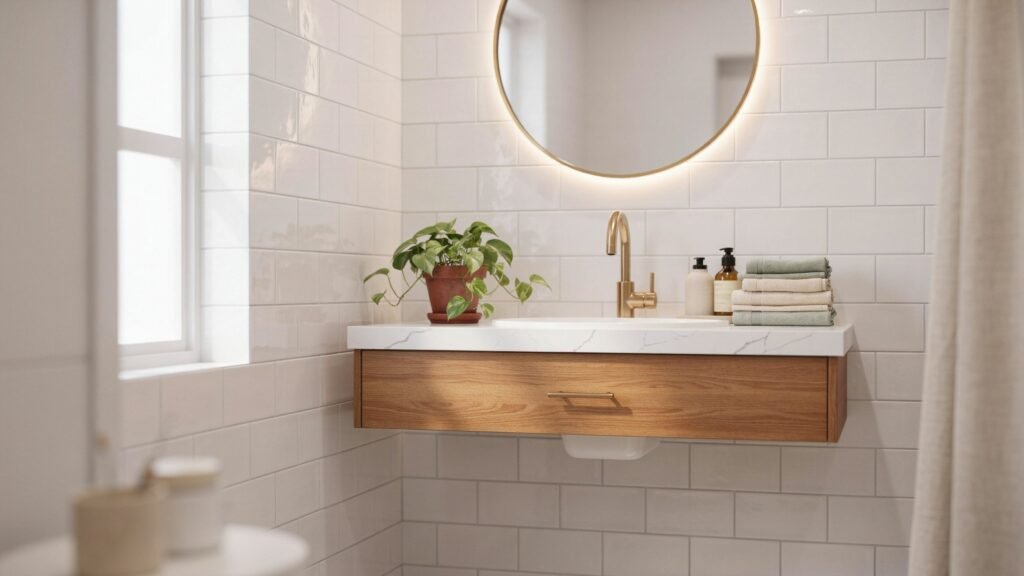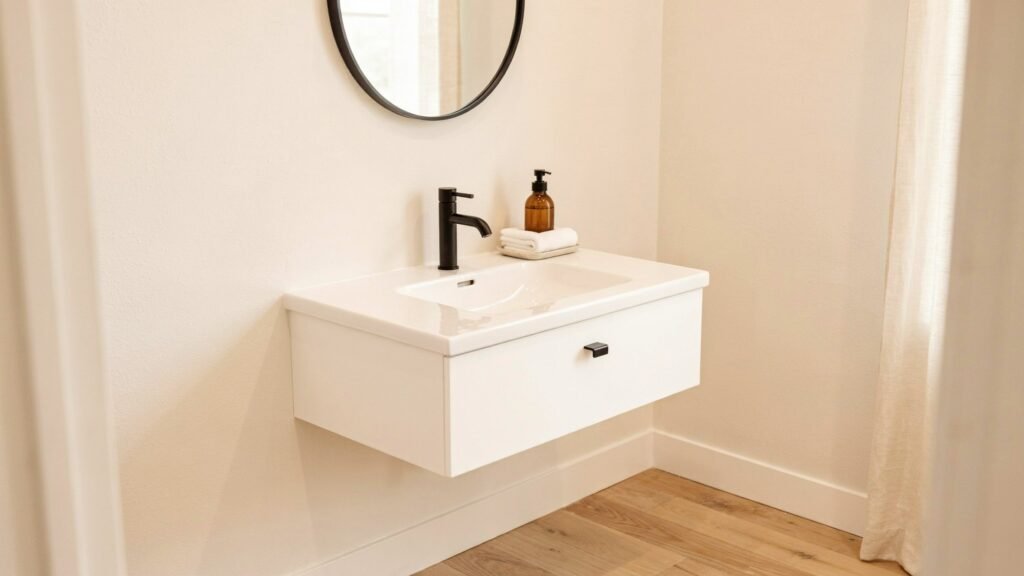
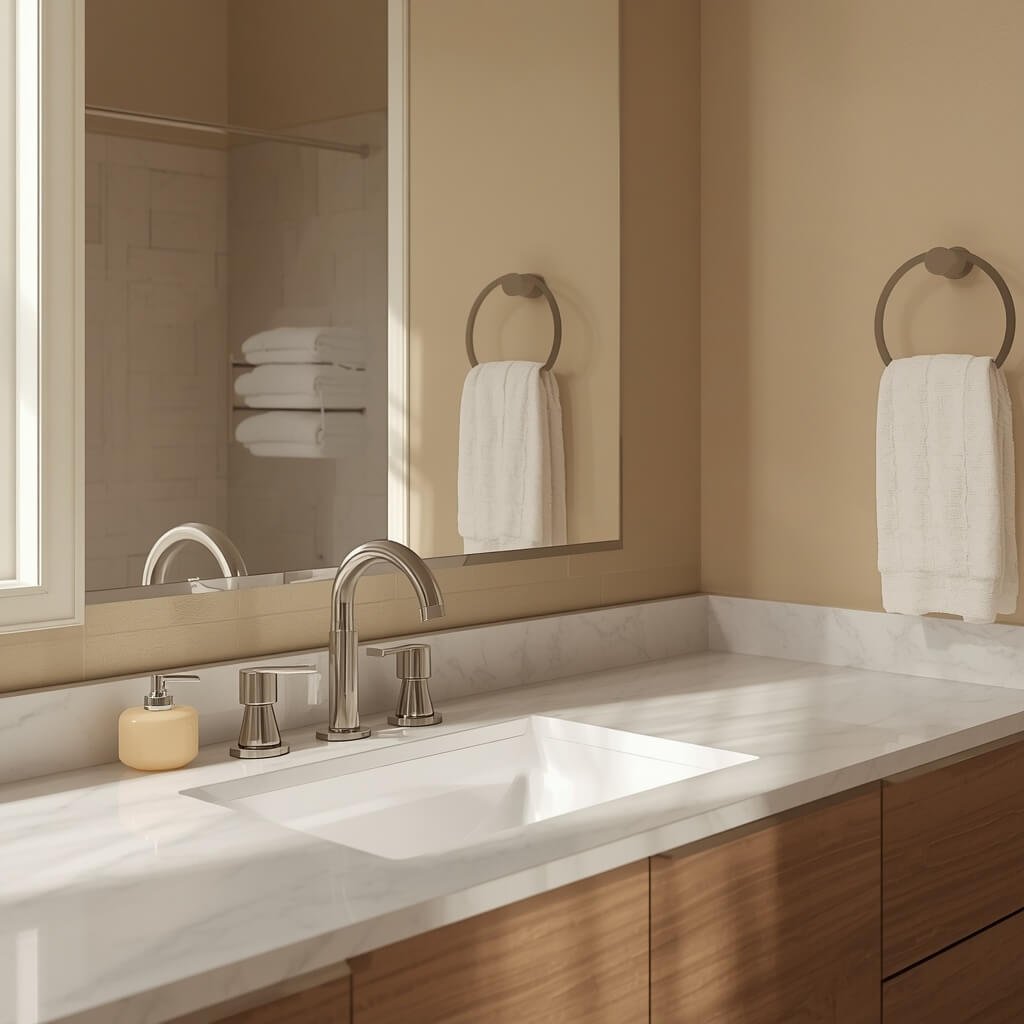
Choosing the right mirror for a 36-inch bathroom vanity comes down to its width, height, shape, and available wall space. For many bathrooms, a mirror around 30 to 34 inches wide is a practical starting point, although a 28-inch mirror can also work well when you prefer more visible wall space around the frame.
The best size depends on the vanity design, sink position, faucet height, lighting fixtures, and how much room you have above the countertop. A mirror should provide a comfortable reflection for daily grooming while keeping the bathroom balanced and functional. This guide explains how to choose suitable dimensions, compare mirror styles, measure your wall, and avoid common installation mistakes.
Table of Contents
What Is the Ideal Mirror Width for a 36-Inch Vanity?
A mirror approximately 30 to 34 inches wide is a useful starting point for a 36-inch vanity. This range leaves a small amount of visible space on each side while providing enough reflective area for everyday tasks.
The ideal mirror width for a 36-inch vanity is not a fixed measurement. Your choice should account for the mirror frame, the sink’s position, and the surrounding wall features.
Consider these common options:
- 28-inch bathroom mirror: Leaves approximately 4 inches of space on each side when centered above the vanity.
- 30-inch bathroom mirror: Leaves approximately 3 inches on each side when centered.
- 32-inch vanity mirror: Leaves approximately 2 inches on each side.
- 34-inch bathroom mirror: Leaves approximately 1 inch on each side.
These measurements assume the mirror is centered and its stated width represents the full outside dimension.
For a balanced appearance, measure the vanity from its left edge to its right edge, then compare that measurement with the mirror’s actual outer width. Also consider nearby walls and light fixtures. A wider mirror may suit a simple, uncluttered wall, while a narrower option can look better when decorative sconces sit beside it.
Before choosing a mirror, check your vanity’s exact width and overall dimensions. Our guide to standard bathroom vanity dimensions can help you understand vanity measurements and plan a well-proportioned bathroom layout.
How Tall Should a Bathroom Mirror Be Above a 36-Inch Vanity?
A bathroom mirror around 28 to 36 inches tall can work well with a 36-inch vanity, depending on the available wall height and the mirror’s proportions. This is a planning range rather than a strict sizing rule.
How Does Mirror Height Affect Everyday Use?
A taller mirror provides more reflective space for people of different heights and may make a compact bathroom feel more open. A shorter design can work well when the ceiling is low, the backsplash is tall, or an overhead light limits the available wall space.
What Should You Consider Before Choosing Mirror Height?
- User height: Choose a mounting position that allows household members to see their faces comfortably without bending or stretching.
- Ceiling height: Leave sufficient room for the mirror and any overhead lighting.
- Countertop layout: Account for the faucet, backsplash, and other features that occupy the wall area.
- Mirror shape: Round and oval mirrors have different proportions from tall rectangular designs, so compare their full dimensions before choosing.
How Can You Measure the Available Wall Space?
Measure the vertical distance from the countertop or backsplash to the ceiling or nearest obstruction. Check the mirror’s complete outside dimensions, including its frame, to make sure it fits the available area.
For more guidance on planning your bathroom layout, see our guide to bathroom vanity dimensions and sizing. Understanding the vanity’s measurements can help you choose a mirror that looks proportionate and fits comfortably above the sink.
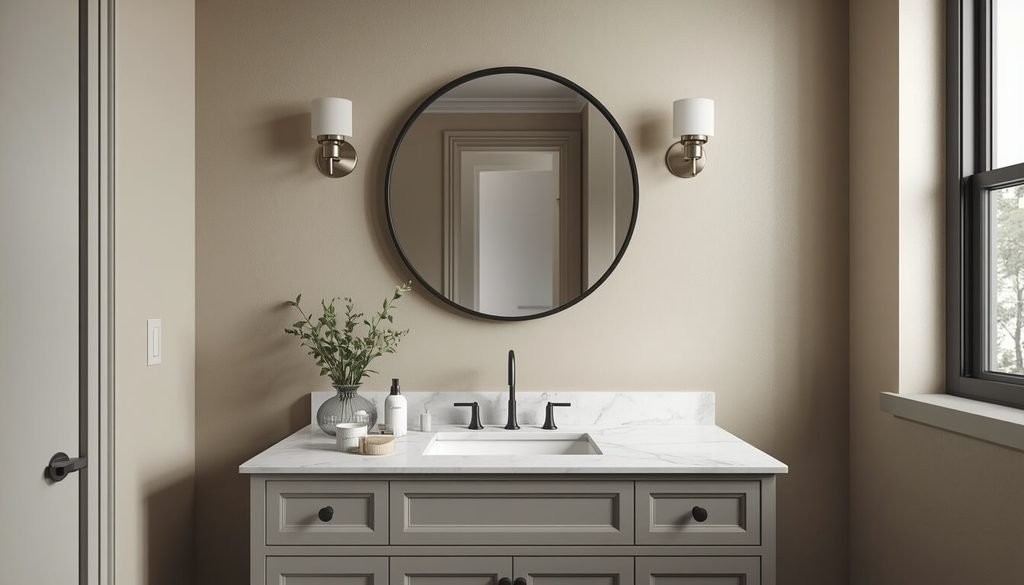
Should a Bathroom Mirror Be Wider or Narrower Than the Vanity?
A bathroom mirror is generally best when it is slightly narrower than the vanity, particularly when the vanity has a single sink and a standard rectangular countertop.
For a 36-inch vanity, a 30- to 34-inch mirror often creates a comfortable visual balance. However, a mirror that matches the vanity’s width can also work when the wall is clear and the design intentionally uses a broad reflective surface.
A narrower mirror offers several advantages:
- It leaves visible wall space along both edges.
- It can accommodate wall sconces without crowding them.
- It helps framed mirrors stand apart from nearby cabinets or walls.
- It creates a defined focal point above the sink.
A mirror wider than the vanity may work in some contemporary bathrooms, but it requires careful planning. Check nearby walls, cabinet edges, light fixtures, and other obstructions before choosing an oversized design.
When comparing mirror width with vanity width, use the mirror’s outside dimensions, including its frame. The reflective glass alone may be smaller than the full product width.
Why Is a 28 to 34-Inch Mirror Suitable for a 36-Inch Vanity?
A mirror between 28 and 34 inches wide can work well with a 36-inch vanity because it provides useful reflection while generally staying within the countertop edges.
Each width creates a different visual effect. A smaller mirror leaves more exposed wall space, while a wider option creates a more continuous look above the vanity.
Consider these options when choosing your mirror:
- 28-inch mirror: Works well when you prefer a compact design or need extra room for wall sconces.
- 30-inch mirror: Offers a balanced option for many standard single-sink bathrooms.
- 32-inch mirror: Provides a wider viewing area while leaving some visible space on both sides.
- 34-inch mirror: Creates a closer match to the vanity width when surrounding fixtures allow enough clearance.
These measurements are practical examples rather than universal standards. Your final choice should also account for the mirror’s shape, frame thickness, and available wall space.
What Should You Check Before Buying?
- Overall dimensions: Measure the mirror from the outer edge of its frame, not just the reflective glass.
- Side clearance: Check the space between the mirror, nearby walls, and lighting fixtures.
- Mirror design: A thick frame may make the mirror appear larger than a frameless design of the same width.
- Wall layout: Confirm that the mirror fits comfortably above the sink without interfering with faucets or other fixtures.
Comparing these details before purchasing can help you select a mirror that fits your 36-inch vanity and suits your bathroom layout.
Which Mirror Shape Works Best With a 36-Inch Vanity?
Rectangular, round, and oval mirrors can all work with a 36-inch vanity. The best shape depends on your bathroom’s design, the amount of wall space available, and the reflection area you need.
Rectangular mirrors are a practical choice for traditional and contemporary bathrooms. Their straight edges coordinate naturally with rectangular countertops, cabinets, and tile patterns. A rectangular bathroom vanity mirror also makes it easier to use the available wall width efficiently.
Round mirrors introduce softer lines and can reduce the visual heaviness of a bathroom with many square or rectangular features. A round mirror for a 36-inch vanity may work particularly well in a small bathroom, although you should confirm that its diameter provides enough reflection.
Oval mirrors combine a softer outline with a relatively tall reflective area. An oval mirror above a bathroom vanity can be a useful option when you want a less angular appearance without choosing a circular design.
When comparing mirror styles, check both the width and height of each option. Mirrors with equal widths may offer different viewing areas depending on their shape and design.
Which Mirror Type Is Best for a 36-Inch Vanity?
The best mirror type depends on your daily routine, bathroom lighting, storage needs, and preferred appearance. A standard wall mirror is suitable for many households, while framed, frameless, LED, and medicine cabinet mirrors offer different benefits.
- Framed bathroom mirror: Adds a decorative border and can coordinate with cabinet hardware or other bathroom finishes. Include the frame in your measurements.
- Frameless bathroom mirror: Creates a clean appearance and may suit minimalist bathrooms. Check the mounting system and finished edge dimensions.
- LED bathroom vanity mirror: Provides integrated lighting, which can be useful when the existing bathroom lighting is insufficient. Confirm electrical requirements and installation clearances.
- Medicine cabinet mirror: Combines reflection with storage. Check its full width, depth, door swing, and whether the wall can accommodate the cabinet.
For a straightforward single-sink bathroom layout, a standard rectangular mirror is often a simple choice. However, the right option is the one that fits your wall and supports your routine rather than the one with the most features.
If you’re planning a bathroom update, our bathroom vanity design and sizing resources can help you consider how the mirror works with the vanity and the rest of the space.
Also check mounting hardware and wall support. A heavy mirror or recessed medicine cabinet may require suitable fasteners, wall reinforcement, or professional installation.
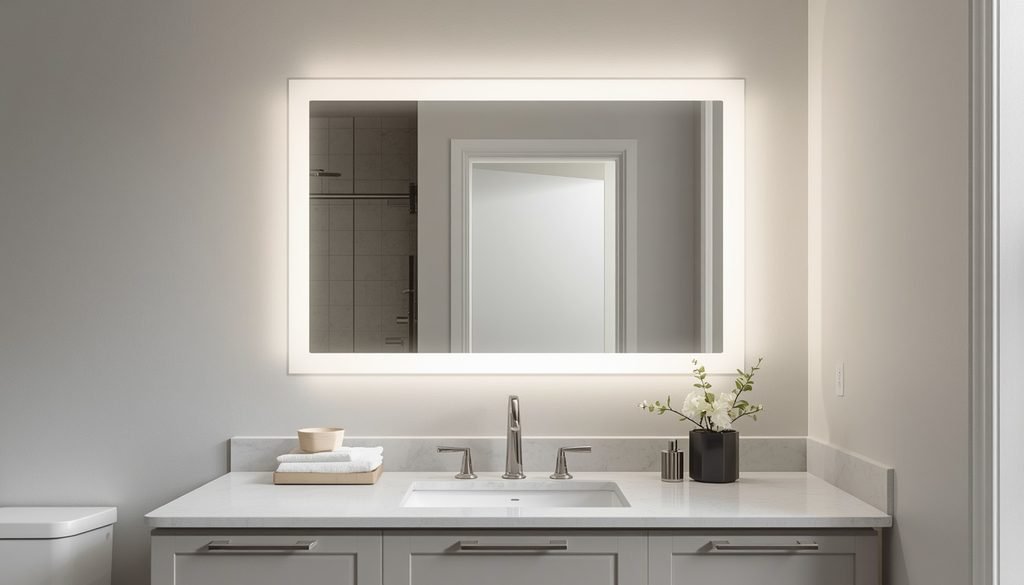
How Much Space Should You Leave Between a Mirror and Vanity?
The appropriate distance between a mirror and vanity countertop depends on the faucet, backsplash, mirror frame, and mounting instructions. A gap of roughly 5 to 10 inches above the countertop can be a useful starting point for planning, but it is not a universal installation requirement.
Why Does the Gap Between the Mirror and Countertop Matter?
The mirror should sit high enough to avoid contact with the faucet and backsplash while remaining low enough for comfortable viewing. Proper spacing also helps create a balanced appearance above the vanity.
What Should You Measure Before Installing the Mirror?
Before installation, consider the following:
- Countertop clearance: Measure from the finished countertop to the mirror’s bottom edge.
- Faucet and backsplash height: Account for tall faucets and decorative backsplash materials.
- Mirror frame depth: Check whether the frame projects outward and affects the available space.
- Nearby fixtures: Make sure the mirror does not interfere with wall-mounted lights or other fittings.
Do Different Sink Styles Require Different Mirror Spacing?
Faucets with a higher profile and vessel-style sinks may require a different gap beneath the mirror than standard sink designs. Measure your own fixtures and countertop setup to determine the appropriate spacing for your bathroom.
How Can You Maintain Comfortable Mirror Placement?
The goal is to create a functional gap without placing the mirror so high that shorter users struggle to see their reflection. Consider the needs of everyone using the bathroom and follow the mirror manufacturer’s installation instructions.
How High Should You Hang a Bathroom Vanity Mirror?
Bathroom mirror mounting height should provide a clear reflection for the people who use the vanity most often. The correct position depends on user height, mirror dimensions, faucet placement, and the distance to the ceiling or lighting.
Start by identifying the mirror’s bottom and top edges on the wall. Use painter’s tape to mark the proposed position, then stand at the sink and check the reflection before drilling any holes.
For a more reliable fit:
- Measure the distance from the countertop to the planned bottom edge.
- Confirm that the faucet and backsplash will not touch the mirror.
- Check the mirror’s top edge against the ceiling and light fixtures.
- Ask household members of different heights to test the proposed position.
- Follow the mirror manufacturer’s mounting instructions.
Bathroom mirror mounting height should not be based on the vanity’s height alone. A tall mirror may need to sit lower than a short mirror to provide a comfortable viewing area.
Before installing the mirror, make sure the fixing system is suitable for its weight and the wall material, especially when dealing with a large mirror or an uneven surface.
How Do Lighting Fixtures Affect Bathroom Mirror Size?
The placement of nearby light fixtures can affect how large your bathroom mirror can be. Check the available wall area around sconces, ceiling lights, outlets, and other fittings before choosing its dimensions.
If wall sconces sit on either side of the mirror, you may need a narrower design to leave enough room for the fixtures. If the lighting is mounted above the mirror, check that the mirror’s top edge does not interfere with the fixture or its installation requirements.
Plan the mirror placement around faucets and light fixtures before purchasing. Consider these details:
- Measure the distance between the vanity edges and nearby fixtures.
- Check the height and width of the lighting hardware.
- Follow the fixture manufacturer’s required clearances.
- Confirm that an LED bathroom vanity mirror can connect safely to the intended power supply.
- Consider how shadows may affect grooming and face visibility.
For more ideas on coordinating bathroom fixtures with your overall design, explore our bathroom vanity and home design inspiration to help plan a balanced, functional space.
A well-sized mirror should work with the lighting rather than compete with it. If the available wall space is limited, choosing a narrower mirror may provide a better overall layout than trying to fit the largest possible design.
How Do You Choose a Mirror for a Small Bathroom?
In a small bathroom, choose a mirror that provides enough reflection without making the wall feel crowded. A 28- to 32-inch mirror can be a reasonable option for a 36-inch vanity when you want more visible wall space, although a wider mirror may also work in a suitable layout.
A few practical choices can help:
- Use a frameless mirror for a simple, visually light appearance.
- Consider a round or oval mirror to soften a compact space.
- Choose a taller design if vertical wall space is available.
- Avoid crowding the mirror with oversized lighting fixtures.
- Measure doors, cabinets, and other obstructions before purchasing.
A larger mirror can help distribute light around the room, but it cannot compensate for poor lighting or an unsuitable layout.
Pay attention to the bathroom vanity wall space and the position of nearby storage. A medicine cabinet mirror may provide additional storage, but its depth and door movement must fit the room.
The most useful mirror is one that improves visibility and everyday convenience without obstructing other bathroom features.
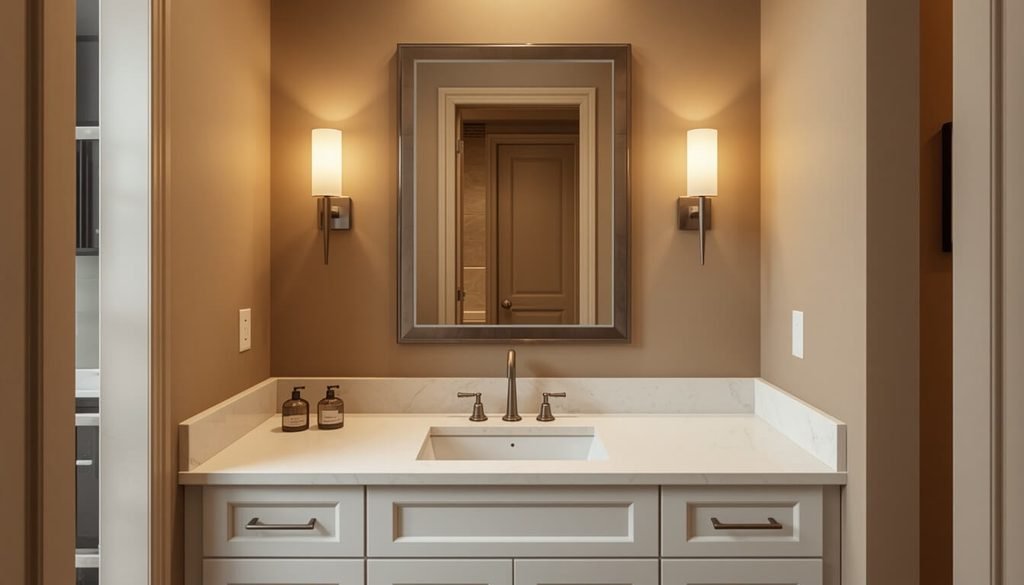
How to Measure the Wall Before Buying a Bathroom Mirror
Accurate measurements help you select a mirror that fits the vanity and surrounding wall. Measure the actual installation area rather than estimating from photographs or the nominal vanity size.
What Measurements Should You Take First?
Follow these steps to determine the available space before choosing a mirror:
- Measure the vanity width. Use a tape measure to record the distance between its outer edges.
- Measure the available wall space. Identify the usable width above the countertop, allowing for side walls and nearby fixtures.
- Check the vertical space. Measure from the countertop to the ceiling, light fixture, or other obstruction.
- Record the sink position. Find the sink centerline so you can align the mirror with the basin.
- Account for the backsplash and faucet. Measure their height and determine how much clearance remains.
- Check the full mirror dimensions. Include the frame, mounting brackets, and any projecting components.
How Can You Use Your Measurements to Choose the Right Mirror?
For example, if your vanity is 36 inches wide and the available wall space is 40 inches, a 32-inch mirror may leave sufficient room for a balanced installation. However, the exact fit depends on fixture positions and the mirror’s mounting requirements.
Why Should You Record Measurements Before Shopping?
Keeping a written record makes it easier to compare mirror dimensions and avoid choosing a design that does not fit. Check the product’s complete measurements and installation instructions before making your final decision.
What Should You Measure Before Installing a Vanity Mirror?
Before mounting the mirror, measure the available wall space, confirm its position above the sink, and inspect the surface where it will be attached. Careful planning helps you avoid placement problems and extra holes in the wall.
Your checklist should include:
- Mirror frame dimensions: Confirm the complete outside width and height.
- Sink and mirror alignment: Identify the center of the sink basin and use it as a reference point to position the bathroom mirror evenly.
- Vanity backsplash clearance: Check the distance between the backsplash and the planned mirror position.
- Bathroom lighting placement: Confirm the mirror will not overlap fixtures or violate their clearance requirements.
- Wall obstructions: Locate outlets, switches, cabinets, and other features that may affect installation.
- Mounting hardware and wall support: Verify that the fasteners are appropriate for the mirror’s weight and wall construction.
Also consider whether the mirror needs to align with the vanity cabinet, sink, or a broader wall feature. In many single-sink bathrooms, centering the mirror over the sink creates a natural focal point, but unusual layouts may require a different approach.
For additional planning ideas, explore our bathroom vanity and home design inspiration to help coordinate mirror placement with the overall bathroom layout.
How Can You Avoid Common Bathroom Mirror Sizing Mistakes?
The most common sizing mistakes involve choosing a mirror based only on appearance, ignoring the frame, or overlooking nearby fixtures. Careful measurement can help you avoid these problems.
Watch for the following issues:
- Choosing a mirror without measuring: Confirm the vanity width and available wall space first.
- Ignoring the frame: The outer dimensions determine the actual fit, not just the reflective glass.
- Placing the mirror too high: Check the reflection from the positions of the people who will use it.
- Forgetting the faucet: Make sure the mirror does not conflict with the faucet or backsplash.
- Overlooking lighting clearance: Measure the space around wall sconces and overhead lights before selecting your bathroom mirror size to ensure a proper fit.
- Assuming every 36-inch vanity is identical: Countertop overhangs, sink placement, and cabinet designs can vary.
- Using unsuitable mounting hardware: Select hardware that supports the mirror safely and suits your wall type.
Another mistake is focusing exclusively on appearance while ignoring daily use. The mirror should provide a useful reflection and remain accessible for routine grooming.
Before drilling, mark the proposed position and check the alignment from several viewing angles. For additional installation guidance, consult The Home Depot’s guide to hanging a heavy mirror, which explains how to assess the wall and choose suitable mounting hardware.
How Do You Choose a Mirror for Your Bathroom Layout?
Choose a mirror by considering the vanity dimensions, sink position, available wall space, lighting, and the bathroom’s overall design. The right size should feel proportionate while supporting comfortable everyday use.
For a typical 36-inch vanity, a 30- to 32-inch mirror is a practical starting point. Choose a 28-inch option if you prefer more visible space around the mirror, or consider a 34-inch design when the wall is clear and you want a closer match to the vanity width.
Use this final checklist:
- Measure the vanity and mirror’s outer dimensions.
- Check the available wall space above the vanity.
- Compare rectangular, round, and oval shapes.
- Confirm the distance between the mirror, countertop, and faucet.
- Review lighting clearance and mounting requirements.
- Position the mirror so its center lines up with the sink basin for a neat, well-balanced bathroom layout.
- Consider Every User’s Needs: Choose a bathroom mirror height and size that offers comfortable visibility for everyone who regularly uses the space.
The ideal bathroom mirror should complement the vanity without crowding the wall or compromising visibility. Taking time to measure and plan helps you choose a mirror that fits the room, works with its fixtures, and remains practical for years of daily use. For more bathroom planning ideas, explore our bathroom vanity and home decor guides to help create a functional, well-balanced space.
FAQs
How Should a Mirror’s Width Compare With a Bathroom Vanity?
A bathroom mirror often looks balanced when it is slightly narrower than the vanity beneath it. For a 36-inch vanity, consider a mirror between 30 and 34 inches wide, while allowing enough room for nearby fixtures and wall space.
Which Bathroom Mirror Styles Are Popular in 2026?
Bathroom mirror designs in 2026 include arched silhouettes, soft curved edges, minimalist frames, and built-in LED lighting. Choose a style that complements your vanity, available wall space, and bathroom lighting.
How big should a vanity light be for a 36-inch vanity?
A vanity light above a 36-inch vanity is often around 24–30 inches wide. Check the fixture’s dimensions and mirror placement to maintain balanced proportions.
What size mirror should I get for my vanity?
Choose a mirror based on your vanity width, wall space, and lighting arrangement. For a 36-inch vanity, a mirror between 30 and 34 inches wide is a good starting point.
What is the current trend in bathroom mirrors?
Arched mirrors, softly rounded frames, minimalist designs, and integrated LED lighting are popular choices for modern bathrooms.
What makes a bathroom look outdated?
Poor lighting, worn fixtures, dated finishes, and a mirror that looks disproportionate to the vanity can make a bathroom feel outdated. Simple updates can improve its overall appearance.
About the Author — Bilal Khan
Bilal Khan is a home decor enthusiast with an interest in bathroom design, vanity styling, and practical home improvement. He enjoys researching mirror sizes, space planning, and design details to help readers make informed decisions. His articles focus on clear guidance, useful measurements, and practical ideas for creating comfortable, functional living spaces.