What Is a Fluted Vanity and Why Is It Trending?
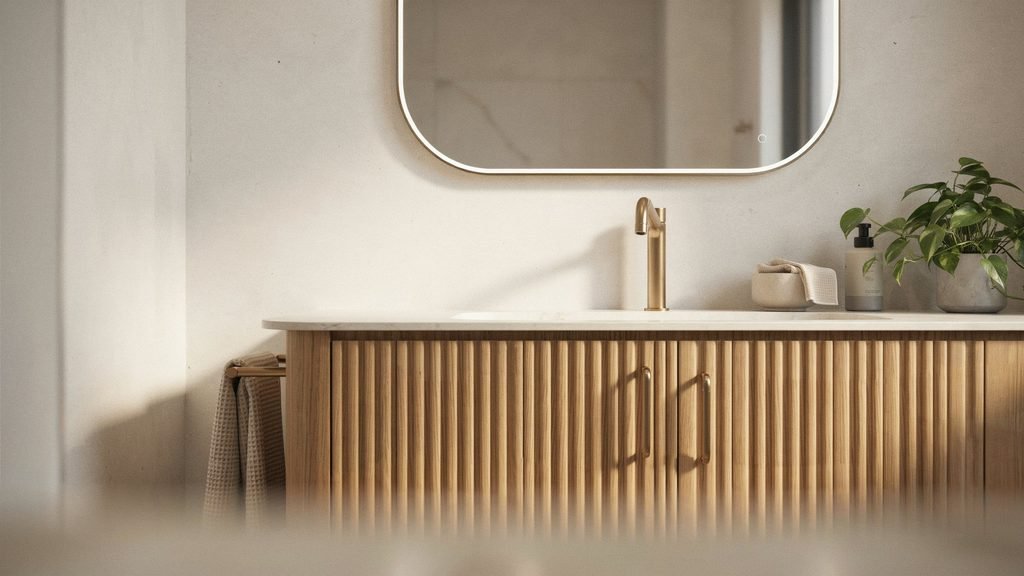
A fluted vanity is a bathroom cabinet featuring vertical grooves carved across its exterior panels, creating a tactile 3D pattern that brings architectural interest to modern bathrooms. This design is currently trending across the USA because homeowners are shifting away from flat, plain surfaces toward rich textures that add depth without visual clutter. Inspired by classical Greek and Roman column architecture, fluted bathroom vanity cabinets blend historical elegance with contemporary minimalism.
The appeal of a fluted vanity lies in its ability to transform a routine vanity cabinet into a subtle focal point. As natural sunlight or artificial bathroom lighting moves across the room, the vertical flutes catch light and cast soft shadows, creating a dynamic look that changes throughout the day. Whether styled in a sleek Japandi layout, an organic modern space, or a transitional master suite, a reeded vanity elevates the entire space while keeping the layout simple and clean.
Table of Contents
Top Benefits of Choosing a Fluted Bathroom Vanity
A fluted bathroom vanity offers an immediate upgrade to your space by combining visual texture, timeless durability, and design flexibility. Whether you are upgrading a compact powder room or planning a spacious master bathroom double vanity, ribbed surfaces bring depth and sophistication that make any bathroom feel like a luxury spa.
Here are the main advantages of installing a fluted vanity:
- Enhanced Visual Texture: The repeating vertical lines create depth and shadow, turning a simple storage cabinet into a custom design piece.
- Timeless Aesthetic: Because fluting is rooted in classical architecture, it avoids feeling like a short-lived trend and remains stylish for years.
- Versatile Design Integration: Fluted detailing pairs effortlessly with various aesthetic styles, including modern, Scandinavian, Art Deco, and transitional spaces.
- Illusion of Height: The vertical orientation of the grooves draws the eye upward, making compact or low-ceiling bathrooms feel taller and roomier.
Popular Types of Fluted Vanities for Modern Bathrooms
Choosing the right type of fluted vanity depends on your floor space, storage needs, and overall bathroom layout. Modern options range from space-saving wall-mounted units to sturdy floor-standing models.
Fluted Floating Vanities
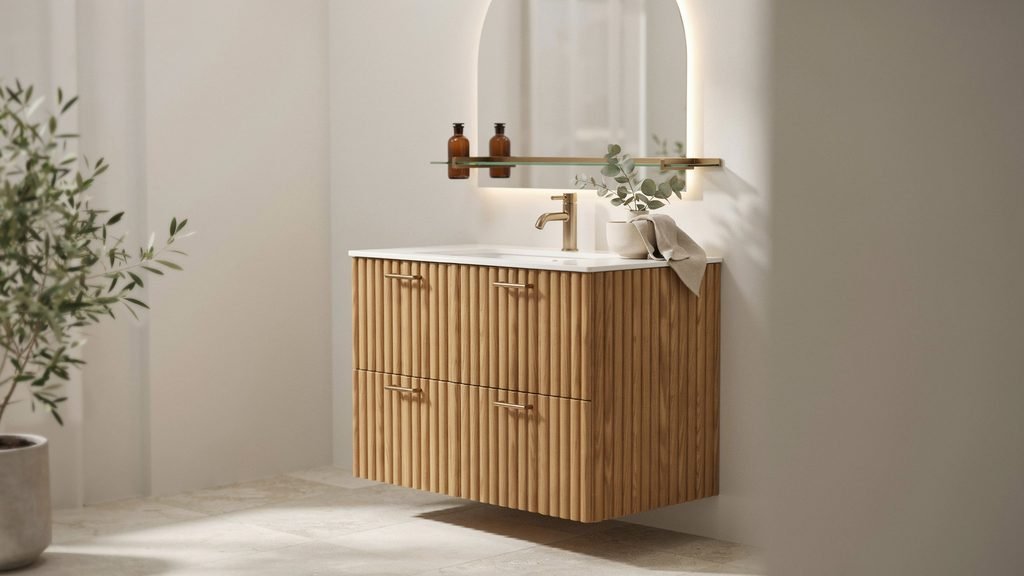
A fluted floating vanity mounts directly to wall studs, leaving the floor space underneath completely open. This wall-mounted style works exceptionally well in smaller bathrooms and powder rooms because open floor visibility makes the space look larger. Additionally, floating cabinets make cleaning the bathroom floor quick and hassle-free.
Freestanding Fluted Vanities
A freestanding fluted vanity rests on legs or sets directly on the floor, providing a classic furniture-like look with maximum internal storage. This style is ideal for busy family bathrooms or master suites that require deep drawers and extra cabinet space for daily essentials.
How to Choose the Right Size and Configuration
Selecting the ideal size for a fluted vanity requires measuring your floor footprint, checking plumbing alignments, and deciding between a single or double sink setup. The key is ensuring smooth traffic flow through the room while maintaining adequate storage space.
Single vs. Double Sink Options
Single sink fluted vanities typically range from 24 inches to 48 inches in width, making them ideal for powder rooms, guest baths, or compact master spaces. Double sink configurations start at 60 inches and go up to 84 inches, offering dedicated counter space and storage for two people in shared master bathrooms.
Depth and Door Clearance
Standard bathroom vanity depth is 21 inches, though narrow depth models around 18 inches work better in tight layouts. Before buying, double-check that drawer fronts and cabinet doors open completely without hitting nearby doors, glass shower panels, or toilets.
Top Benefits of Choosing a Fluted Bathroom Vanity
A fluted bathroom vanity offers an immediate upgrade to your space by seamlessly combining tactile texture, long-lasting durability, and versatile design flexibility. Whether you are remodeling a compact powder room or styling a spacious master bathroom double vanity, these distinctive ribbed cabinet fronts bring structural depth and subtle elegance, turning an ordinary vanity unit into a tranquil, luxury spa retreat.
Here are the primary benefits of installing a fluted bathroom vanity:
- Enhanced Visual Texture: The continuous vertical grooves generate soft shadows and multidimensional depth, transforming a standard storage cabinet into an eye-catching architectural focal point.
- Timeless Aesthetic Value: Rooted in classical Greek and Roman architecture, fluted detailing naturally transcends fleeting design crazes, ensuring your bathroom cabinetry stays modern and stylish for years.
- Versatile Design Integration: The subtle vertical line pattern pairs effortlessly across multiple interior styles, blending seamlessly with modern organic, Scandinavian minimalism, vintage Art Deco, and classic transitional spaces.
- Illusion of Ceiling Height: The vertical orientation of the fluted grooves naturally guides the eye upward. When paired with the ideal average vanity height, this smart visual effect makes smaller layouts or low-ceiling bathrooms appear significantly taller and more spacious.
Expert Tips for Styling a Fluted Vanity in Your Bathroom
Styling a fluted vanity requires pairing its textured surface with complementary mirrors, hardware, and plumbing fixtures that enhance its vertical detail rather than competing with it.
To create a balanced look, consider these practical design pairings:
- Choose Soft Mirror Shapes: Pair sharp vertical flutes with curved, pill-shaped, or arched mirrors to soften the linear energy of the cabinet.
- Select Modern Hardware Finishes: Use brushed brass, champagne bronze, or matte black faucets and pulls to create clean, attractive contrast against wood or painted finishes.
- Layer Task and Accent Lighting: Install wall sconces on either side of the mirror so light washes down the fluted front, highlighting the textured shadow work.
- Keep Countertops Uncluttered: Let the cabinet texture remain the focal point by storing everyday items inside drawers and keeping top surfaces minimal.
Real-World Practicality: Living with a Textured Vanity
Living with a fluted vanity in a busy household is both practical and low-maintenance when your cabinet features durable materials and quality hardware built for daily use. While some homeowners worry that vertical grooves might collect dust or soap splashes, modern water-resistant finishes protect the wood surface from daily moisture exposure. To preserve the finish long-term, following proper wood surface care practices ensures your textured cabinetry remains clean with simple dusting and a damp cloth wipe-down. Choosing smooth full-extension, soft-close drawers adds functional convenience, keeping your bathroom quiet, organized, and effortless to manage.
How to Clean and Maintain a Fluted Surface
Cleaning a fluted vanity takes minimal effort when done regularly using a microfiber cloth and a mild, non-abrasive cleaner. Keeping the vertical grooves clean prevents dust build-up and maintains the cabinet’s original luster.
- Dust Weekly: Run a dry microfiber duster or a soft brush attachment vertically down the grooves to remove dry dust particles.
- Wipe Spills Immediately: Clean water spots, toothpaste splatters, or soap drips right away using a damp, soft cloth to protect the finish.
- Avoid Harsh Chemicals: Skip abrasive scrubbing pads, bleach, and strong chemical sprays, as they can wear down protective sealant layers.
- Dry Thoroughly: After wiping down the cabinet, dry the grooved channels with a clean microfiber towel to prevent moisture from settling in the seams.
Conclusion
A fluted vanity is an exceptional choice for homeowners looking to elevate their space with subtle architectural texture, modern elegance, and practical storage. Whether you select a warm oak finish, a sleek black cabinet, or a trending sage green bathroom vanity, choosing the right dimensions, mounting style, and moisture-resistant materials creates a striking focal point that anchors your entire room. With simple routine care and thoughtful hardware choices, a fluted vanity unit delivers everyday luxury, functional organization, and lasting durability for years to come.
FAQs
Q: Are fluted vanities still in style?
A: Yes, fluted vanities are extremely popular in modern bathroom design. Their classical architectural texture combined with modern minimalism keeps them at the forefront of contemporary interior trends.
Q: What is a fluted bathroom vanity?
A: A fluted bathroom vanity is a cabinet featuring repetitive vertical grooves or channels carved across its surface, creating a tactile, three-dimensional shadow effect and visual depth.
Q: What are the trends for bathroom vanities in 2026?
A: Key vanity trends in 2026 focus on rich tactile textures (like fluting and reeding), warm natural wood tones (oak and walnut), floating wall-mounted designs, and integrated stone sinks with brushed metallic hardware.
Q: What color vanity is timeless?
A: Natural warm oak, classic crisp white, and deep navy blue are timeless vanity colors that maintain lasting aesthetic appeal and blend easily across changing design trends.
Q: What colors make a bathroom look expensive?
A: Deep earth tones like charcoal grey, rich espresso wood, soft sage green, matte black, and warm alabaster white instantly elevate a bathroom and create a high-end, luxury spa environment.
Q: What is the current trend for bathroom vanities?
A: The current trend centers on textured vanity fronts—particularly fluted and slatted wood designs—paired with seamless quartz tops, soft curved mirrors, and understated brushed brass or matte black fixtures.