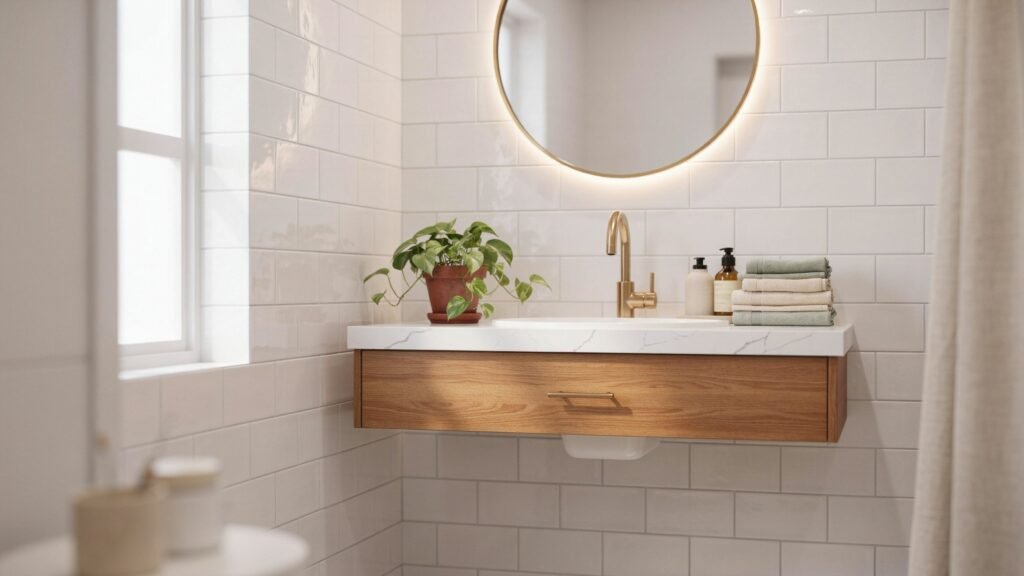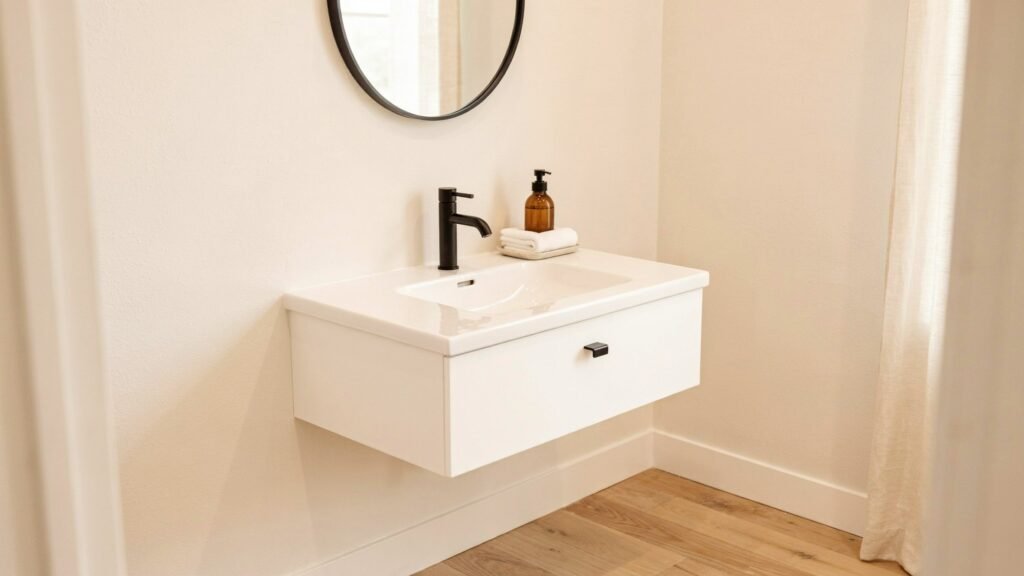
What Is a Farm Sink Bathroom Vanity?
A farm sink bathroom vanity is a bathroom cabinet fitted with a farmhouse-style sink that has an exposed front panel, known as an apron. Unlike a standard drop-in or undermount sink, the apron remains visible, giving the vanity a distinctive look that suits farmhouse, rustic, and transitional bathrooms.
Table of Contents
How Is It Different From a Standard Bathroom Sink?
A traditional bathroom sink usually sits on top of the countertop or underneath it, leaving the cabinet front unchanged. An apron-front sink extends toward the front of the vanity, so the cabinet often needs a special cutout or custom construction.
Key differences include:
- Visible front: The exposed apron becomes a noticeable design feature.
- Cabinet requirements: The vanity may need adjustments to accommodate the sink’s shape and weight.
- Basin size: Some models are deeper or wider than standard bathroom sinks, although dimensions vary.
- Design appeal: The style pairs well with natural wood, Shaker cabinets, simple hardware, and neutral colors.
Why Do Homeowners Choose This Style?
Some homeowners prefer the farmhouse sink because it adds character without relying on elaborate decorations. A white apron-front basin against a natural wood vanity, for example, can create a warm, balanced look in a guest bathroom.
However, not every farmhouse sink is made for bathroom use. Many are designed for kitchens and may be too large or deep for a typical bathroom cabinet. Check the dimensions, plumbing clearance, and cabinet support before choosing one.
The goal is to find a sink that complements your bathroom while remaining comfortable and practical for everyday use.
Can You Use a Farmhouse Sink in a Bathroom Vanity?
Yes, you can use a farmhouse sink in a bathroom vanity, provided the sink is designed or adapted for bathroom use and the cabinet can support its weight. The key is to check the sink dimensions, plumbing clearance, and countertop fit before choosing a model.
A farm sink bathroom vanity can give a bathroom a farmhouse-inspired look, but not every apron-front sink is suitable for this purpose. Many farmhouse sinks are made for kitchens, where cabinets are wider and deeper than typical bathroom vanities. A large kitchen sink may leave too little counter space for toiletries or take up valuable storage underneath.
Before choosing one, check these important details:
- Sink dimensions: Measure the sink’s width, depth, and height, including the exposed front apron. Compare these measurements with the available vanity space.
- Cabinet support: Farmhouse sinks made from fireclay or cast iron can be heavy, especially when filled with water. The vanity may need reinforced framing or a custom sink base to carry the load safely.
- Plumbing clearance: Make sure there is enough room for the drain, P-trap, water supply lines, and faucet connections without interfering with drawers or cabinet doors.
- Countertop compatibility: An apron-front sink may require a custom countertop cutout and a cabinet front designed to accommodate the exposed basin.
- Everyday usability: Leave enough countertop space for soap, a toothbrush holder, and other bathroom essentials. Also consider whether the sink’s depth will cause water to splash onto nearby surfaces.
For example, if your existing bathroom vanity is 30 inches wide, a large kitchen farmhouse sink may leave very little room for the faucet and countertop accessories. A smaller apron-front basin or a custom-built vanity may be a more practical option. Always check the manufacturer’s installation instructions rather than relying on the overall sink width alone.
The cabinet’s height and the sink’s rim position also matter. If the sink sits higher than expected, it can make washing your hands uncomfortable. Measure the finished height from the floor to the top rim before finalizing the design.
If you are planning a remodel, compare the sink’s dimensions with your available bathroom floor space and cabinet layout. Our guide to standard bathroom vanity depth can help you understand typical vanity measurements before deciding whether a particular farmhouse sink will fit.
The bottom line: A farmhouse sink can work well in a bathroom vanity when its size, weight, plumbing, and cabinet construction are compatible. Careful measuring before purchase can help you avoid expensive cabinet modifications and an awkward finished layout.
What Are the Benefits of a Farm Sink Bathroom Vanity?
A farm sink bathroom vanity offers a distinctive apron-front design, a comfortable basin for everyday washing, and a strong farmhouse look. When the sink is properly sized for the bathroom, it can also become a focal point without sacrificing practical use.
1. A Distinctive Apron-Front Design
Unlike a traditional drop-in or undermount sink, a farmhouse sink has a front panel that remains visible instead of being fully concealed by the countertop. This exposed apron gives the vanity a more noticeable design feature.
The front can complement natural wood cabinets, painted finishes, stone countertops, and simple hardware. It is especially appealing to homeowners who want something different from a standard bathroom vanity without changing the entire room.
2. A Deep Basin for Everyday Use
Some apron-front sinks offer a deeper basin than conventional bathroom sinks, although depth varies by model. The extra room can make everyday tasks more comfortable, particularly when washing your face or rinsing small items.
However, a deeper basin is not automatically better for every bathroom. Check the sink’s interior dimensions and rim height to make sure it suits your needs and does not cause uncomfortable splashing.
3. A Strong Farmhouse and Rustic Look
A farmhouse sink works naturally with warm, textured materials and simple bathroom finishes. Depending on the sink material and cabinet design, it can suit several styles:
- Farmhouse: Pair a white apron-front sink with a natural wood vanity and classic metal hardware.
- Rustic: Combine a textured wood cabinet with a simple countertop and muted wall colors.
- Transitional: Balance the traditional sink shape with clean cabinet lines and understated fixtures.
- Modern farmhouse: Use a streamlined vanity, neutral colors, and simple lighting to keep the space from looking overly traditional.
The overall effect depends on how the sink works with the rest of the room. A farmhouse basin can look out of place if the cabinet, countertop, and fixtures have conflicting styles.
4. A Distinctive Focal Point for Your Bathroom
The exposed front of a farmhouse sink gives the bathroom vanity a noticeable design feature. It can add character to a powder room or guest bathroom without the need for extra decorations. Pairing the sink with a simple cabinet, a framed mirror, and matching fixtures helps create a balanced, welcoming look.
For example, a 36-inch vanity with a white apron-front sink, a wood cabinet, and a framed mirror can create a clear visual centre. Before choosing this layout, confirm that the sink fits the cabinet and leaves enough countertop space for soap and other essentials.
5. Several Material and Finish Options
Farmhouse-style sinks are available in different materials, each with its own appearance and maintenance needs. To understand how various materials perform under daily kitchen use, you can review this expert guide to kitchen sink materials which details durability, care needs, and weight trade-offs. Common choices include:
- Fireclay: Often chosen for its smooth, traditional white finish. Its weight means the cabinet must provide suitable support.
- Porcelain: Offers a familiar bathroom-friendly appearance and a smooth surface that is generally easy to clean.
- Cast iron with enamel: Provides a traditional look, but its substantial weight requires careful installation planning.
- Stainless steel: Creates a more contemporary appearance and may suit homeowners who prefer a less traditional finish.
Always review the manufacturer’s care instructions and installation requirements. Material, finish, weight, and resistance to staining or chipping can vary between products.
Is a Farm Sink Bathroom Vanity Worth Considering?
This style is worth considering if you want a distinctive sink, appreciate farmhouse design, and have enough room for the basin and its supporting cabinet. It may be less suitable if you need maximum drawer storage, a wide countertop, or a straightforward replacement for an existing vanity.
You should also consider how the sink’s color and finish will coordinate with the countertop and backsplash. Our guide to bathroom vanity backsplash ideas can help you explore combinations that create a balanced, cohesive look.
Ultimately, the main benefit is the combination of visual character and everyday function. Choose a model that fits your bathroom’s dimensions and routine rather than selecting one based on appearance alone.
Which Materials Work Best for a Farm Sink Bathroom Vanity?
Fireclay, porcelain, cast iron, and stainless steel can all work for a farm sink bathroom vanity, but the right choice depends on the look you want, the sink’s weight, and how much maintenance you are willing to handle. Before choosing a material, check whether the sink is designed for bathroom use and whether your vanity can support it safely.
1. Fireclay: Best for a Traditional Farmhouse Look
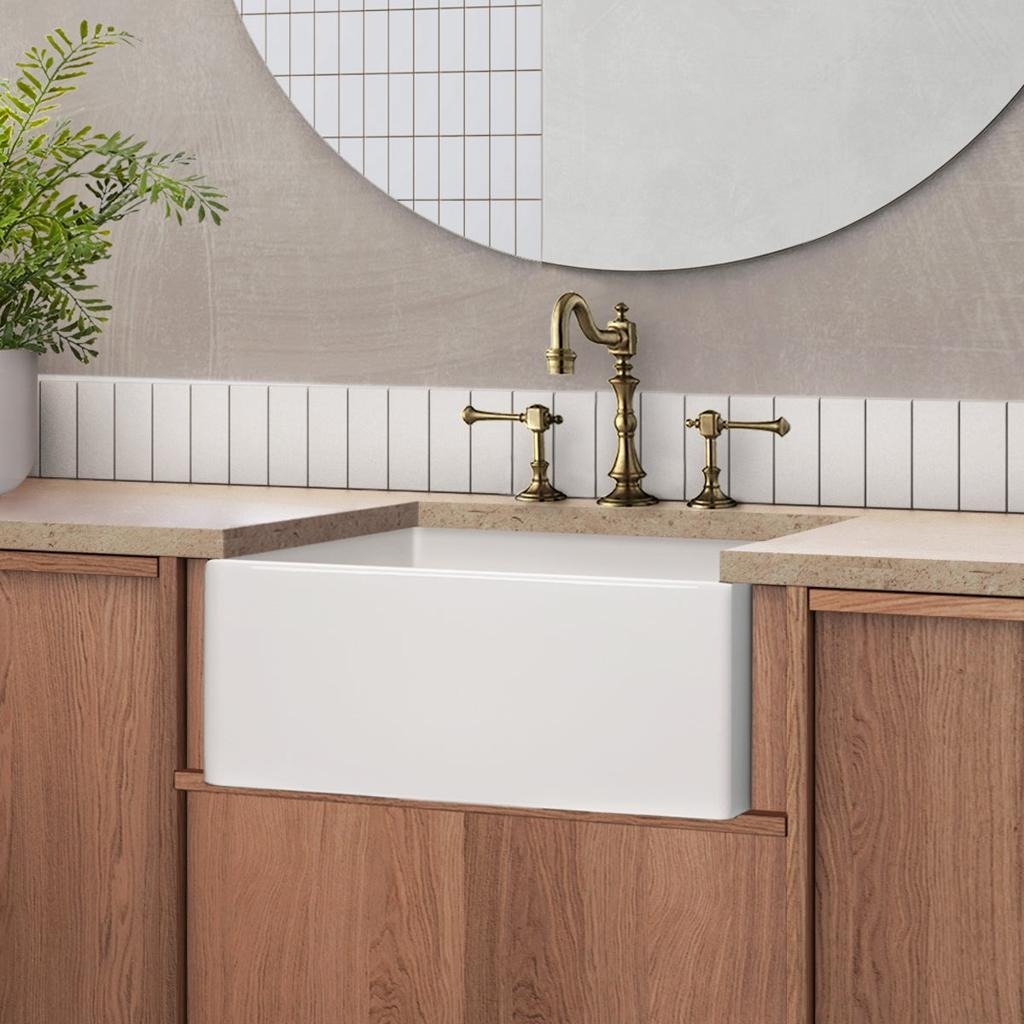
Fireclay sinks are known for their smooth, glazed finish and classic white appearance. They suit farmhouse and cottage-style bathrooms, especially when paired with natural wood cabinets or light-colored countertops.
What to consider:
- Appearance: Usually has a clean, traditional look that works well with neutral bathroom colors.
- Weight: Can be heavy, so the cabinet may need additional structural support.
- Maintenance: The glazed surface is generally easy to wipe clean, but abrasive cleaners can damage some finishes.
- Bathroom suitability: Check the basin dimensions carefully because many fireclay farmhouse sinks are designed for kitchens.
Fireclay is a good option if appearance is your priority and your vanity can accommodate the sink’s size and weight.
2. Porcelain: Best for a Classic Bathroom Finish
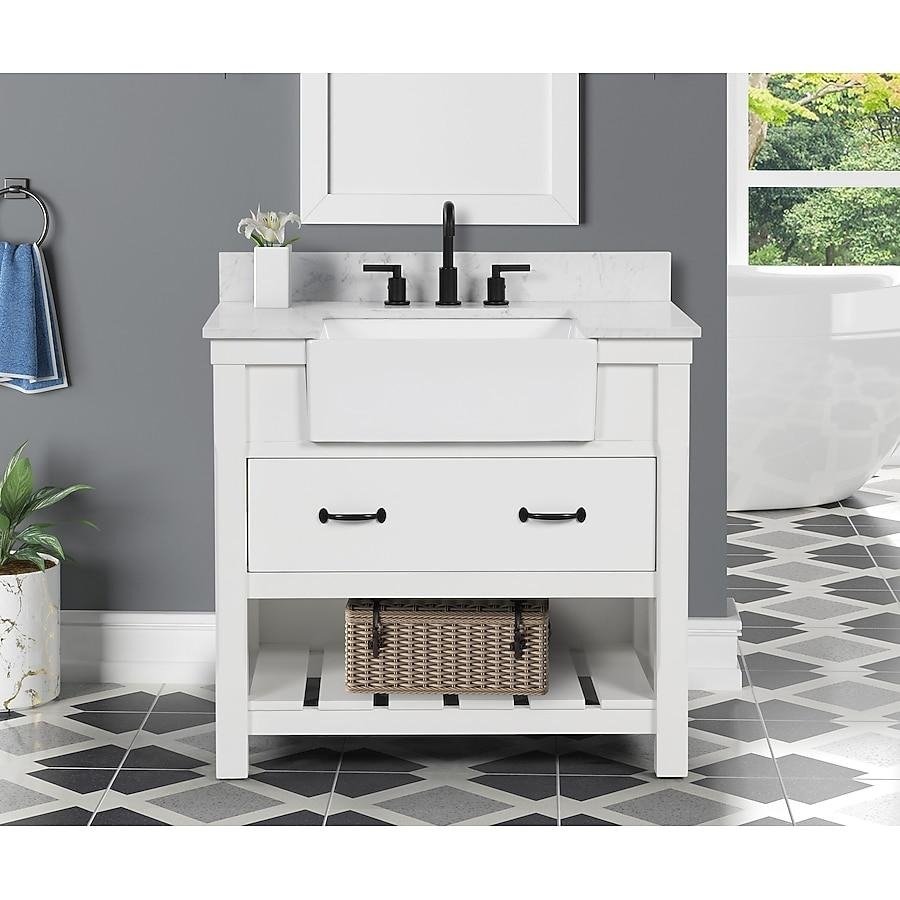
Porcelain offers a familiar bathroom look with a smooth, glazed surface. Depending on the product, it may be a practical choice for homeowners who want a clean, bright basin that coordinates with white fixtures and traditional cabinetry.
What to consider:
- Appearance: Works with classic, transitional, and many modern bathroom designs.
- Weight: Varies by construction, so check the manufacturer’s specifications.
- Maintenance: Routine cleaning is usually straightforward with a suitable nonabrasive cleaner.
- Durability: The surface can chip or crack if struck hard, and damaged glaze may become harder to clean.
For a guest bathroom, a white porcelain basin paired with a painted vanity can create a coordinated look without requiring elaborate finishes.
3. Cast Iron: Best for a Traditional, Solid Appearance
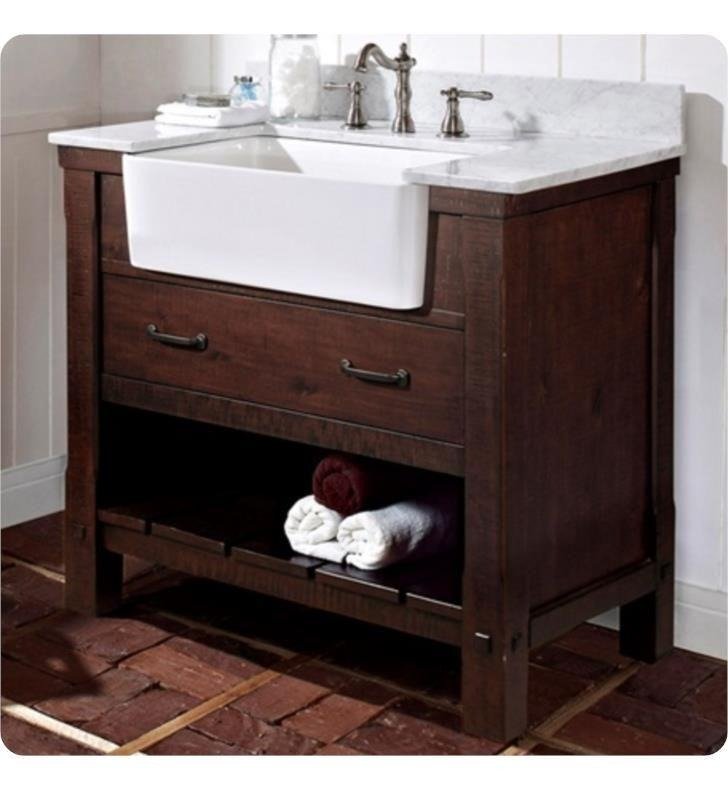
Cast iron sinks typically have a protective enamel coating that provides a smooth, polished finish. Their substantial construction can suit traditional bathrooms, but their weight makes installation planning especially important.
What to consider:
- Appearance: Often available in classic white and other finishes, depending on the manufacturer.
- Weight: Heavy, sometimes requiring reinforced cabinetry and carefully planned support.
- Maintenance: Use cleaners approved for the enamel finish and avoid abrasive scrubbing.
- Durability: The enamel can chip if exposed to a strong impact; damaged areas may need professional attention.
Cast iron can work well in a custom vanity, provided the cabinet, countertop, and installation method are designed for the sink’s full weight.
4. Stainless Steel: Best for a Simple, Contemporary Look
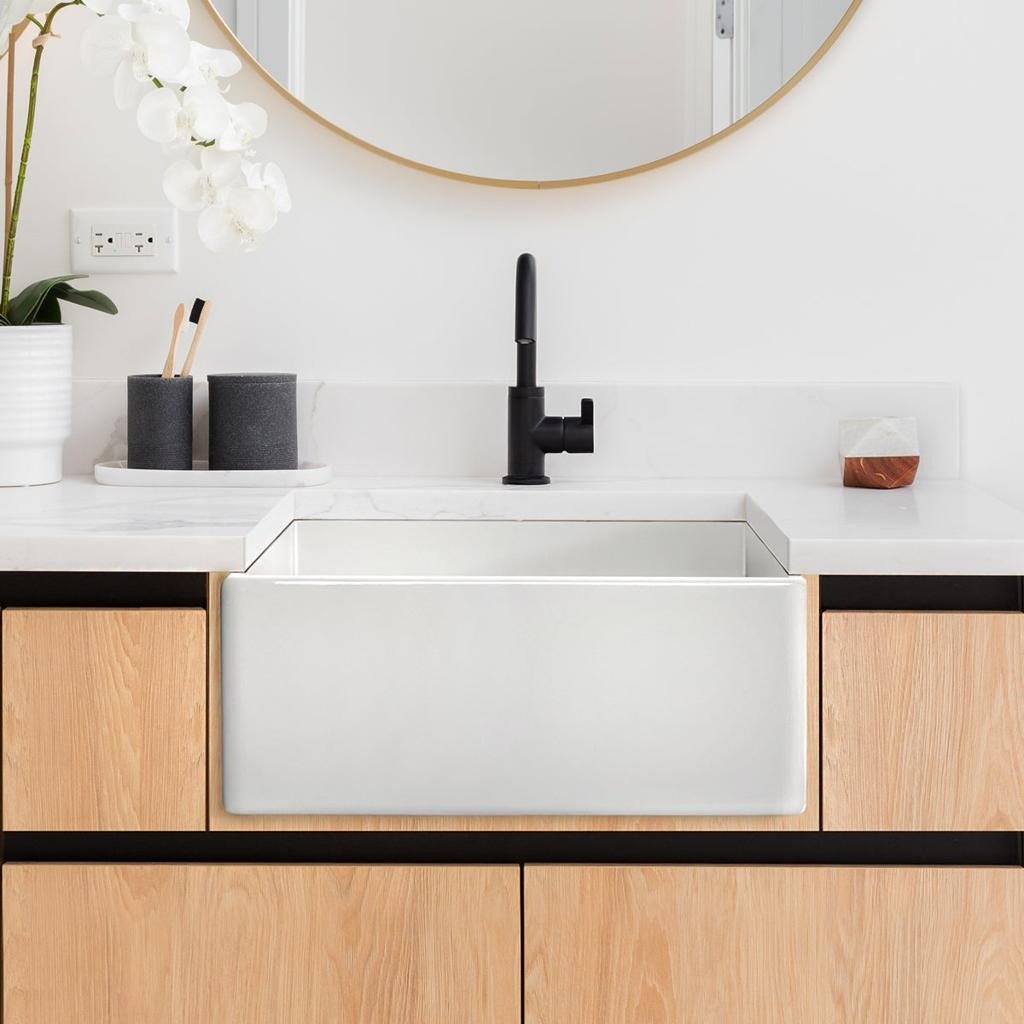
Stainless steel gives a farmhouse sink a less traditional appearance. Its metallic finish can suit modern, industrial, or understated bathrooms, particularly when combined with simple cabinetry and restrained hardware.
What to consider:
- Appearance: Creates a clean, contemporary contrast with wood or dark-colored cabinets.
- Weight: Often lighter than comparable fireclay or cast iron models, although dimensions and construction matter.
- Maintenance: Water spots and fingerprints may show, so regular wiping helps maintain its appearance.
- Durability: The surface can scratch or develop small dents, depending on its thickness and construction.
Stainless steel may be worth considering if you prefer a practical, modern finish rather than the traditional white farmhouse look.
How to Compare These Sink Materials
| Material | Appearance | Weight consideration | Main maintenance concern |
| Fireclay | Classic, glazed | Often heavy | Avoid damaging the glaze |
| Porcelain | Smooth, traditional | Varies by construction | Prevent chips and cracks |
| Cast iron | Traditional, enamel-coated | Very heavy | Protect the enamel |
| Stainless steel | Modern, metallic | Often lighter | Manage scratches and water spots |
Actual weight, finish quality, and care requirements vary by model, so review the product specifications before making a decision.
Which Material Should You Choose?
For a farmhouse-inspired bathroom, fireclay or porcelain may suit you if you prefer a classic white finish. Cast iron is worth considering for a traditional design when the vanity can support its weight, while stainless steel offers a more contemporary alternative.
Before purchasing, check these three things:
- Sink dimensions: Make sure the basin fits the available cabinet width and depth.
- Cabinet strength: Make sure the vanity is sturdy enough to hold the sink securely, even when the basin is filled with water during everyday use.
- Cleaning requirements: Choose a finish you can maintain with products suitable for its surface.
Your countertop also affects the finished appearance. If you are comparing stone surfaces, colors, and edges, our guide to cultured marble vanity tops with integral sinks offers another perspective on coordinating a bathroom sink and countertop.
The best material is the one that suits your bathroom’s design, fits the vanity correctly, and meets your maintenance expectations. Don’t choose by appearance alone; confirm that the specific sink is suitable for bathroom installation before ordering.
How Do You Choose the Right Vanity Size and Sink Dimensions?
Choose a vanity and sink that fit your bathroom, leave enough countertop space, and allow comfortable access to plumbing. For a farm sink bathroom vanity, measure the available space carefully because the exposed apron and basin depth can affect cabinet design.
What Should You Measure Before Buying?
- Width: Measure the available wall space and allow room for nearby doors, drawers, and fixtures.
- Depth: Check how far the vanity will extend into the bathroom, including the countertop and sink.
- Height: Consider the finished height from the floor to the sink rim so everyday handwashing feels comfortable.
- Countertop space: Leave enough room for soap, a toothbrush holder, and other daily essentials.
- Faucet and plumbing: Confirm faucet-hole placement, drain alignment, and clearance for water lines and the P-trap.
For example, a 36-inch vanity may accommodate a compact apron-front sink, but the actual fit depends on the sink’s dimensions and the cabinet’s construction. Never assume that a kitchen farmhouse sink will fit a bathroom cabinet simply because its width looks suitable.
Before ordering, compare the manufacturer’s installation template with your measurements. You can also review our guide to standard bathroom vanity depth to understand typical cabinet dimensions and plan your bathroom layout more confidently.
How Do You Install a Farm Sink in a Bathroom Vanity?
Installing a farm sink bathroom vanity requires accurate measurements, a sturdy cabinet, a properly fitted countertop, and secure plumbing connections. Since an apron-front sink may need custom cabinet work, always check the manufacturer’s installation instructions before starting.
Key Steps for Installing a Farmhouse Sink
1. Prepare the vanity cabinet. Measure the sink and mark where the front apron will sit. Make sure the cabinet can accommodate the sink without affecting doors or drawers.
2. Provide proper sink support. Heavy materials such as fireclay and cast iron may require a reinforced frame or support platform. The cabinet must safely carry the sink’s weight, including water during normal use.
3. Fit the countertop. Use the manufacturer’s template to position the sink opening and apron correctly. Incorrect measurements can leave gaps or prevent the sink from sitting securely.
4. Connect the faucet and drain. Check faucet-hole placement, align the drain with the plumbing, and leave enough room for the P-trap and water supply lines.
5. Seal the necessary joints. Use a compatible sealant wherever the installation instructions require it to help prevent water from entering cabinet joints. Follow the sealant’s curing instructions before using the sink.
When Should You Hire a Professional?
A plumber or experienced installer is a sensible choice if the project requires cabinet reconstruction, countertop cutting, drain relocation, or additional structural support.
For example, replacing a standard drop-in basin with a heavy apron-front sink may require changes to both the cabinet front and the support frame. Do not cut the countertop or cabinet until you have confirmed the sink’s exact dimensions and installation method.
Before completing the project, check that the finished vanity provides enough countertop space, usable storage, and comfortable clearance for everyday bathroom use.
What Bathroom Styles Work Well With a Farm Sink Vanity?
A farm sink bathroom vanity works well with farmhouse, rustic, transitional, and modern farmhouse designs. The key is to balance the apron-front sink with suitable cabinet finishes, countertop materials, mirrors, and hardware so the bathroom feels coordinated rather than crowded.
1. Farmhouse Bathroom Style
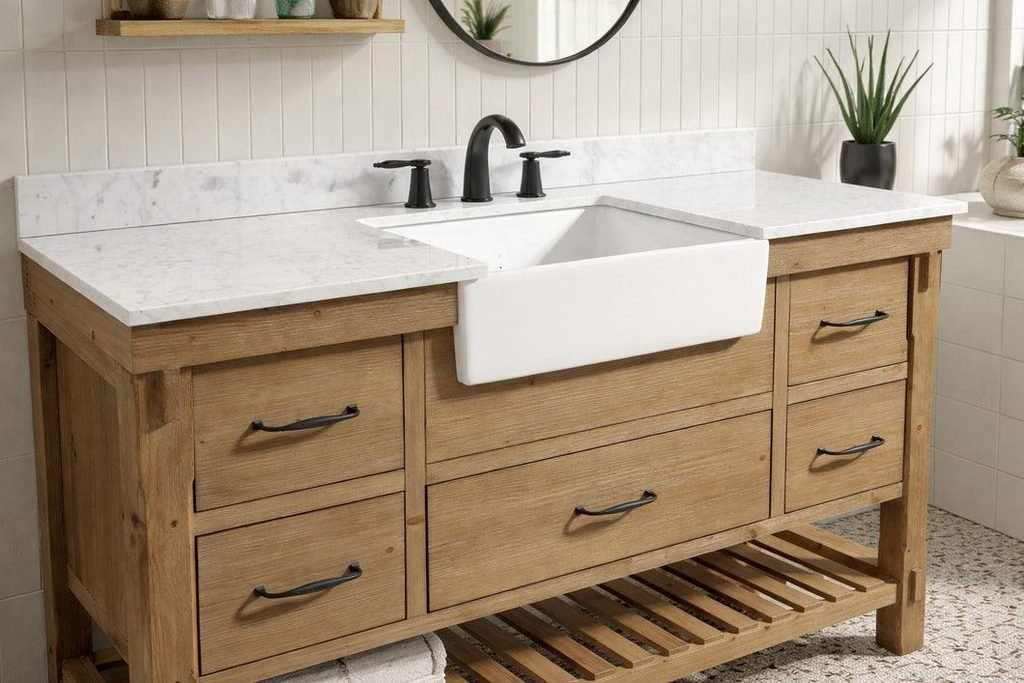
A traditional farmhouse bathroom pairs a white apron-front sink with natural wood cabinets, simple fixtures, and warm neutral colors.
- Cabinet finish: Natural oak, white paint, or light wood.
- Countertop: White quartz or a simple stone surface.
- Mirror and hardware: A framed mirror with brushed nickel or matte black hardware.
- Wall colors: Warm white, cream, or soft beige.
These elements create a welcoming look without adding too many decorative details.
2. Rustic Bathroom Style
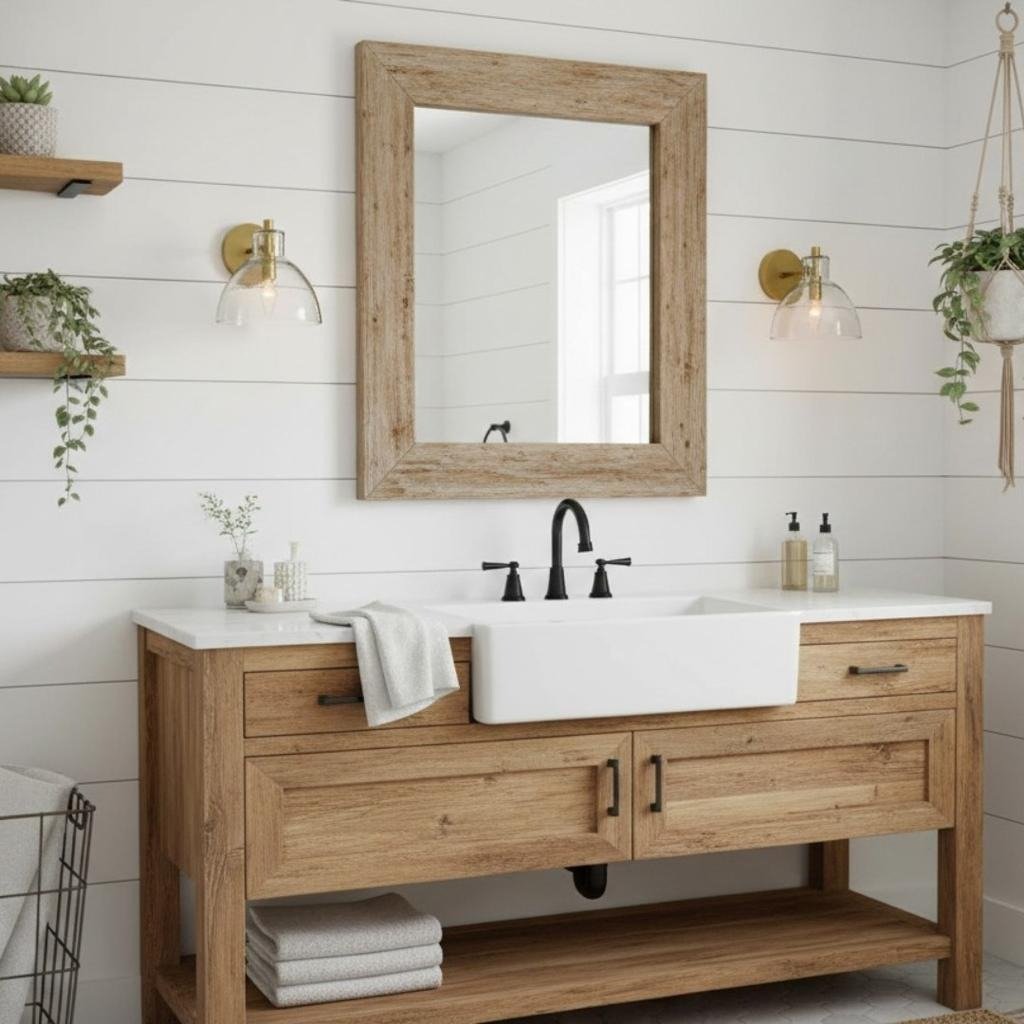
Rustic bathrooms emphasize natural textures and earthy colors. A farmhouse sink can complement this style when paired with wood grain, understated stone surfaces, and simple metal fixtures.
Choose a medium or dark wood vanity, a neutral countertop, and warm lighting. Avoid combining too many strong textures in a small bathroom, as the sink and cabinet may compete for attention.
3. Transitional Bathroom Style
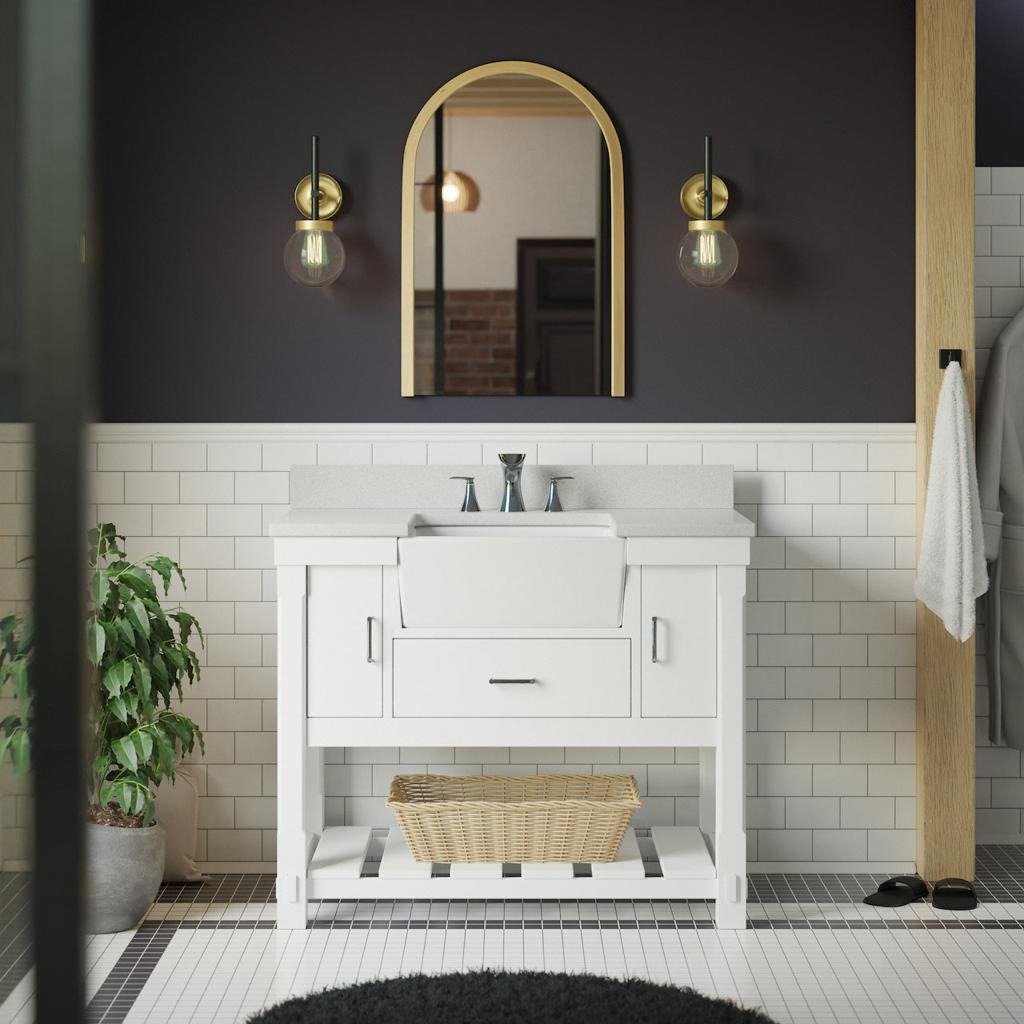
Transitional design blends traditional features with cleaner, more contemporary finishes. It is a practical choice if you like the farmhouse sink but do not want a fully rustic bathroom.
Consider these combinations:
- Shaker-style cabinets in white, navy, or soft gray.
- A simple quartz countertop with subtle veining.
- A rectangular framed mirror and understated faucet.
- Neutral wall colors that connect the cabinet and countertop.
For example, a white apron-front sink paired with a navy vanity and a light countertop can create contrast without making the room feel overly traditional.
4. Modern Farmhouse Bathroom Style
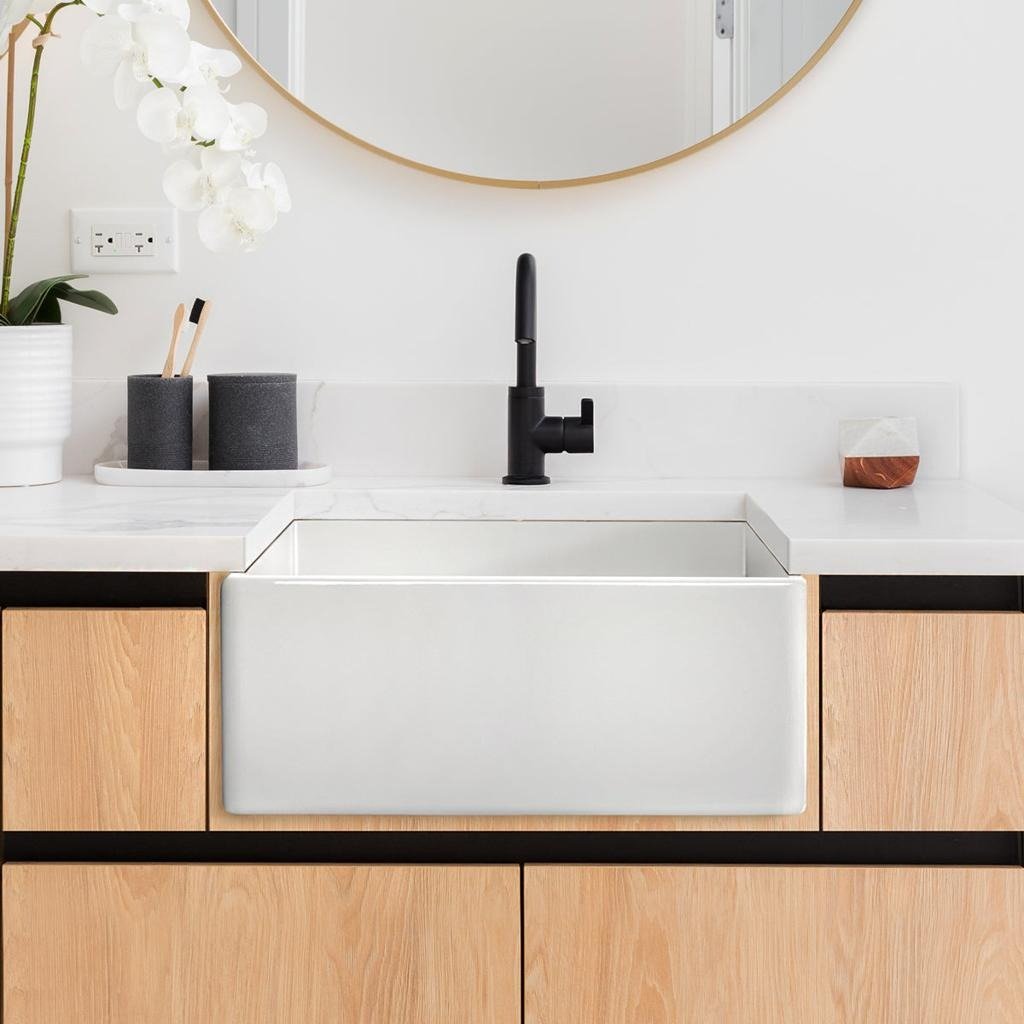
Modern farmhouse bathrooms use the familiar apron-front sink with simpler shapes and fewer decorative details. This approach works well when you want farmhouse character without a heavily rustic appearance.
Use flat or clean-lined cabinet fronts, a restrained color palette, and streamlined hardware. A round mirror or simple rectangular mirror can soften the sink’s strong front-facing shape.
How to Make the Sink Fit Your Bathroom Design
Whichever style you choose, coordinate the sink with the vanity cabinet, countertop, mirror, and wall color. A useful starting point is to choose one main finish, one complementary material, and a small number of accent details.
Also consider the room’s size. In a compact powder room, a smaller apron-front basin and a light-colored countertop may help the vanity feel less bulky. In a larger bathroom, a wood cabinet and a contrasting mirror frame can make the sink a stronger focal point.
The best design is one that balances appearance with everyday use. Before finalizing your choices, make sure the sink fits the cabinet properly and leaves enough space for comfortable handwashing and bathroom essentials.
What Problems Should You Consider Before Choosing One?
A farmhouse sink can add character to a bathroom, but it may also bring extra installation costs, reduced storage, and fitting challenges. Check these practical issues before deciding if it suits your space.
- Limited cabinet storage: A deep basin may take up room needed for drawers, shelves, and cleaning supplies.
- Higher installation costs: Custom cabinet work, countertop cutting, and plumbing changes can increase the overall budget.
- Heavy sink materials: Fireclay and cast iron models may need reinforced cabinet support.
- Water splashes: A deep or poorly positioned basin can cause splashing, especially with an unsuitable faucet.
- More cleaning around the apron: Water spots and residue can collect around the exposed front edge and surrounding joints.
- Limited bathroom-sized options: Many farmhouse sinks are designed for kitchens, so finding a compact model with suitable dimensions may take extra effort.
For example, installing a large kitchen sink in a 30-inch bathroom vanity could leave little room for storage or countertop essentials. Always check the sink’s measurements, cabinet compatibility, and installation requirements before purchasing.
The best choice balances appearance, available space, maintenance, and total installation cost.
Conclusion
A farmhouse sink can bring character and a distinctive finish to a bathroom, but its success depends on thoughtful planning. The right combination of sink size, cabinet strength, materials, and overall design can make it both attractive and practical. Before committing to this style, consider how it will fit your daily routine. A beautiful bathroom should work just as well as it looks.
FAQs
1. What Is the Drawback of a Farmhouse Sink?
Farmhouse sinks can cost more to install, require a specially fitted cabinet, and reduce storage space. Some models are also heavy and need extra support.
2. Do They Make Farmhouse Sinks for Bathrooms?
Yes, some farmhouse sinks are designed for bathrooms. Check the sink’s dimensions and cabinet compatibility before buying, as many models are made for kitchens.
3. Are Farm Sinks Still in Style?
Yes, farmhouse sinks remain popular in farmhouse, rustic, and modern farmhouse bathrooms. Their simple design can also suit transitional interiors.
4. Are Farm Sinks Worth It?
They can be worth it if you like the exposed apron-front design and find a model that fits your space. Consider installation costs, storage, and maintenance before choosing one.
5. What Is the Best Brand of Farmhouse Sink?
The best brand depends on your budget, preferred material, size, and bathroom needs. Compare product dimensions, installation requirements, warranty, and customer reviews before deciding.
6. Is There a Difference Between a Farmhouse Sink and an Apron Sink?
The terms are often used interchangeably. Both usually feature a front panel that remains visible beyond the cabinet, although designs and dimensions can vary.
About the Author: Bilal Khan
Bilal Khan is a passionate home interior enthusiast and dedicated bathroom design specialist with years of hands-on experience researching modern cabinetry, vanity materials, and functional layout trends. Having evaluated hundreds of vanity configurations—from solid oak finishes to custom fluted designs—Bilal helps homeowners make practical, long-lasting renovation choices. When he isn’t exploring the latest interior design trends, he creates clear, research-backed guides to simplify home improvement projects for readers across the USA.