
Introduction
Ever walked into a bathroom and immediately felt calmer, without knowing exactly why? Nine times out of ten, it’s the vanity doing that work. A mid century style bathroom vanity brings warm wood, tapered legs, and clean, simple lines together in a way that feels intentional rather than decorated. This article walks through what actually makes this style work — the materials, the sizing, and the small styling choices — so you can figure out if it fits your bathroom.
Table of Contents
Mid-Century Modern Bathroom Vanity
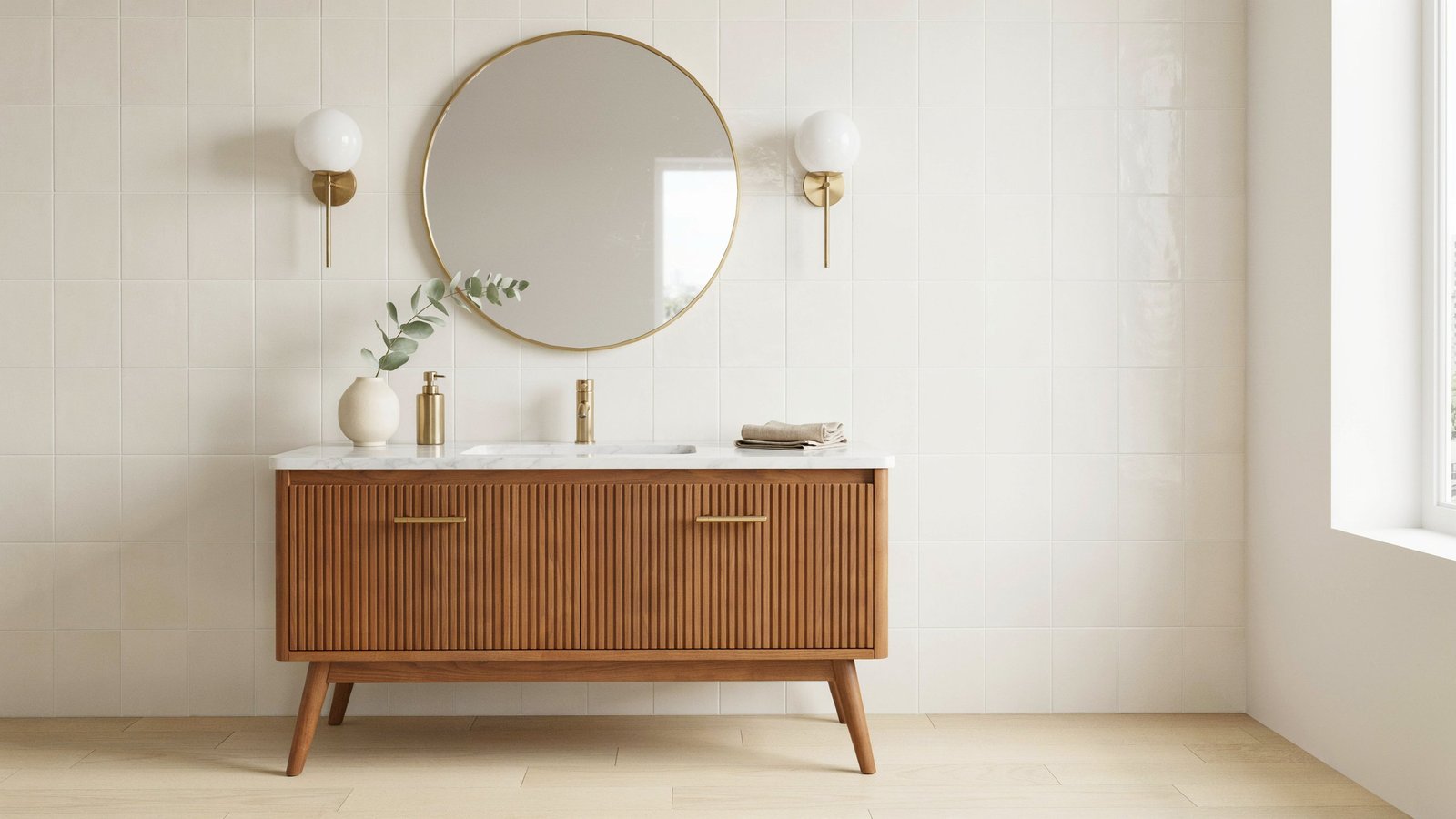
A mid century style bathroom vanity is built around three things: warm natural wood, tapered legs, and a countertop that stays simple instead of flashy. Once you see one in person, the look is easy to recognize — it just feels calmer than a typical vanity.
That calm feeling isn’t an accident. It comes straight from mid-century modern bathroom design, a style rooted in clean, simple lines rather than heavy ornamentation. Walk into most American homes built or renovated in the last few years, and you’ll notice this vanity style shows up more in guest bathrooms and powder rooms than anywhere else — probably because it makes a small space feel less cluttered without trying too hard.
The materials matter more than people expect. This ties directly into the organic materials approach that defines the entire style — the idea is to bring a piece of nature indoors, but in a controlled, tailored way rather than something rustic or rough. Common choices include:
- Solid oak — light, durable, and the most widely used option
- Walnut — richer, darker tone for a warmer feel
- Teak — naturally water-resistant, a smart pick for humid bathrooms
Then there are the legs. Splayed, slightly angled legs — sometimes rounded, sometimes tapered to a point — lift the cabinet off the floor. This small detail does two things: it opens up the visual space underneath, and it echoes the Bauhaus design influence that shaped mid-century furniture in the first place, where function and form were never separated.
Hardware stays quiet on purpose. Brushed brass or matte black pulls, often just a thin bar or a recessed groove, keep the eye moving smoothly across the cabinet instead of snagging on decoration. This is the less is more design philosophy in action — every element earns its place, and nothing is added just to fill space.
Countertops usually go one of two ways, almost always paired with a rectangular undermount sink:
- Honed marble — soft, matte finish that avoids a glossy, formal look
- Simple quartz — low-maintenance and budget-friendly for everyday use
A 36-inch single-sink vanity with a white quartz top is a common real-world example — compact enough for a smaller bathroom, but still giving off that sense of understated luxury that mid-century design is known for.
When you combine the wood, the leg shape, the hardware, and the countertop, what you end up with is a piece that was never designed to follow short-lived trends in the first place. These same mid-century modern décor principles have stayed relevant for more than seven decades, and that track record is exactly why so many homeowners return to this style — they want a vanity that will still feel right in their bathroom ten years from now, not just this season.
What Materials Are Best for a Mid-Century Style Vanity?
Solid wood — usually oak, walnut, or teak — is the best material for a mid century style bathroom vanity, with wood veneer as a budget-friendly backup. Each option affects how the vanity looks, how long it lasts, and how well it handles bathroom moisture, so the right pick really depends on your space and your budget.
Oak remains the most common wood choice for a mid century style bathroom vanity, and for good reason. It has visible grain that fits the clean, simple lines of mid-century modern décor, plus it’s tough enough to handle daily use in a family bathroom. A 48-inch oak vanity with a light honey finish is a typical real-world pick for a primary bathroom shared by two people — it holds up to constant splashing without warping or fading fast.
Walnut sits a step above oak in both price and looks. Its darker, richer tone leans into the understated luxury side of the style, which is why it shows up more often in primary suites than in guest bathrooms. If you want a vanity that feels like a statement piece without shouting for attention, walnut delivers that balance.
Teak is the practical choice for humid climates. It has natural oils that resist water damage, making it a smart option for bathrooms with poor ventilation or heavy shower use. This links back to the organic materials approach that defines mid-century modern bathroom design — teak brings that same warm, natural feel while solving a real functional problem.
Veneer — a thin layer of real wood over an engineered core — is the most affordable route. It won’t have quite the same depth or longevity as solid wood, but a well-made veneer vanity still captures the look for buyers working with a tighter budget. Here’s a quick way to think about the trade-offs:
- Oak — durable, moderate cost, classic grain pattern
- Walnut — richer tone, higher price, best for a focal-point vanity
- Teak — best water resistance, ideal for humid or poorly ventilated bathrooms
- Veneer — lowest cost, good for renters or short-term budgets
All four materials share the same less is more design philosophy — minimal ornamentation, honest wood grain, and a finish that ages well instead of looking dated in five years. That’s the real reason mid-century modern vanities keep showing up in home renovations across the U.S.: the materials themselves are chosen to last, not just to look good on day one.
How Do You Pick the Right Vanity Size for Your Bathroom?
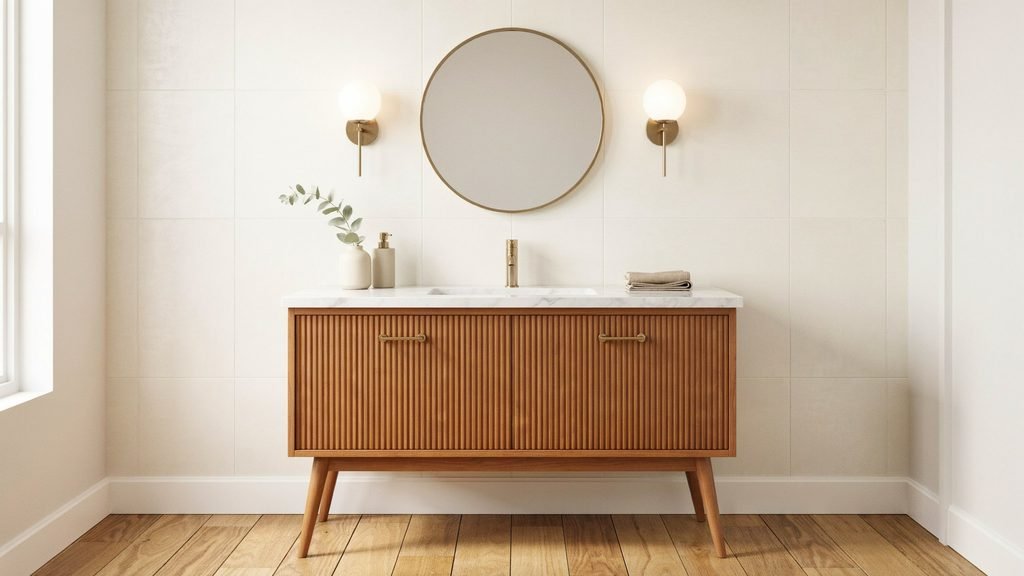
The right size for a mid century style bathroom vanity comes down to two numbers: your available wall space and how many people use the bathroom daily. Measure first, decide second — that one habit prevents most of the sizing mistakes homeowners make.
Start by measuring the wall where the vanity will sit, then subtract a few inches on each side for clearance around doors, towel bars, or adjacent fixtures. A common scenario in older American homes: a powder room with only 40 inches of wall space, which rules out anything wider than a 36-inch vanity right away. This is where the clean, simple lines of mid-century modern bathroom design actually work in your favor — even a compact vanity doesn’t feel cramped because the design avoids bulky, ornate cabinetry.
How Many People Use the Bathroom?
This is the second factor, and it matters just as much as wall space. A single-sink vanity works fine for a guest bathroom or a bathroom used by one person. But a primary bathroom shared by two adults getting ready at the same time usually needs a double-sink setup, which pushes the size up significantly. Skipping this step is one of the most common sizing mistakes — homeowners measure the wall, pick a vanity that fits, and only later realize two people can’t use it comfortably at once.
Matching Size to Room Function
Room function should guide the decision as much as square footage does:
- Powder rooms and guest baths — a 30 to 36-inch single-sink vanity keeps the space open without wasting room
- Shared primary bathrooms — 60 to 72-inch double-sink vanities give two people enough counter space to avoid bumping elbows
- Small full bathrooms — a 36 to 48-inch vanity balances storage with walking space around the tub or shower
This sizing logic ties directly into the organic materials and understated luxury approach of mid-century design — even a larger vanity is built to feel proportional to the room, not oversized for the sake of storage.
Getting size right also protects your budget. A vanity that’s too large for the room often needs custom plumbing adjustments, which adds unexpected cost to a renovation. Measuring correctly the first time — and matching that number to who actually uses the bathroom — sets up the next decision cleanly: choosing between a 36-inch or 72-inch mid-century vanity, which is exactly what the next two sections cover.
Mid-Century Modern Bathroom Vanity (36-Inches)
A 36-inch mid century style bathroom vanity is the go-to size for small bathrooms and powder rooms, giving enough counter space for daily use without crowding the room. It’s the size most homeowners land on when a bathroom has to stay functional and open at the same time.
This size works because of how mid-century modern bathroom design handles proportion. The clean, simple lines of the cabinet, combined with slim tapered legs, make a 36-inch vanity feel bigger than its actual footprint. A real-world example: a half bath with only 38 inches of wall space between the door frame and the toilet — a 36-inch vanity fits with just enough clearance to open drawers fully, something a bulkier traditional vanity in the same spot usually can’t manage.
Single-sink is standard at this size, almost always paired with an undermount rectangular sink that keeps the top clean and easy to wipe down. Storage is usually one of two layouts:
- Two soft-close doors with an open cabinet behind them, good for towels or larger items
- A mix of drawers and a lower cabinet, better for organizing smaller toiletries separately
Either layout stays true to the less is more design philosophy — no wasted space, no overcomplicated storage that’s hard to keep tidy.
Material choice at this size leans toward solid oak or a quality veneer, since a smaller cabinet doesn’t need the heavier structure that larger vanities require. This keeps cost down while still delivering the organic materials feel that defines the style — visible wood grain, a light stain, and hardware that stays quiet rather than decorative.
A 36-inch vanity also suits homeowners renovating on a tighter timeline. Because it doesn’t usually require moving plumbing lines in a standard powder room layout, installation tends to be faster and less disruptive than resizing for a larger vanity. That practical advantage, paired with the understated luxury look mid-century design is known for, is exactly why this size shows up so often in guest bathrooms and powder rooms across U.S. homes.
Mid-Century Modern Bathroom Vanity (72-Inches)
A 72-inch mid century style bathroom vanity is built for larger primary bathrooms where two people need their own sink and counter space. It’s the size most homeowners choose when a shared bathroom starts feeling crowded during the morning rush.
This size only makes sense in a room with enough floor space to support it — typically a primary bathroom of 100 square feet or more. A common real-world scenario: two adults getting ready at the same time before work, each needing their own sink, their own mirror space, and enough counter room to avoid bumping into each other. A 72-inch double-sink vanity solves exactly that problem, which is why it’s the standard choice for shared primary suites across U.S. homes.
Double-Sink Layout and Storage
At this size, double-sink is the default layout, with two undermount sinks spaced evenly across the countertop. Storage scales up too, usually combining:
- A center bank of drawers for smaller items like toiletries and grooming tools
- Two side cabinets with soft-close doors for towels or bulkier essentials
- Open cubbies or shelving in some designs, adding a lighter visual break in the cabinet front
This layout keeps the clean, simple lines of mid-century modern bathroom design intact, even at a larger scale — the extra storage doesn’t turn the piece bulky or busy.
Material and Structural Considerations
A vanity this size needs a sturdier build than smaller versions, which is why solid walnut or oak is more common here than veneer. The added weight of two sinks and a longer countertop calls for real structural support, not just a decorative wood layer. This reflects the organic materials philosophy of the style — solid, honest wood that can carry real functional weight, not just look the part.
Countertops at 72 inches are almost always marble or quartz, chosen for durability across a wider surface that sees double the daily use. Paired with less is more design philosophy hardware — simple brushed brass or matte black pulls — the vanity stays visually calm despite its size, delivering the understated luxury feel mid-century design is known for even in a large-format piece.
Before committing to this size, it’s worth confirming your existing plumbing can support two sinks without a full re-route, since that’s usually the biggest cost factor in scaling up from a single-sink vanity.
How to Style a Mid-Century Vanity in a Modern Home
Styling a mid-century vanity comes down to three choices: the mirror shape, the lighting fixture, and the hardware finish — get those three right, and the whole bathroom pulls together on its own. None of it needs to be complicated, but each choice does affect how well the vanity reads as true mid-century modern bathroom design rather than just a wood cabinet.
Choosing the Right Mirror
Round or rectangular mirrors with clean, simple lines are the classic choices for this style, and either one works — round mirrors soften a boxy vanity, while rectangular mirrors give a more structured, contemporary look. A brushed brass or matte black frame ties the mirror back to the vanity’s hardware, keeping the whole setup from feeling like mismatched pieces bought separately.
Getting the Lighting Right
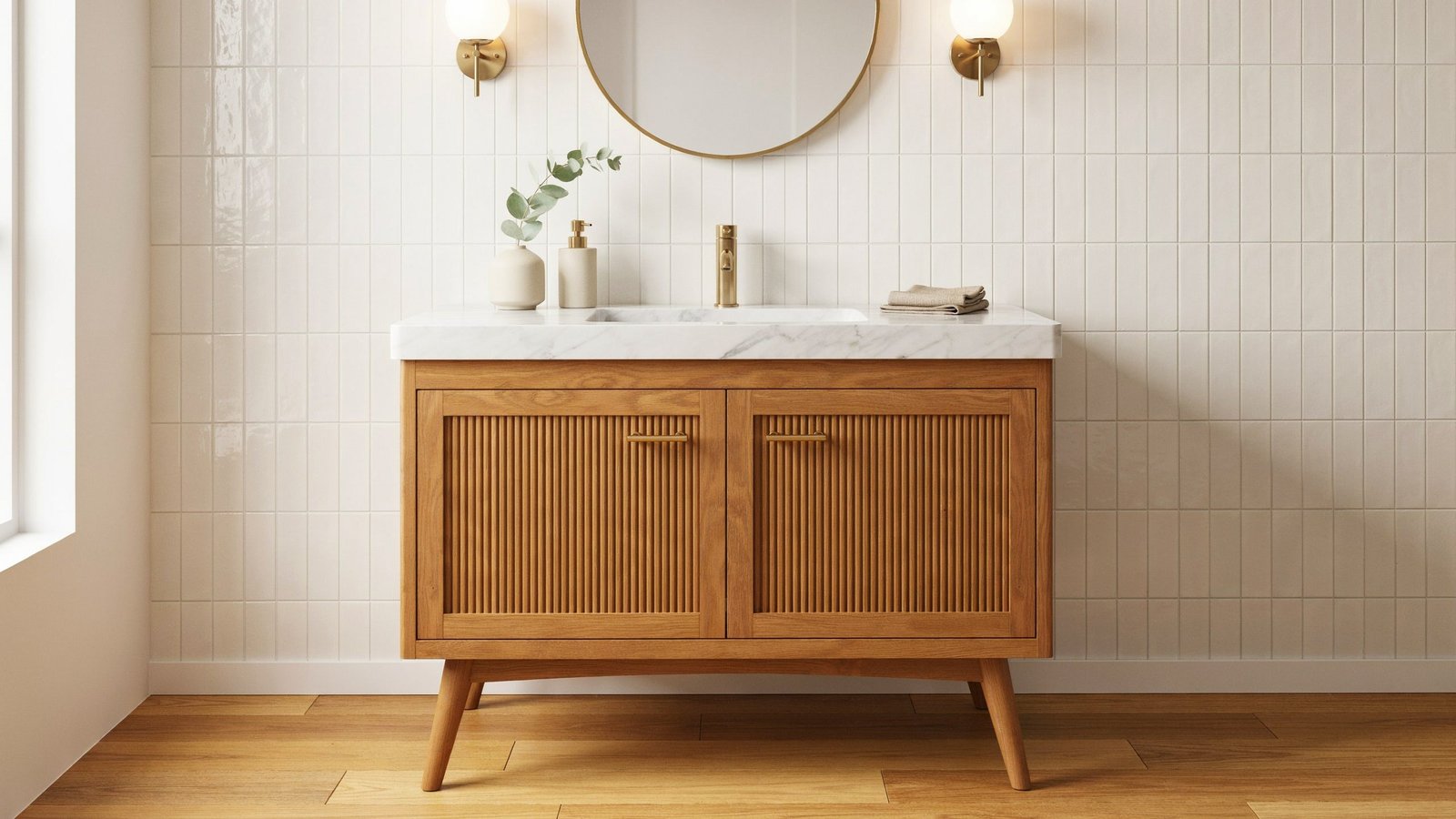
Lighting is where most homeowners either nail this style or miss it completely. Mid-century modern bath vanity lights typically use exposed brass socket bars with globe bulbs, smoked glass globe sconces on sculpted arms, or linear configurations in satin brass and matte black — all designed to suit vanities with vessel sinks and geometric tile. A real-world example that works well: mounting a pair of globe sconces flanking the mirror at 60 inches from floor to center produces the most even, shadow-free grooming light, which matters more than people expect when shaving or applying makeup.
For bulb choice, 3000K bulbs are recommended for grooming accuracy while still keeping the warmth of brass finishes intact — this small detail avoids the harsh, clinical light that clashes with the understated luxury feel of mid-century design. Common fixture options include:
- Globe bars — even, wrap-around light above the mirror
- Side sconces — best for eliminating shadows during grooming
- Linear bars — a more minimal option for smaller bathrooms
Matching Hardware Finishes
Hardware finish should stay consistent across the vanity pulls, faucet, and light fixture — mixing too many metals breaks the less is more design philosophy this style is built on. Brushed brass and matte black remain the two most popular finishes for a reason: brass adds warmth against oak or walnut, while matte black creates a sharper, more modern contrast. Brushed nickel and chrome are safer, more neutral alternatives if the rest of the bathroom already leans cooler in tone.
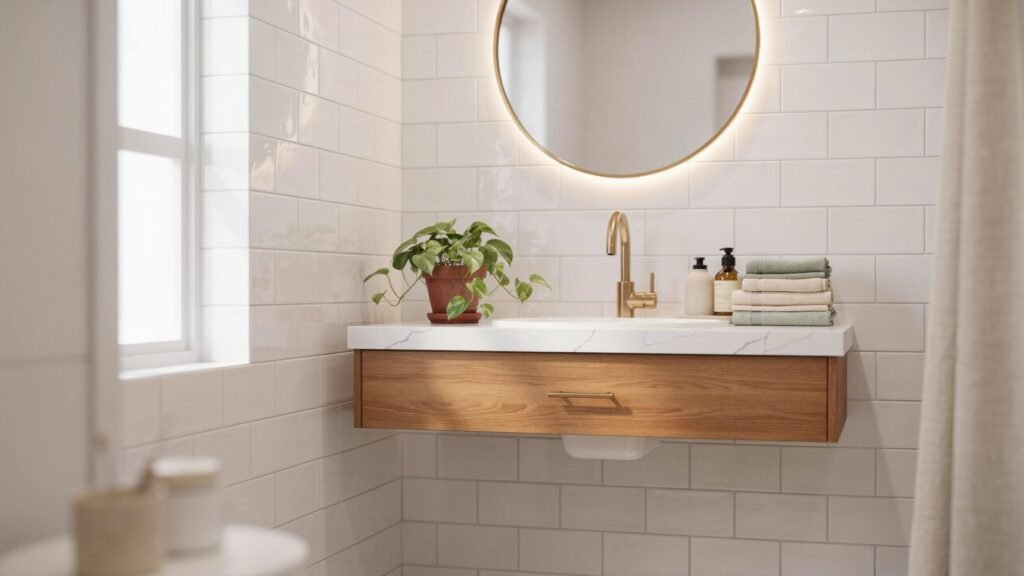
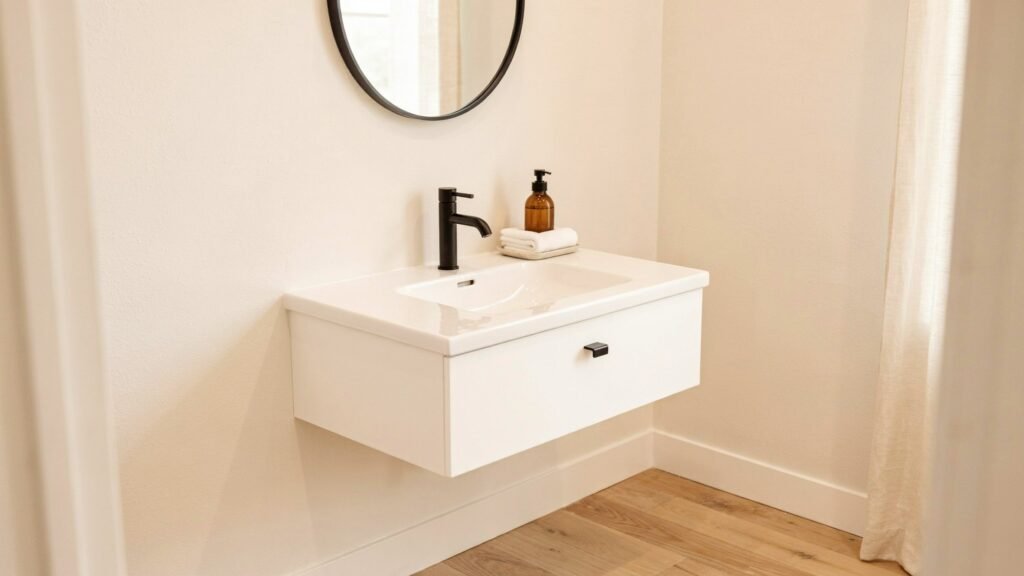
Floating or wall-mounted versions of the vanity add one more layer to this styling approach, creating a sense of openness that reinforces the organic materials and clean, simple lines running through the whole design. Once the mirror, lighting, and hardware all share the same finish logic, the vanity stops looking like a single furniture piece and starts reading as a fully styled mid-century bathroom.
Is a Mid-Century Style Bathroom Vanity Worth It?
A good vanity rarely gets credit for how much it shapes a room, but it’s usually the first thing that sets the tone for everything else. Material, size, lighting, hardware — none of these choices exist in isolation, and getting them right is really about matching the piece to how you actually live, not just how a photo looks.
So before you settle on a finish or a fixture, take a moment to think — what does your bathroom actually need to feel calm and functional every morning? That answer matters more than any trend ever will.
FAQs
What does a mid-century modern bathroom look like?
It’s a bathroom built on clean lines, warm wood tones, and minimal clutter — think a freestanding wood vanity, simple hardware, and neutral tile with the occasional pop of color.
What defines a mid-century modern vanity?
Solid wood construction (usually oak or walnut), splayed tapered legs, reeded or flat-panel doors, and a simple marble or quartz top with an undermount sink.
What are the trendy bathroom vanity styles for 2026?
Floating and wall-mounted vanities lead the year, paired with fluted wood fronts, warm oak and walnut finishes, and brushed brass or champagne bronze hardware — a natural fit alongside mid-century styling.
What colors suit a mid-century vanity?
Warm earth tones work best — sage green, terracotta, and warm gray are trending in 2026, alongside natural wood tones like white oak and walnut that let the grain show.
What color bathroom vanity never goes out of style?
Natural wood tones and classic white remain the safest, longest-lasting choices — both pair easily with any hardware finish or countertop.
Is mid-century modern in style in 2026?
Yes. Warm wood finishes, clean silhouettes, and furniture-style vanities are central to 2026 trends, which aligns closely with the mid-century modern aesthetic.
What’s the difference between mid-century and mid-century modern?
Mid-century modern refers to the 1945–1960s design movement with clean lines and function-first pieces, while “mid-century” design started earlier, in the 1930s, and kept decoration to an even greater minimum.
Written by Bilal Khan
Bilal Khan is a home décor and interior design writer who focuses on practical, research-backed guidance for bathroom and vanity design — including materials, sizing, and styling choices that hold up over time. His work is centered on helping homeowners make informed renovation decisions based on real product knowledge rather than passing trends, with a particular interest in mid-century modern and timeless bathroom design.
Have a question about mid-century bathroom vanities? Reach out — Bilal regularly researches and writes on bathroom design topics like this one.
Pingback: Typical Vanity Depth: Complete Sizing Guide
Pingback: Average Vanity Height: Standard vs Comfort Guide (2026)